Sign up for Chalkbeat Philadelphia’s free newsletter to keep up with news on the city’s public school system.
As Philadelphia school officials move closer to closing schools in part to address urgent facilities needs, not even state officials know the depth of the state’s school building problem.
Now, several state Democratic lawmakers are pushing to pass a bill that would require the state to create an inventory of school facilities data to document building conditions.
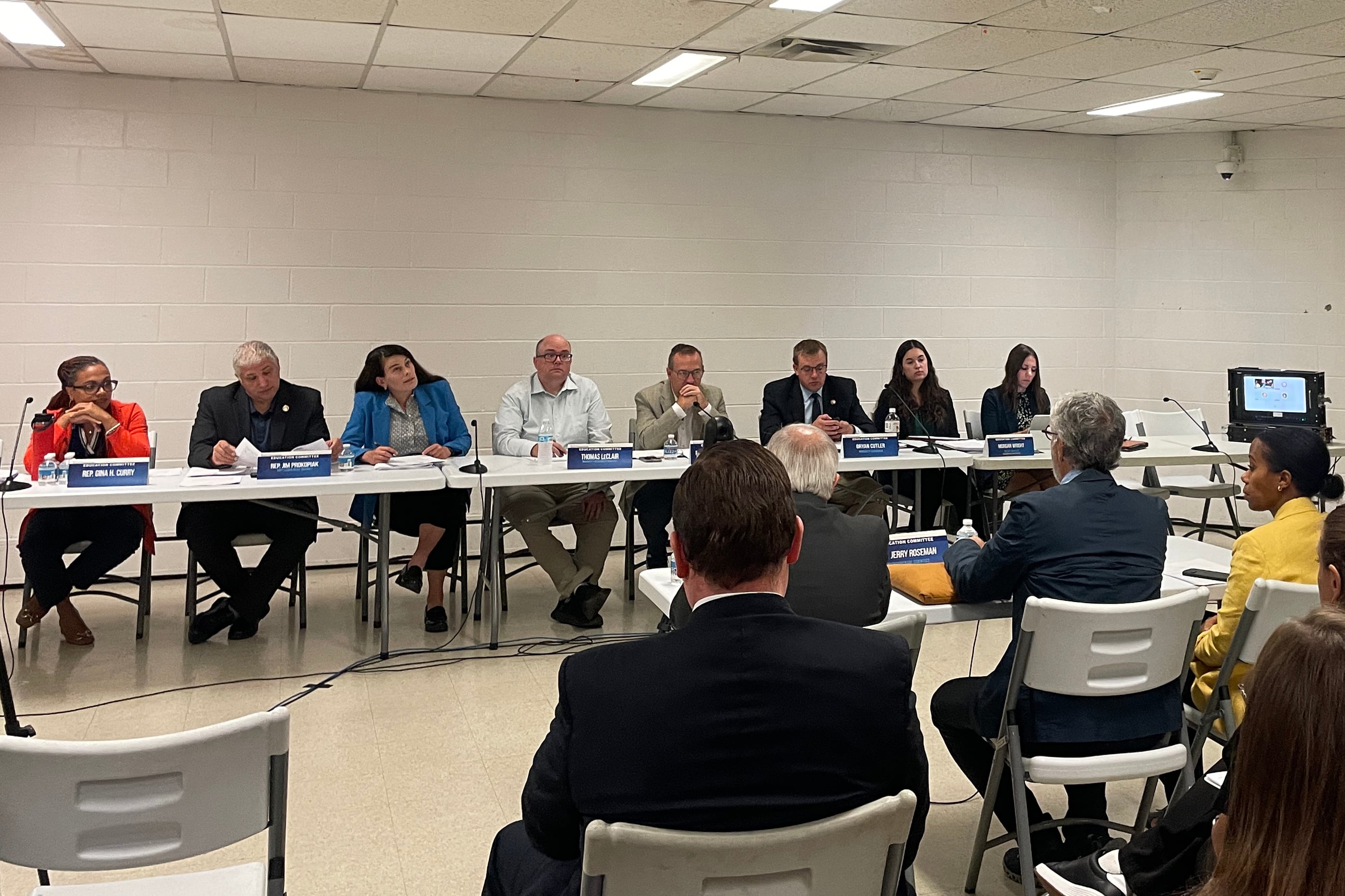
“We need to identify the problem,” said Rep. Elizabeth Fiedler at a hearing about the proposed legislation Monday in South Philadelphia. “The current state of school facilities presents both a crisis of education and a public health crisis.”
Though individual districts, including Philadelphia, have gathered some data about their schools’ facilities needs, statewide information about which schools are in greatest need of repairs because of broken infrastructure, environmental hazards, and outdated technology remains severely lacking.
Jessica Sites, director of the bureau of financial operations at the Pennsylvania Department of Education, said it’s obvious to the department that there are severe building problems in districts across Pennsylvania.
During several hearings over the state’s school funding formula, which a judge ruled in 2023 was unconstitutional, Pennsylvanians raised grave concerns about schools with mold, asbestos, and crumbling walls. Concerns about asbestos exposure have closed several Philly schools in recent years, and the district’s approach to the issue recently drew the attention of the U.S. Department of Justice.
But the state does not have information on each school’s square footage, let alone comprehensive information on the costs of maintenance or repairs.
“We can’t quantify it well enough — I think that’s the problem,” said Sites. “What we are being is reactive to some of these issues. We are not being proactive.”
Small and inexpensive building issues, like a small leak, can transform into a severe and expensive problem without proactive maintenance, said Jerry Roseman, director of environmental science at the Philadelphia Federation of Teachers.
He urged officials at Monday’s hearing to support districts in collecting better building data so they can make small repairs before they become costly, full-building issues.
The legislation would require school districts to submit detailed information about their facilities to the department every three years, including building square footage, age, and brief descriptions of any major renovations. It would also require districts to provide plans on how they would modernize school buildings.
The legislation states the department would provide technical assistance to districts to repair infrastructure when funding is available. It would also support schools in securing additional federal, state, and local funding for repairs.
LeShawna Coleman, chief of staff at the Philadelphia Federation of Teachers, said the union supports the legislation as long as it’s accompanied by state funding.
“Without a dedicated and recurring appropriation in the state budget, this initiative will result in an unfunded mandate,” said Coleman.
Rebecca Redelmeier is a reporter at Chalkbeat Philadelphia. She writes about public schools, early childhood education, and issues that impact students, families, and educators across Philadelphia. Contact Rebecca at rredelmeier@chalkbeat.org.