Sign up for Chalkbeat Philadelphia’s free newsletter to keep up with the city’s public school system.
A federal appeals court ruled Monday that the Philadelphia school district’s admissions policy for selective high schools could have had the “purpose and effect of discriminating on the basis of race.”
The ruling revives Sargent v. School District of Philadelphia, a lawsuit that alleges the district’s controversial selective admissions policy is unconstitutional because it favored some races over others. A district court judge had previously dismissed the case. The 3rd U.S. Circuit Court of Appeals decision cites the Students for Fair Admissions Supreme Court case that ended the use of race-based preferences in college admissions to send the case back to the district court for a trial.
The decision reopens questions about what methods, if any, Philadelphia school leaders can use to create more diversity in the district’s elite high schools, which historically have been disproportionately white and Asian American.
It also bolsters a long-running campaign by conservative legal activists to end the use of race-neutral factors in K-12 admissions policies. School districts have been barred from using race as a factor in school admissions and enrollment decisions for nearly two decades, but courts have generally held that using race-neutral factors, such as geography or income, to promote diversity are allowed. The Supreme Court has repeatedly declined to take up cases that could upset that status quo, but conservative legal groups continue to bring challenges, such as the Philadelphia lawsuit.
In 2021, the Philadelphia school district overhauled its admissions process for magnet high schools, which are widely considered to be the city’s most desirable public high schools. Unlike neighborhood high schools, students must apply to magnet schools and not all are accepted. Before the admissions process changed, principals of magnet schools had discretion over which students they admitted.
The new policy created a lottery system that prioritized students from certain ZIP codes and also required students to meet higher academic and attendance standards. School leaders at the time said the changes were part of an effort to make the school district an “antiracist institution.”
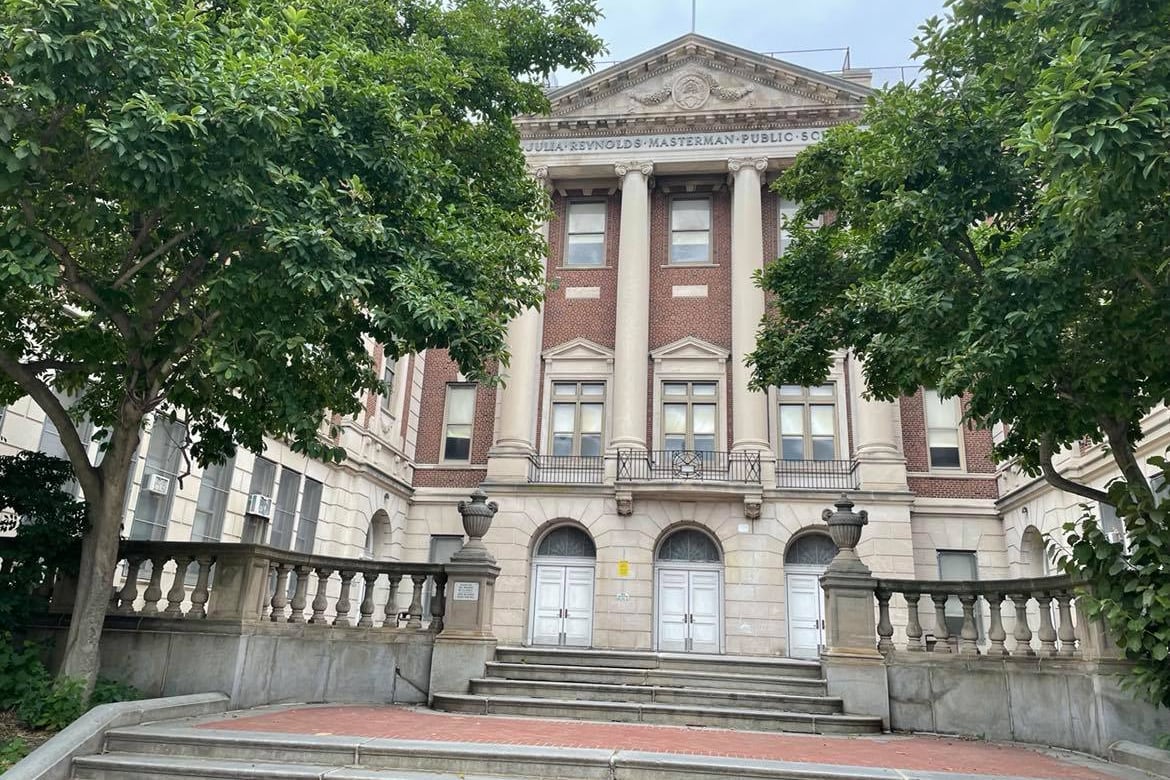
In its ruling, the federal appeals court said the new policy increased Black and Hispanic students’ chances of admission to some of the city’s top magnet schools, including Palumbo, Carver, Central, and Masterman, while decreasing Asian American and white students’ chances.
A school district spokesperson said Tuesday that the district does not comment on pending litigation.
Before the change, white students had long been overrepresented at Central and Masterman high schools, two of the city’s top schools. More recently, so had Asian American students. In 2020, some Black students at Central urged the district to overhaul its admissions policies to address the declining percentage of Black students admitted to the school.
Some parents and students immediately pushed back against the new system, which they said prevented some high-achieving students from accessing top schools.
Three parents whose children did not get into their top-choice school under the new policy sued with support from America First Legal Foundation, a conservative nonprofit law firm. The parents have children who are Black, white, and biracial. They alleged that because students from predominantly Black and Hispanic ZIP codes who met admissions criteria had an automatic in, the policy had a discriminatory effect.
In sending the case back to the lower court, the appeals court justices noted that top district officials, including then-Superintendent William Hite, had openly discussed wanting to address racial disparities, especially in the aftermath of the killing of George Floyd. That did not necessarily mean the policy was discriminatory, but it requires the lower court to more fully consider those arguments, the justices wrote.
America First Legal was founded by Stephen Miller, a top advisor to President Donald Trump. Trump has used executive orders to ban analyses that examine disproportionate impacts in considering whether policies violate civil rights, and his Education Department has used a similar legal theory to pressure school districts to end diversity policies that rely on race-neutral factors.
Since Sargent was originally filed, the district has made some changes to the admissions process, including allowing students to rank multiple choices and giving students who attended middle schools attached to selective high schools priority access to those schools as well. It has kept priority ZIP codes, but has made some changes to which ones are included.
Magnet school admissions policies contested across the country
Many school districts don’t have a network of selective admissions high schools like Philadelphia or New York do. However, the districts that do have garnered legal scrutiny. As school districts have tried different tactics to diversify these schools, conservative legal groups, often working with Asian American parents, have challenged changes to admissions policies they see as proxies for race in Boston, New York, and Fairfax County, Virginia.
Justin Driver, a professor of constitutional law with Yale Law School, said the Supreme Court may not necessarily get involved in this case, with the “ball in the Philadelphia School District’s court.” The district could change its policies rather than appeal an unfavorable ruling, and even if it did, the Supreme Court might not agree to take the case.
“They could decline to do so because of what lawyers refer to as percolation,” he said. “We want to see how other courts are going to wrestle with these issues. But I do think that from a preliminary view, the facts of this case are similar to other cases.”
As in the case of other admissions policies challenged, “George Floyd’s death was sort of the cataclysmic event that made them rethink the policy here,” Driver said.
Erin Wilcox, a senior attorney for the Pacific Legal Foundation, has represented plaintiffs in similar cases, including Coalition for TJ v. Fairfax County School Board. In that case, Pacific Legal argued against an admissions process that awarded additional points to students from underrepresented schools or from low-income families.
The Supreme Court declined to hear that case in 2024. But Wilcox said she believes that “eventually the court will grapple with this issue,” now with a split of opinion between circuit courts on this issue.
Wilcox said Supreme Court justices dissenting on these cases have written some “pretty fiery” dissenting opinions.
For example, Justice Samuel Alito wrote of the Fairfax case: “The Court’s willingness to swallow the aberrant decision below is hard to understand. We should wipe the decision off the books.”
“Maybe ... some justices putting that out there so forcefully, which is not something they do all that often, might be having an impact on some of the appellate court judges across the country,” Wilcox said.
Wilcox said the plaintiffs she’s represented have fought to get into magnet schools in pursuit of a rigorous education.
“In a lot of cases, students have been preparing or trying to go to these schools for years,” she said.
Derek Black, a constitutional law expert with the University of South Carolina, said he believes just because administrators may have had a goal of increasing racial parity in enrollment doesn’t mean the resulting admissions policy is discriminatory. Nor, he said, should that goal alone trigger the heightened judicial standard that’s applied to policies that consider race.
“As I read the facts, no, not a single student was admitted based upon his or her race,” he said. “That means it’s race-neutral.”
Rebecca Redelmeier is a reporter at Chalkbeat Philadelphia. She writes about public schools, early childhood education, and issues that affect students, families, and educators across Philadelphia. Contact Rebecca at rredelmeier@chalkbeat.org.
Lily Altavena is a national reporter at Chalkbeat. Contact Lily at laltavena@chalkbeat.org.