House Democrats called on Gov. Bill Lee and the legislature Friday to reallocate $41 million earmarked for a school voucher program halted this week by a judge’s order.
Calling it “fiscally irresponsible” to press ahead amid a severe economic crisis, the minority caucus also urged the Republican governor to avoid expensive appeals of the court’s ruling declaring the 2019 education savings account law unconstitutional.
“There is obviously no place for even a dollar of voucher funding in our state budget,” said Rep. Mike Stewart, who chairs the House Democratic caucus. “We’re headed back into session to make difficult decisions. The first thing that needs to be removed from the state budget is our voucher funding.”
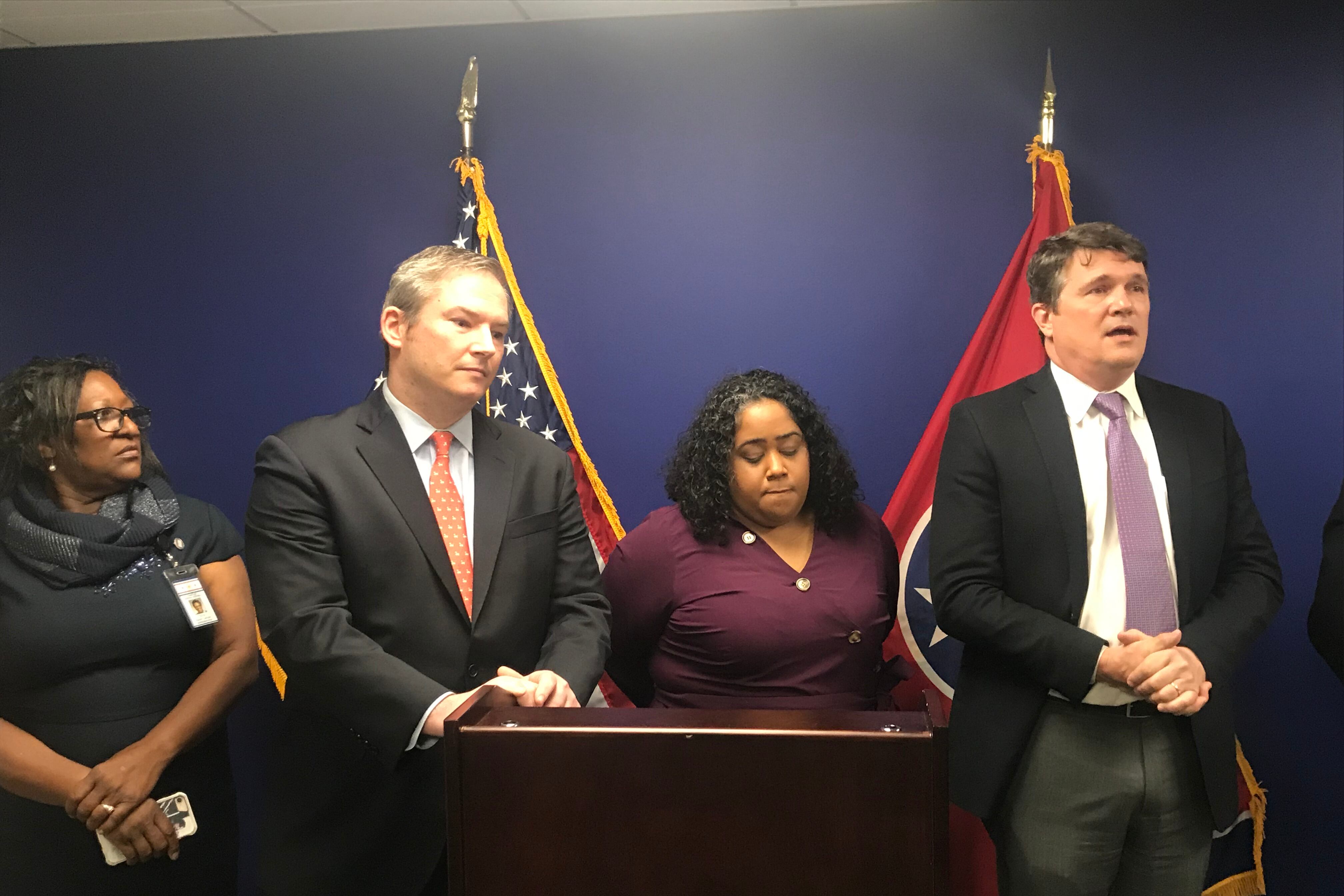
The Democrats’ call — issued during three regional press conferences conducted by video conference — came after a whirlwind week of court rulings and legal maneuvering over this fall’s planned launch of education savings accounts. The program aims to provide public funding to send some low-income students in Memphis and Nashville to private schools.
Days after striking down the voucher law because it singles out Tennessee’s two largest cities, Davidson County Chancellor Ann C. Martin on Thursday blocked the state from proceeding with the program while waiting for a higher court’s review.
Tennessee is also watching local and state tax revenues crater amid the coronavirus pandemic. Estimates put the shortfall at more than $500 million this year and $1.5 billion in 2020-21. Lawmakers are expected to reconvene in June to reexamine state spending.
The governor said he wants voucher funding to stay intact because he believes a higher court will reverse the judge’s ruling. The state attorney general has filed papers seeking an appeal.
“We certainly hope that investments in education like the education savings accounts will continue,” Lee told reporters on Friday, noting that students face even greater learning challenges as schools are shuttered due to COVID-19.
But House Democrats want the voucher money redirected quickly to fill an anticipated funding gap for public schools.
“We now, more than ever, need to make sure that every dollar entitled [to public schools] cannot be hamstrung by the vouchers,” said Minority Leader Karen Camper of Memphis.
Tennessee’s budget allocates $41 million for the voucher program. Of that amount, $3 million is to cover the program’s administration. The remainder is for a school improvement fund to offset anticipated funding losses to Shelby County Schools and Metropolitan Nashville Public Schools as students accept education savings accounts.
But even if most of the program’s funding is intended to reimburse districts in the program’s first year, Democrats say it should be struck from the books.
“We don’t need a line item in our budget that suggests that the General Assembly recognizes vouchers as legitimate, as constitutional, or as authorized,” Stewart said. “We need to get rid of that line item. We need to allocate this money to traditional public school funding.”
House Speaker Cameron Sexton agreed Friday the state faces tough budget decisions, but indicated it was premature to identify expenses to be cut.
“It will ultimately be up to the judicial system to decide” on education savings accounts, said Sexton, a Crossville Republican who voted against the law. “We are still assessing and evaluating our monthly and yearly revenue numbers. However, it appears significant reductions must be made.”