Sign up for Chalkbeat Tennessee’s free newsletter to keep up with statewide education policy and Memphis-Shelby County Schools.
Labrandon Fletcher, a 16-year-old student in Memphis-Shelby County Schools, says there’s a long list of things that need fixing in his school building.
The ceiling at Hamilton High School is “falling apart,” he said, and the bathroom plumbing needs dire attention. But the biggest issues are lighting and air conditioning.
“No one wants a dark place to learn and get an education,” Fletcher said. “It’s harder to see things, to see what’s on the board.”
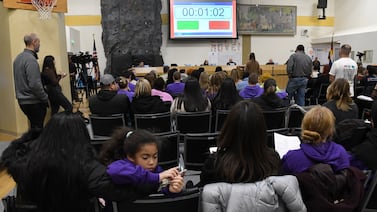
Fletcher is one of many community members, including a small group of students, who brought their concerns to the first meeting of the Memphis-Shelby County Schools facilities committee on Wednesday.
The group is expected to give recommendations for how the district should address over $1.6 billion in deferred maintenance costs in the next decade. That plan will include some school closures, committee leaders said.
MSCS students and school leaders described years of quick fixes in deteriorating buildings, with no sustainable plan in place.
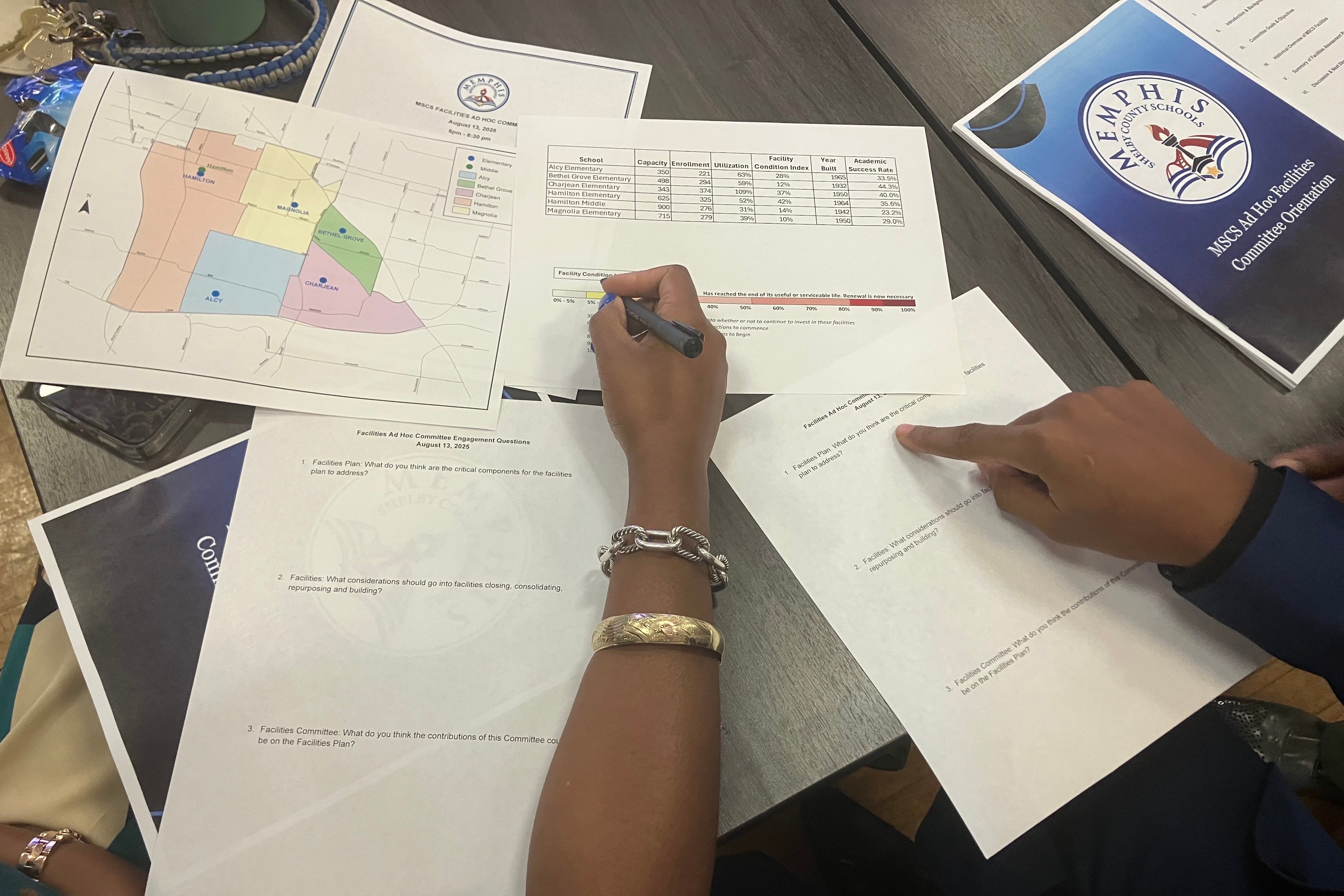
Michelle Stuart, who heads MSCS’ facilities services, said Wednesday that the district prioritizes spending based on student safety. When closing schools, she said, leaders consider factors like building age and condition, enrollment numbers, and academic performance.
Free Bacchus, an assistant principal at Hamilton High School, said she remembers the outcry from parents when Magnolia and Charjean elementary schools closed to merge with a new Alcy Elementary in 2020. But her perspective changed when she toured the Alcy building.
“When I walked in, I was like, ‘Wow, how beautiful. How lucky are these children to have a library like this, a ceiling-to-wall window,’” Bacchus said.
“I know it hurt,” she said, to close the schools down. “But just look at what those kids got in return.”
Stuart said the MSCS facilities report, released by outside firm Bureau Veritas in April, found $334 million worth of repairs needed in schools in the next two years. The district has not yet fulfilled a Chalkbeat Tennessee July request for the report, which was provided to the Daily Memphian and other media earlier this year.
The firm also estimated an additional $1.2 billion in needed longer-term investments, bringing the district’s grand total in facilities maintenance to just under $3 billion over the next 20 years.
MSCS has spent over $381 million on building improvements and repairs since 2021, said Chief Financial Officer Tito Langston. Over half of that was used for HVAC upgrades, according to numbers he presented Wednesday.
Board Member Amber Huett-Garcia noted that almost none of the recent spending is “innovative.”
“This is keeping our schools functioning between roofs, heating, and cooling,” she said. “We’re patching our buildings.”
Nylah Sanders, a student at Whitehaven High School, said that the “simple, little things” are always being repaired at her school “over and over and over.” Her peer, Austin Townsel, said students “can use better” technology and air conditioning.
“We’re not in the 21st century,” Natalie McKinney, committee co-chair, said in response.
McKinney said the facilities committee is expected to meet again in early September, when members will break into working groups to tackle specific issues. Designated seats for students and parents still haven’t been filled.
Bri Hatch covers Memphis-Shelby County Schools for Chalkbeat Tennessee. Reach Bri at bhatch@chalkbeat.org.