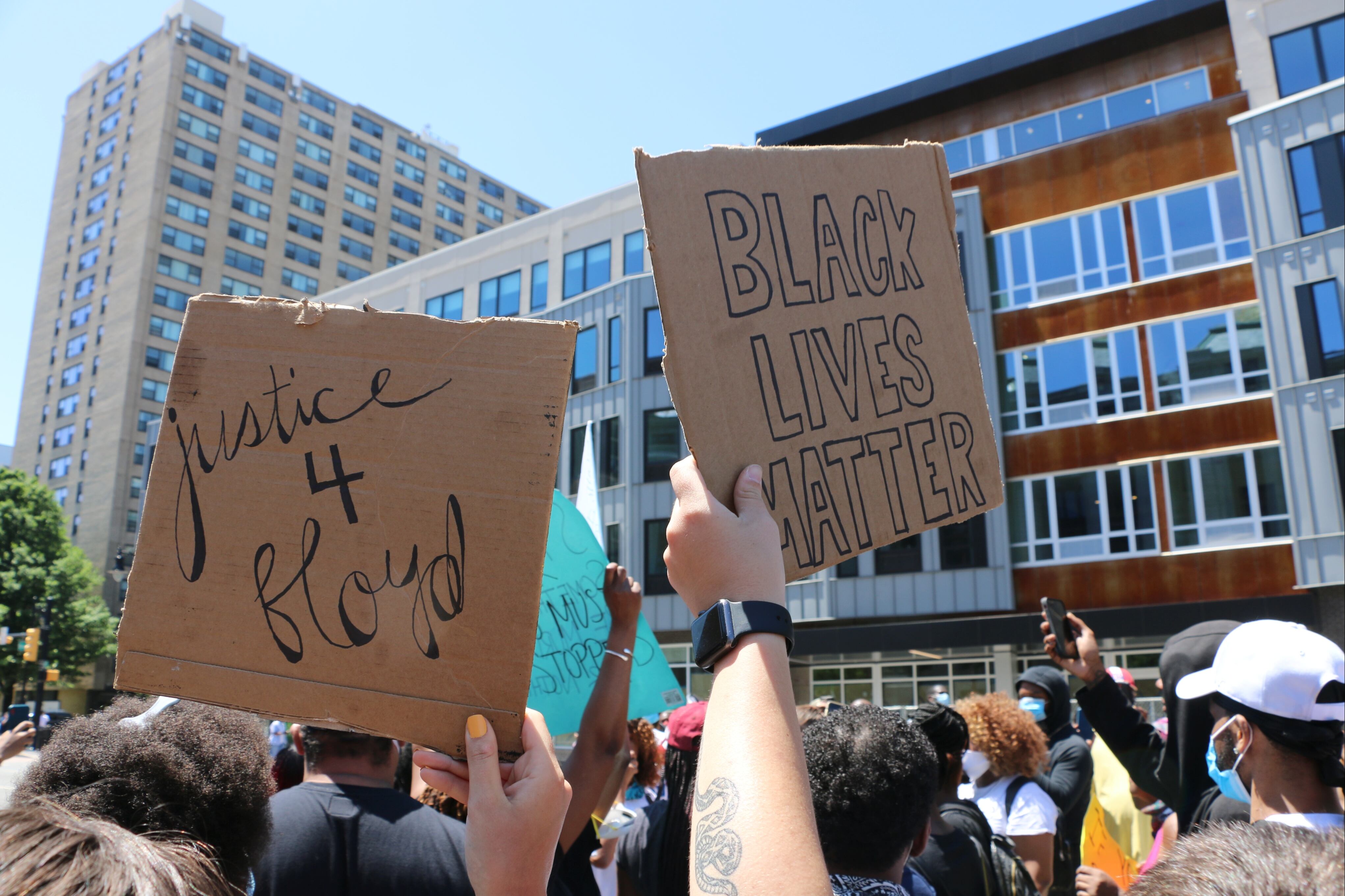
The death of George Floyd in Minneapolis spurred protests against police brutality in cities across the U.S. and forced a national reckoning on racial injustice.
Students are part of the conversation, raising their voices and orchestrating marches in their own communities.
“We see what’s happening,” said Kanara Bramlett, 17, who just graduated from high school in Denver. “We really needed to demonstrate that we as young people have a voice in our community and we’re capable of creating the same amount of change as the adults.”
Chalkbeat wants to amplify young people’s voices even further.
Students, how are you feeling about the civil unrest around police brutality and marches to support Black Lives Matter? What are your hopes for the future? What do you want to tell your parents, teachers, community and political leaders, and fellow students?
Share your thoughts via a six-word story. Want some inspiration? Here are a few examples from Brain Pickings and Buzzfeed.
Please submit your thoughts by June 17. Select responses will be published on Chalkbeat’s website and social media channels. We can’t wait to hear from you.