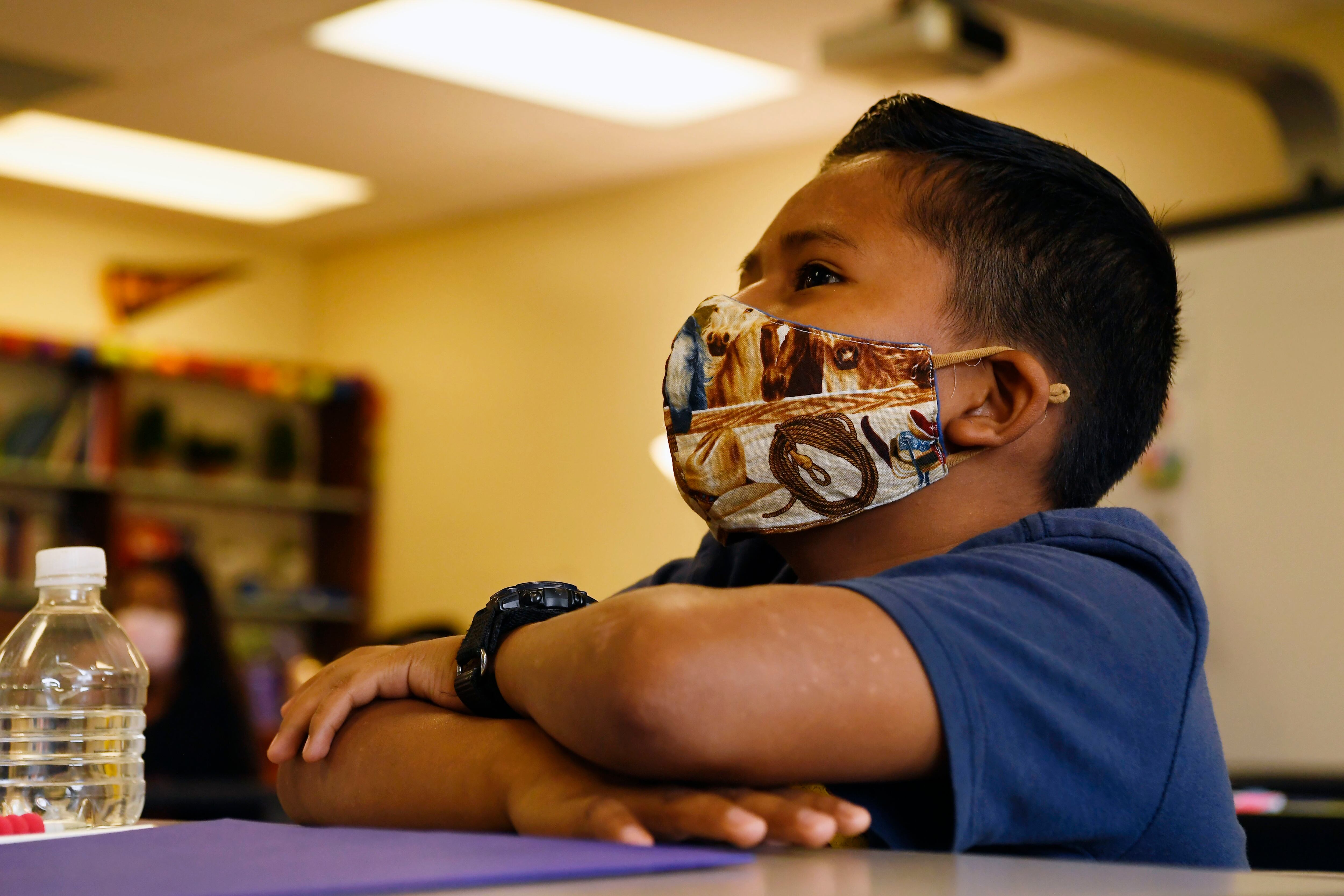
Masks will still need to be worn in all Colorado schools, child care centers, and indoor summer camps under a modified executive order from Gov. Jared Polis.
Colorado’s statewide mask mandate, first issued in July 2020, was set to expire Saturday.
Polis announced Friday that he would extend the mask mandate for at least another 30 days in counties with moderate to high COVID-19 levels on the state’s dial system. In counties with low virus levels, defined as fewer than 35 cases per 100,000 over a one-week period, the mask order will be relaxed.
There are 31 counties with about 238,000 residents in level “green,” with the lowest COVID rates. These counties can now set their own policies on mask use, with a few exceptions.
However, people older than 10 will still need to wear a mask in all school and child care settings in all counties for at least the remainder of the school year, under the modified order. Many schools require masks for younger students as well.
“We fought hard to get Colorado kids back in school successfully, and we’re not going to jeopardize Colorado’s return of in-person learning by changing the mask policy this school year,” Polis said in a press release.
The mask order also continues to apply in certain health care and personal services settings, as well as in jails, prisons, and nursing homes, regardless of community COVID levels.
State health officials emphasized that consistent mask use is key to reducing transmission in school settings, particularly because the vaccine is not yet authorized for children.
Colorado opened vaccination to everyone age 16 and older on Friday. According to the state health department, fewer than 20% of Coloradans are fully immunized.
New COVID-19 cases and test positivity have increased in recent weeks from a low in early March.