Sign up for Chalkbeat Colorado’s free daily newsletter to get the latest reporting from us, plus curated news from other Colorado outlets, delivered to your inbox.
Former Colorado Education Commissioner Katy Anthes faced plenty of anger in her old job. That’s motivated her to help school district leaders and educators in Colorado and beyond develop skills that promote conflict resolution and reduce polarization.
Anthes will work to build those skills in her new role as director of the FORWARD Initiative at the Public Education & Business Coalition, a Denver-based teacher training and advocacy organization. She started Dec. 1.
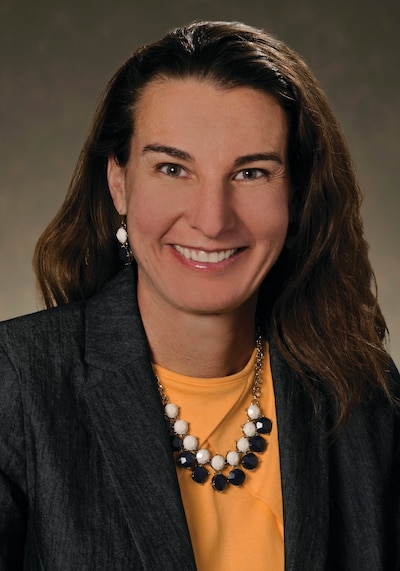
“Part of it is just kind of getting back to some basics around listening, seeing the humanity in others, having curiosity, and being able to pause before you immediately react,” she said. “These are not rocket science, but they are skills we seem to have gotten away from.”
Anthes, who stepped down as commissioner in July after seven years on the job, said the idea for the initiative came out of the soul-searching she did after leaving the Colorado Department of Education.
She said she worked with the coalition’s director, Sue Sava, to launch the FORWARD Initiative in the hopes of moving education past some of today’s divisive rhetoric and culture wars. Anthes also works part time for Third Mile Group, an educational consulting firm.
Initially, FORWARD will consist of two offerings. The first is a book study facilitated by Anthes of “High Conflict: Why We Get Trapped And How We Get Out” by Amanda Ripley. The second is individual or small group coaching sessions led by Anthes. Both are fee-based.
Anthes said without strong skills to probe disagreements and calm conflicts, superintendents and other education leaders can be forced to spend all their time putting out fires instead of attending to student needs.
Anthes, who was widely considered a steady and even-handed education commissioner, said she honed her ability to listen thoughtfully and de-escalate conflict during her years at the education department.
“Those are the skills you have to build,” she said. “They don’t come naturally to us. Especially in this world right now it’s fight or flight.”
Anthes said when people tagged her in angry Twitter posts as commissioner, she would often invite them to meet for a discussion. Not many took her up on the offer. But she said it signaled that screaming on social media wouldn’t do justice to the complex issues they raised.
“Social media is not the place for nuance,” she said.
Anthes said several other national organizations do work similar to the FORWARD Initiative, though they’re not necessarily focused on education. Those groups include Starts With Us, More In Common, Moral Courage College, and Braver Angels.
Ann Schimke is a senior reporter at Chalkbeat, covering early childhood issues and early literacy. Contact Ann at aschimke@chalkbeat.org.