Colorado lawmakers on the Senate Education Committee voted against a bill that would have made it harder to remove content from a school or public library.
Senate Bill 49 had undergone numerous changes after concerns from Colorado school districts that the bill was too prescriptive and would trample on their ability to make policy decisions that are unique to their community.
State Sen. Lisa Cutter, a Jefferson County Democrat and co-sponsor of the bill, held off on asking for a vote on the bill on Monday to introduce amendments after a three-hour committee hearing.
But on Wednesday, the Senate Education Committee voted against the bill with a 5-2 vote, after voting 4-3 against the amendment to the proposal.
Cutter said after the hearing she thought changes she made were enough to get the bill approved.
“We’ve made a lot of accommodations and, honestly, I am not 100% sure why it didn’t pass,” she said.
The most significant pushback came from the Colorado Association of School Boards, which represents over 1,000 school board members across the state. But Cutter said the amendments were enough for the association to drop its opposition.
During testimony, Hilary Daniels, the association’s staff attorney, said the original bill interfered with Colorado’s local control provision, which allows boards to tailor educational policy to meet the needs of their community.
The law also would have been redundant, she said.
“Local boards of education are fully aware of First Amendment constitutional law, which prohibits them from removing school library books for partisan or discriminatory reasons,” she said. “These legal parameters are already included in CASB (Colorado Association of School Boards) sample policy regarding public complaints about instructional materials, which districts use to inform their own policies.”
School board members from across the state who represent the association said many schools have already created their own policies that address pieces of the legislation, including who can and cannot challenge a book. Those policies help protect content and staff, they said.
Cutter and other lawmakers worked through those concerns on Tuesday, and the amended bill brought forward on Wednesday said schools and libraries shall create a process — if they do not already have one — that addresses pulling a book or other library material, such as films, audiotapes, or computer software.
The bill would have also created protections for librarians, school administrators, and volunteers. Under the bill, only residents who live within a library district or have children within a school would have been able to request the removal of a book.
Content also wouldn’t have been able to be reconsidered for removal more than once every five years.
“I’m actually particularly disappointed that we didn’t at least consider the portion that had to do with public libraries,” Cutter said. “I would have liked to have at least addressed that.”
Librarians and other advocacy groups such as the ACLU of Colorado and the Colorado Association of Libraries testified that the proposal would have protected content and librarians.
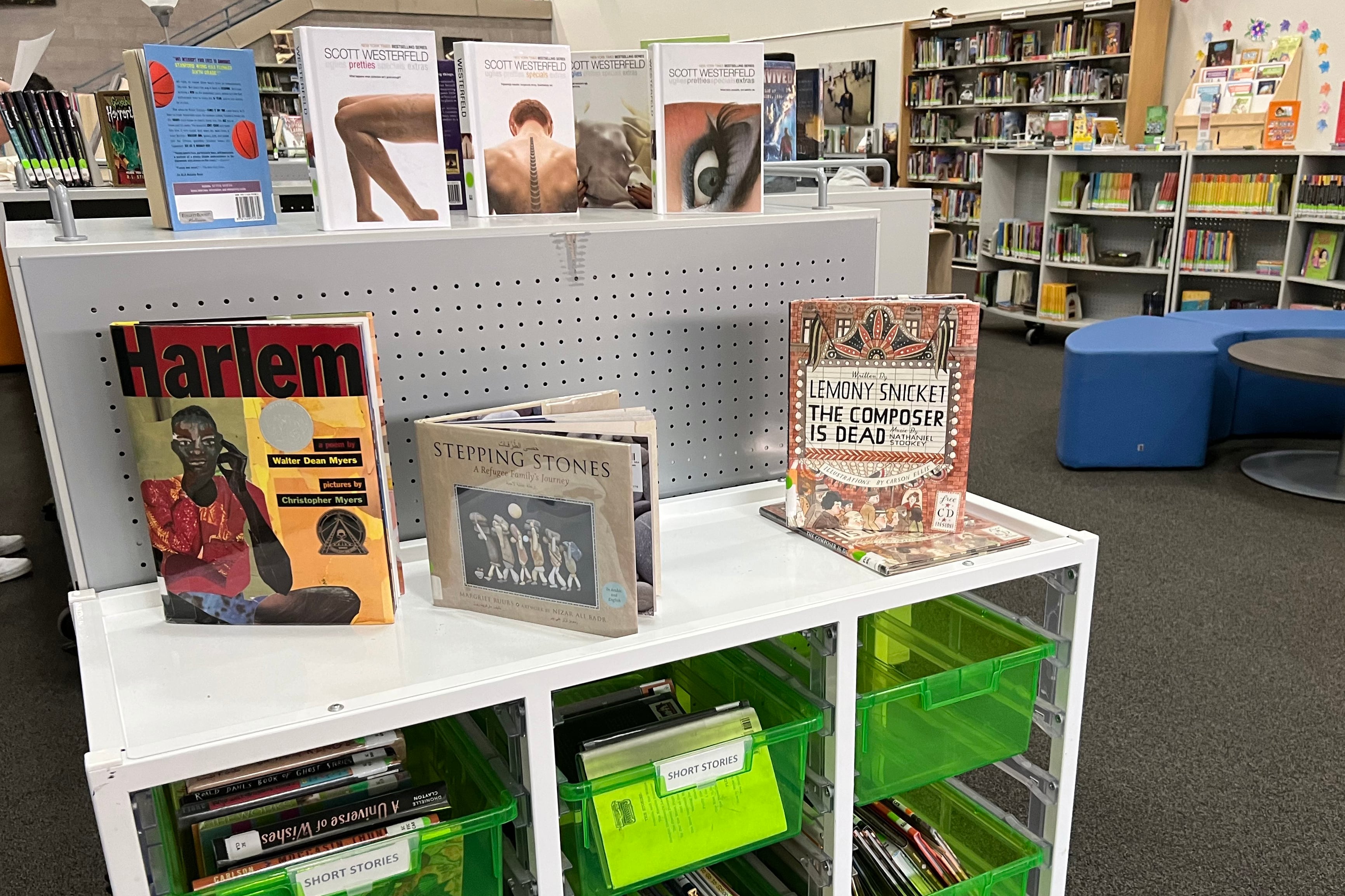
From January to August 2023, Colorado libraries heard eight challenges of 136 titles, according to the American Libraries Association. Book bans also surged across the nation during the same time period, and other states have passed laws prohibiting bans.
The most sweeping challenges have come from a handful of conservative organizations.
Colorado Education Association President Amie Baca-Oehlert said most of the books challenged were written by or about a person of color or a member of the LGBTQ+ community.
“This political tactic has dire consequences for children, who research shows greatly benefit from seeing people like themselves in books and in their classrooms,” she said.
Cutter said she will explore whether she can reintroduce the bill and “see if we can figure out what the issues were.”
Jason Gonzales is a reporter covering higher education and the Colorado legislature. Chalkbeat Colorado partners with Open Campus on higher education coverage. Contact Jason at jgonzales@chalkbeat.org.