Sign up for Chalkbeat Colorado’s free daily newsletter to get the latest reporting from us, plus curated news from other Colorado outlets, delivered to your inbox.
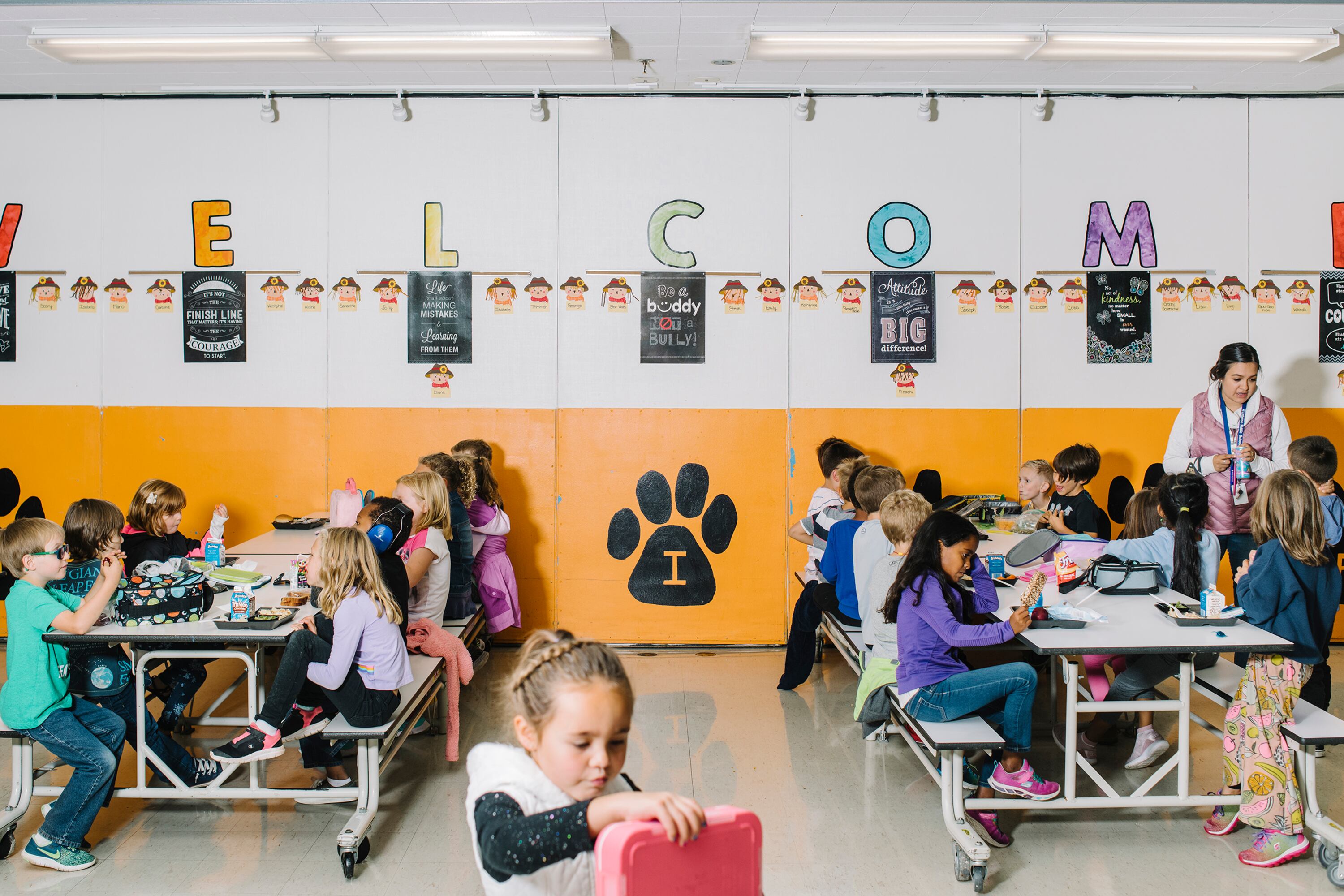
Anyelin Ortega told Colorado lawmakers recently that the lunch line at her high school can be 25 minutes long, often leaving the 17-year-old only five minutes to finish her food.
“It is very disrespectful and demanding for any person to be rushed from eating,” said Ortega, who attends a Denver charter school. “After lunch, I have found myself feeling very anxious and irritated from the lack of energy from having an empty stomach.”
Ortega was among the students and advocates who testified in favor of a bill that would create a “time-to-eat” task force to evaluate topics including how much time the state’s school districts are giving students to eat lunch and whether students have recess before or afterward.
Colorado does not mandate schools set aside a certain number of minutes for lunch. Those decisions are left to school districts or individual schools.
The task force would examine the outcomes associated with those decisions, such as students’ academic performance, their behavior, and how much food is wasted because students can’t finish their lunches. The task force would write a report with recommendations for school districts to adopt policies “that allow for increased time to eat,” the bill says.
“It breaks my heart when I see students repeatedly pick up their tray and shovel a few more bites into their mouths as they hold (it) over a trash can and throw away half of their food,” Shannon Thompson of the Colorado School Nutrition Association told lawmakers at a hearing last week. “As a registered dietitian, I work in school nutrition to feed kids, not trash cans.”
Rep. Jenny Willford, a Northglenn Democrat, said House Bill 1301 is based on her personal experience as a parent. When her son started in elementary school, Willford said he was having behavior issues after lunch. She said she worked with the school to figure out the root cause: Her son would play hard at recess but then not have enough time to eat lunch.
“You can’t learn when your tummy is hungry,” Willford said.
House Minority Leader Rose Pugliese, a Colorado Springs Republican, said she agreed to co-sponsor the bill because she had a similar experience with her own children.
In addition to hungry students and wasted food, Pugliese pointed out another problem with short lunch periods: wasted money. Colorado voters approved a measure in 2022 making school meals free for all students, and this is the first year it’s in place. But more students are eating than expected, and the state is having to shore up the program with extra funding.
“From a fiscally conservative perspective, we don’t want to be investing money in food that’s being thrown away,” Pugliese said.
Cade Nelson, a sophomore at Legend High School in Parker, told lawmakers that he supports the free meals program. But he said it’s caused the lunch lines at his school to grow.
“The free lunch essentially does not matter because I’ve seen people run out of time to eat,” Nelson said. “If we had more time to eat, I think everybody would be much happier.”
The bill passed the House Education Committee last Thursday on a 10-1 vote. Most of the pushback and hesitation was not related to the task force but to a separate grant program in the bill meant to promote more physical activity and play during the school day.
An association of Colorado physical education teachers had concerns that the grant program could supplant P.E. teachers. But the committee approved an amendment requiring schools to have a P.E. teacher on staff in order to apply for the grant funding.
Rep. Anthony Hartsook, a Parker Republican, was the only lawmaker to suggest scrapping the time-to-eat task force in favor of a mandate that school districts lengthen lunch times.
“Why not do a mandate?” Hartsook said. “They need more time to eat, they need more time to play. Duh. We all know that. So why are we waiting?”
But Willford said school scheduling is a tricky balance that must take into account the amount of instructional time required by the state. She said she worried a mandate would cause problems.
“If we move straight to a mandate, it becomes a bit of an unfunded mandate for local school districts,” Willford said. “My hope is that the task force comes back with a number of unique models of how we can implement longer periods for school lunch that is reflective of the diversity of schools we have across our state.”
Hartsook voted yes on the bill. The sole no vote was from Republican Rep. Don Wilson.
The bill says the task force would make its recommendations by Feb. 1, 2025. Task force members would include students, parents, educators, school board members, teachers union representatives, and representatives from community organizations.
Melanie Asmar is the bureau chief for Chalkbeat Colorado. Contact Melanie at masmar@chalkbeat.org.