Sign up for our free monthly newsletter Beyond High School to get the latest news about college and career paths for Colorado’s high school grads.
Thanks to $5.6 million in donations, Colorado will launch a new initiative to help rural college students get an education that connects to the workforce, according to a Friday news release.
State officials will use the money to create a statewide consortium focused on expanding rural work-based learning opportunities, such as internships, apprenticeships, clinical experiences, or project-based learning. The state will also use the money to help cover credit-bearing work experiences and address disparities in internship access. Additionally, the state plans to measure the impact of this type of education.
Lawmakers approved the three-year pilot program within House Bill 1186 during this year’s legislative session to help rural colleges, but did not provide state funding. Instead, lawmakers asked state officials to collect at least $2 million in grants, gifts, or donations. The move helped make the bill more palatable in a year when lawmakers needed to wrangle a $1.2 billion budget shortfall.
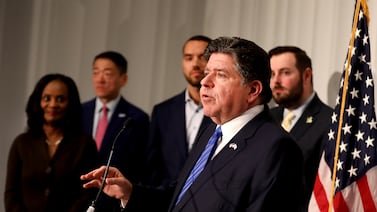
“This significant investment represents a major step forward in ensuring that every Colorado student has access to quality educational opportunities,” said Gov. Jared Polis in a Friday news release. “This legislation recognizes that our rural communities and the institutions that serve them are vital to Colorado’s future, and this funding helps us turn that vision into reality.”
Colorado Department of Higher Education Executive Director Angie Paccione said during legislative testimony in March that the bill would ensure more rural students can apply their college education to the real-world workforce. About 76% of degree programs in the state require some form of work-based learning opportunity, she said.
Yet there’s a larger gap in the work-based learning opportunities rural colleges can offer, said bill sponsor state Rep. Matthew Martinez, a Democrat who represents rural Monte Vista and previously worked in higher education.
“I want to narrow the gap between a student getting to graduation and getting in the job field,” he said in March.
Democratic state Rep. Meghan Lukens, Republican state Sen. Janice Rich, and Democratic Sen. Dafna Michaelson Jenet also sponsored the bill.
The state received $5.5 million over three years from Ascendium Education Group, a nonprofit whose mission includes helping students from low-income backgrounds connect to education and career training. Nonprofit Strada Education Foundation, which focuses on making it easier for students to get from college to a career, also donated $100,000.
The grants will be managed by the higher education department’s Office of Educational Equity, Workforce, and Social Mobility, according to the news release.
“This funding will support talented students statewide in pursuing their education and career goals side by side — because they shouldn’t have to choose one over the other,” said Gillian McKnight-Tutein, the higher education department’s chief educational impact officer, in the release.
Jason Gonzales is a reporter covering higher education and the Colorado legislature. Chalkbeat Colorado partners with Open Campus on higher education coverage. Contact Jason at jgonzales@chalkbeat.org.