Sign up for Chalkbeat New York’s free daily newsletter to get essential news about NYC’s public schools delivered to your inbox.
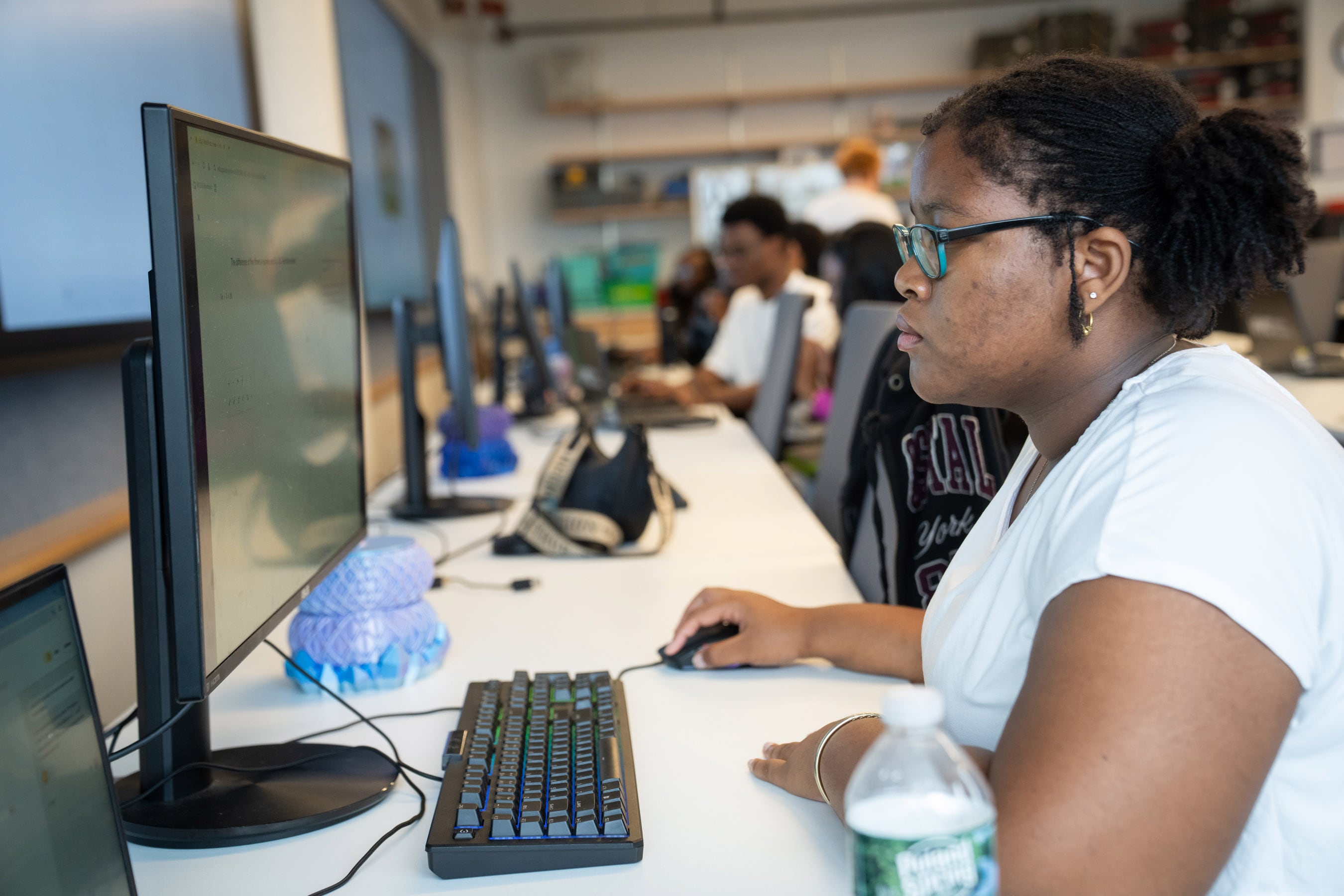
New York City is ratcheting up restrictions on students’ access to YouTube on school-issued devices, education officials told City Council members on Tuesday.
The disclosure came just one day after Council members Shekar Krishnan and Eric Dinowitz called on the city’s Education Department to restrict the video-sharing platform in schools, among other demands to restrict classroom technology.
“We heard everyone loud and clear,” Scott Strickland, the department’s deputy chief information officer, said at a City Council oversight hearing on Tuesday focused on technology use in schools. He said the YouTube restrictions took effect Sept. 9, the day before students returned to classrooms.
Now, students can’t access the platform on school-issued Chromebooks or iPads in classrooms or at home, Strickland said. First Deputy Chancellor Danielle Giunta suggested the department would allow access to YouTube for “a very limited educational purpose.” The only exception is videos teachers share through Google Classroom as part of their lessons, a department spokesperson said.
The Education Department’s previous policy was to only allow access to YouTube at schools whose principals had requested it, Strickland said at a council hearing earlier this year.
The announcement comes two weeks after Mayor Zohran Mamdani unveiled a broader tech policy that generally bars individual screen use before third grade and recommends screen time limits of 30 minutes in grades 3-5 and 45 minutes in grades 6-8. Officials also banned student-facing generative artificial intelligence tools from preschool through eighth grade.
The decision to restrict YouTube reflects a growing skepticism of education technology tools that has swept the country. It also reflects a remarkable pivot: Under Mamdani, the Education Department is increasingly open to banning products and tools that were common in public school classrooms. Two years ago, former schools Chancellor David Banks said that AI would “revolutionize” the school system. (He has also praised Mamdani’s AI policy.)
“Banning YouTube is a good start,” said Dinowitz, who represents the northwest Bronx and chairs City Council’s education committee. “We must also ban gamified learning, ensure that the use of any digital technology is supported by research, provide educators with professional learning, and move back to hand-written state assessments.” He also called for a stronger digital literacy curriculum.
The lawmakers argued that open access to YouTube could easily be misused by students. But they suggested teachers should be allowed to use the platform more narrowly to show content related to their lessons.
“I failed to see the educational value of allowing students that kind of access to YouTube for their own passive screen time,” Krishnan, who represents Queens, said during Tuesday’s hearing. He noted public schools in Los Angeles do not allow student-led access to YouTube.
New York City officials said they will be on the lookout for problems with the new policy.
“If we find reports or start hearing about workarounds, we’re going to go after that strongly,” Strickland said.
A spokesperson for Google, YouTube’s parent company, did not immediately respond to a request for comment.
Education officials also said they were instructing schools to use paper-and-pencil tests when possible.
Still, there are exceptions to that directive. City officials require schools to assess students three times a year in reading and math, which are typically conducted digitally and are exempt from the screen time limits. Students in grades 3-8 also must take state exams digitally.
Alex Zimmerman is a senior reporter for Chalkbeat New York, covering NYC public schools. Contact Alex at azimmerman@chalkbeat.org.