Sign up for Chalkbeat New York’s free daily newsletter to get essential news about NYC’s public schools delivered to your inbox.
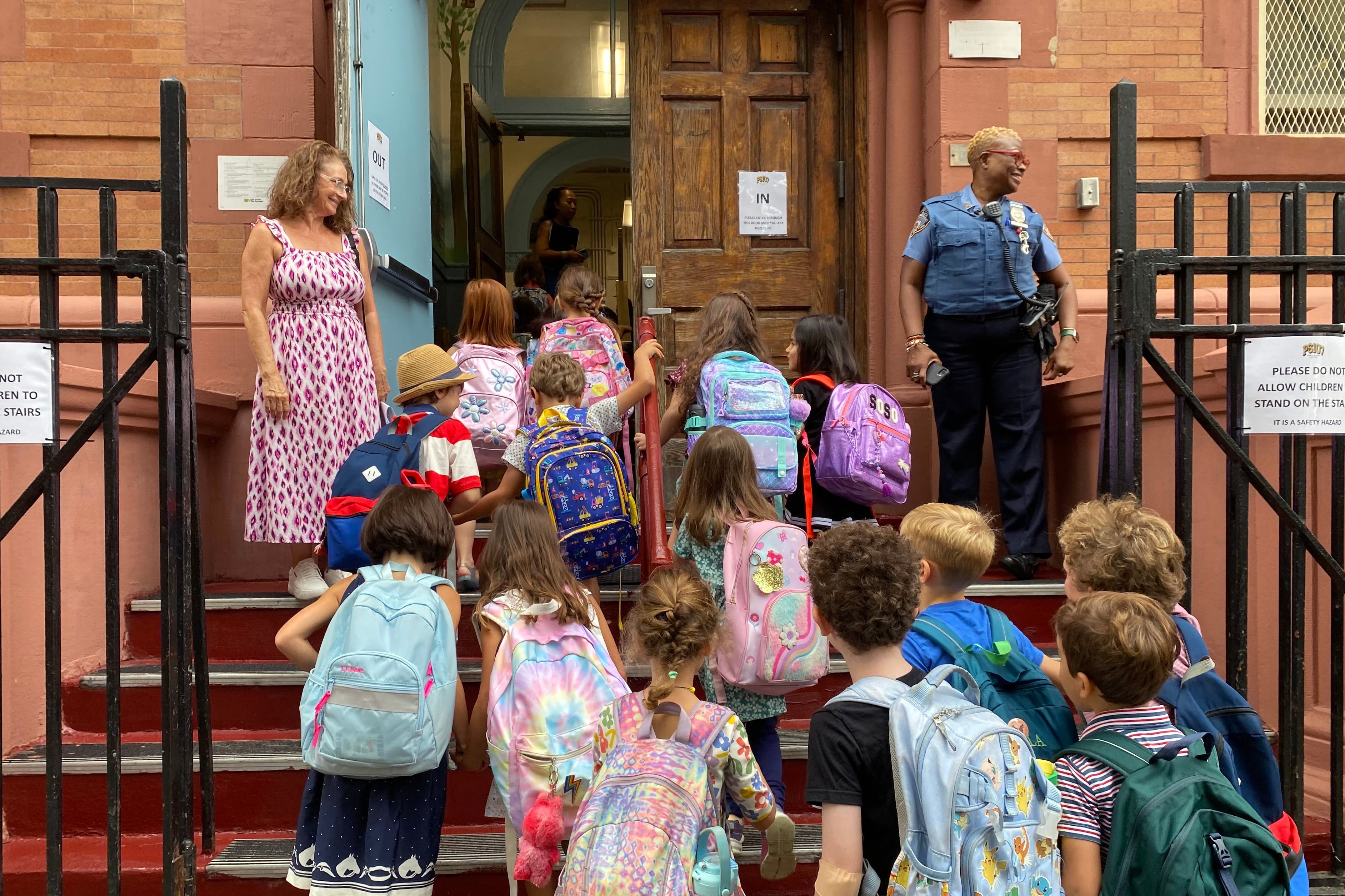
The school year started Thursday with a new policy restricting artificial intelligence and screen time for New York City’s youngest students, and many parents feel relieved.
They welcome the limits, not only for what they mean in the classroom but also for what they could mean at home: Parents hope the policy will help them rein in their children’s screen time and AI use — and potentially quell some of the battles they have with their kids over those limits.
“I really appreciate there’s a rule,” said Julia Jackson, a Brooklyn mom to twin 10-year-olds in fifth grade and twin 9-year-olds in fourth grade. “Then I can point to the rule. I’m not on my own navigating this crazy jungle of newness, of technology all the time.”
Thursday marked the start of a yearlong moratorium on student-facing generative AI tools, such as chatbots and tutors that respond to prompts, in preschool through eighth-grade classrooms. The policy allows limited AI use in high school.
For screen time, the Education Department is banning individual devices from preschool through second grade. Students in grades 3-5 can use individual devices for up to 30 minutes a day, and in middle school, the limit is 45 minutes, per the policy’s recommendations. There are no screen time guidelines for high school.
The new policy was crafted after a groundswell of parent pushback to AI and technology use in schools. When announcing the guidance, Mayor Zohran Mamdani called it the “broadest generative AI moratorium in the nation.” The next day, however, Los Angeles announced an even more restrictive policy, limiting AI use for high schoolers.
Unanswered questions, but welcome support
Questions remain. Although New York City officials plan to convene a coalition of educators, students, parents, union officials, and experts to help assess the policy and consider future changes, they have offered few specifics on how they plan to ensure schools adhere to the AI policy and follow the recommended screen time limits. Still, several parents said Thursday that they planned to use the new policy as a jumping-off point for discussions with their kids about AI use and screens.
Jackson, who considers herself “anti-screen-time,” has not allowed her kids to have phones or iPads, much to their dismay because they claim they are the only ones without such devices. She’s glad more families are trying to delay giving their kids devices, too, and hopes the school system’s policy will help shape that conversation.
“We’re trying to hold out as long as we can,” she said. “It helps that other parents feel the same way, but it’s tough.”
Bora Lee, who has a sixth grader at the Brooklyn Urban Garden Charter School and a fourth grader at P.S. 107 in Park Slope, plans to sit down with her children this weekend to discuss the school policy and set boundaries around how — and where — they use their Chromebooks. Lee said she plans to have them only use their devices in the living room, rather than their bedrooms, to keep better tabs on what they’re searching.
“It’ll be easier to have the conversations at home about screen time limits because school is setting limits, and so hopefully there will be fewer battles over it,” Lee said. “My children do better when we say, ‘Well, school says that really you should only be using 30 minutes,’ and they are more likely to stick to that guidance.”
Lee was surprised last year to find her older daughter had used AI, perhaps unintentionally when searching on Google, to write a paragraph for a school assignment. It “freaked” Lee out, she said, and prompted her to seek guidance from the school on navigating AI use.
The new guidance, however, doesn’t address students’ use of AI for homework.
Schools Chancellor Kamar Samuels told reporters Thursday that school leaders and superintendents will assess how well the overall policy is working.
“The people who know schools best — our principals, our superintendents — they’re going to be looking at what implementation looks like on a daily basis,” he said.
Samuels also emphasized that the screen time limits for grades 3-8 are guidelines and said he did not expect schools to enforce them strictly.
“The idea is not to go around and say you’re at 31 minutes,” he said, noting that the “spirit” of the policy is to move students away from screens when possible.
Not all parents and students are on board with new policies
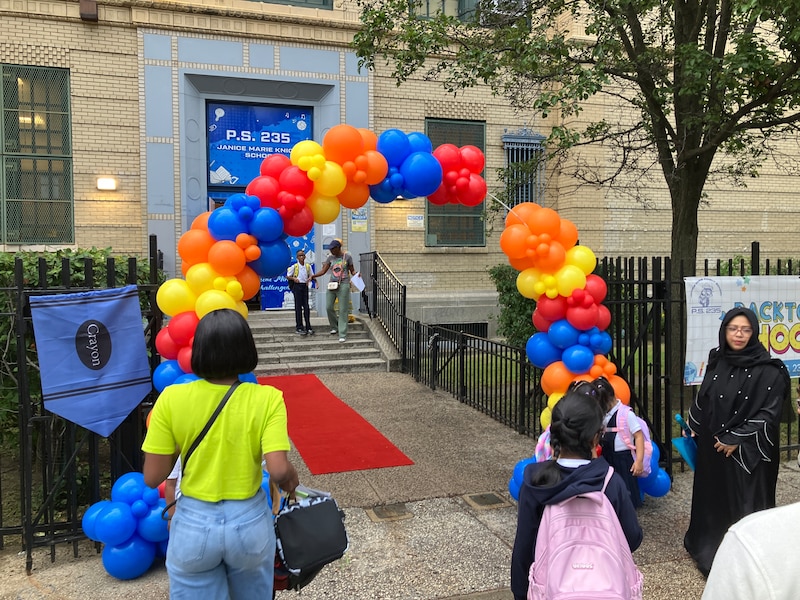
Nickel Douglas, whose fourth grader attends P.S. 235 in Brooklyn’s East Flatbush neighborhood, didn’t think AI belonged in the classroom but said her daughter has occasionally used ChatGPT to help guide her when she’s stuck on a math problem or other schoolwork.
Douglas said she was disappointed with the limits on individual devices. The school had previously provided a laptop to her daughter, which she found easier to transport to and from school than a stack of books.
“I think she learns more on the laptop,” Douglas said. “Even at home, she uses the laptop to do research.”
But Sereta Smith, another mom from P.S. 235, disagreed. “I’m old school,” Smith said. “I believe that peer-to-peer interaction is better than screens.”
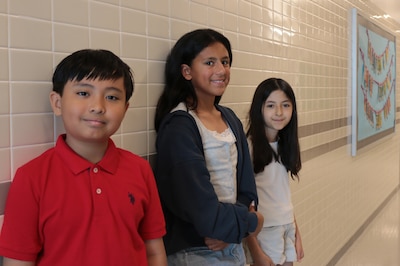
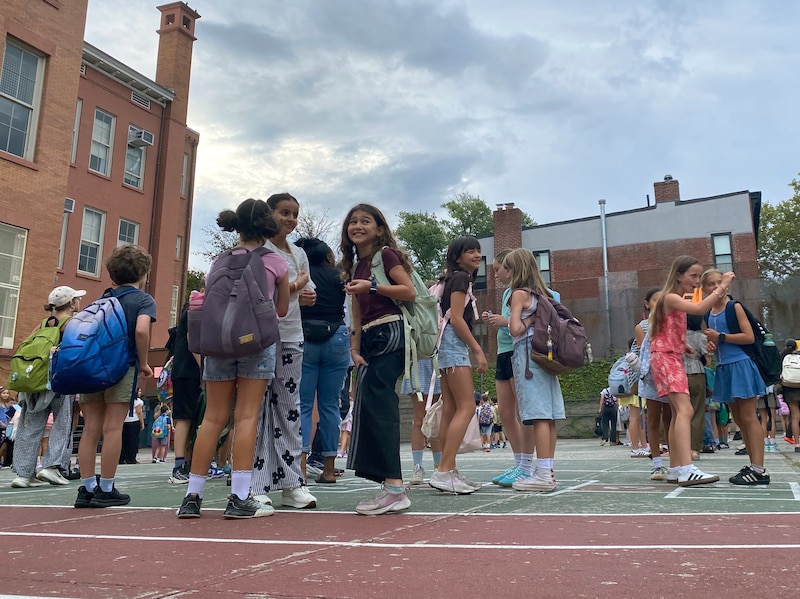
Sixth graders at P.S./I.S. 206 in Sheepshead Bay, Brooklyn, said their previous schools often used i-Ready for regular assessments and schoolwork and used other apps for reading. One student, Yasmina, said she likes how digital platforms give her more reading options. But she admitted her eyes “did kind of hurt.” She added, “I guess it helps to use devices less, so I can focus more.”
Her classmate Zay prefers print. “The actual copy’s better,” he said. “You can actually feel the book and see it in your eyes.”
Parents of high schoolers are perhaps having other conversations around AI use and screens, with more focus on responsible use.
“I’m less worried about the developmental and the biology aspects,” said Abe Asoli about his older daughter, a freshman at Brooklyn Tech. Instead, he is asking: “Are we doing this right? Are we optimizing to the best of our abilities to find that balance between relying on AI but also pursuing a healthy education?”
He also wants his daughter to be informed about technology’s potential impact on learning. The night before the first day of school, he sent his daughter an article about how reading proficiency is declining in countries around the world.
“Part of our approach is simply talking about it and creating awareness,” he said.
“All of this is just a part of the beginning of a discussion,” Asoli added. “Yes, schools will set limits, parents will set limits, and policymakers will begin to build task forces and committees, and so that’s hopefully the silver lining.”
Alex Zimmerman is a senior reporter for Chalkbeat New York, covering NYC public schools. Contact Alex at azimmerman@chalkbeat.org.
Amy Zimmer is the bureau chief for Chalkbeat New York. Contact Amy at azimmer@chalkbeat.org.