Sign up for Chalkbeat Colorado’s free daily newsletter to get the latest reporting from us, plus curated news from other Colorado outlets, delivered to your inbox.
Six decades ago, Colorado lawmakers made it easier for school districts to band together and offer services that they couldn’t afford to provide on their own.
The creation of Boards of Cooperative Educational Services, or BOCES, allowed districts to pool resources for things like special education services, career and technical education, early intervention services, gifted and talented programming, and teacher training.
Last fall, one of these co-ops proved to be a useful vehicle for a different aim — opening a school intended to test the legality of spending public money on religious education.
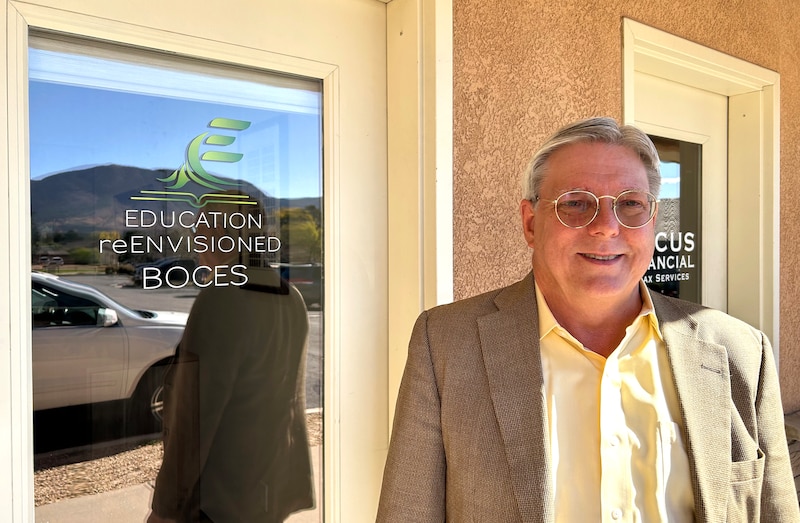
Education reEnvisioned, or ERBOCES, launched Riverstone Academy in Pueblo County with 30 elementary students in August. Billed as Colorado’s “first public Christian school,” it is the most prominent example of how its authorizer is using its BOCES status to further school choice.
The school — and ERBOCES’ recent role steering state dollars to home-schooling — is raising questions about whether these co-ops created in a different era for different purposes have too much latitude and too few guardrails.
The Colorado Department of Education’s enforcement powers are limited to certain areas, such as special education, a department spokesperson said. Most oversight falls to BOCES’ boards of directors, which can vary in how much or little they hold school operators accountable.
“Nobody in the state actually regulates how BOCES operate or what they can do,” said Ken Haptonstall, co-executive director of the Colorado BOCES Association, a membership group for BOCES.
“There’s no statutory way for the department to be able to say, ‘Oh, you’re being bad as a BOCES or you need to do this as a BOCES,’” he said.
Some lawmakers and education officials contacted by Chalkbeat said Riverstone’s creation shows school-authorizing safeguards failed — and creates a dangerous precedent.
George Welsh, executive director of the San Luis Valley BOCES, doesn’t agree with public funding for religious schools and said Riverstone’s launch by a BOCES creates a slippery slope.
“Obviously, if one can do it, why couldn’t all?” he said.
Riverstone is currently receiving state funding. But if a state audit underway now finds the school is ineligible because of Colorado’s ban on religious public school, the state could claw back the money. Riverstone and ERBOCES cited that possibility in a lawsuit filed against the state this month for religious discrimination.
BOCES exist to pool district resources
A 1965 Colorado law allowed the creation of BOCES. A year later, 14 school districts in the San Luis Valley banded together to form the state’s first one. Most states have a version of the public education co-ops, though names and formats vary.
In Colorado, BOCES are typically made up of a group of school districts from a single region. About half include a college or university. The cooperatives are governed by a board of at least five people, usually school board members from districts that belong to the BOCES. In some cases, school district superintendents can serve on the BOCES board.
Five Colorado BOCES authorize schools. ERBOCES, unlike the other four, doesn’t hire school staff or oversee day-to-day operations at its schools. Instead, it contracts with outside groups to operate them.
Some BOCES focus on offering a single service or program. One in Adams County provides insurance services to its three member districts. The only job of the Denver-based Expeditionary BOCES is to run a single school, the Rocky Mountain School of Expeditionary Learning.
“The purpose of the BOCES is it’s a collaborative,” said Welsh, who heads the 14-member San Luis Valley BOCES.
He offered an example: “We have six and a half school psychologists in our stable … and so they serve all the school districts in the San Luis Valley in terms of the identification process for special education students.”
Welsh said his BOCES also runs a program for several young adults in the valley who have significant emotional disabilities. This semester, his team launched a pilot internship program that matches high schoolers in member districts with local businesses so they can get on-the-job experience.
Like many BOCES serving small, rural districts, Welsh’s BOCES is considered a “special education administrative unit.” It’s a label that can apply to a school district or a BOCES and means that the entity must ensure special education laws are followed for students with disabilities.
Royce Tranum, the executive director of San Juan Boces, which has eight member school districts in southwestern Colorado, said one of the “curious” things about BOCES is that there are strict state rules governing some areas but not others. For example, the state carefully monitors BOCES for the job they do as special education administrative units.
“They oversee parts of what we do, but not the organization as a whole,” she said.
Education reEnvisioned is different from other BOCES
ERBOCES was founded in 2013 as Colorado Digital BOCES.
Brad Miller, an attorney who helped start the co-op, said by email that its founders “recognized that school districts are reticent to offer student-focused special schools and programs … and that a BOCES was statutorily intended for such innovations and opportunities.”
State law says the cooperatives were enacted for the “expansion of education services of the public schools” in Colorado and, where possible, to enable “two or more school districts to cooperate in furnishing services.”
But mostly, ERBOCES isn’t helping member districts achieve economies of scale.
Education reEnvisioned has three member school districts with no shared boundaries, including District 49 in El Paso County and the Montezuma-Cortez district, which is almost 400 miles away in southwest Colorado. Pikes Peak State College is a member, and the Elizabeth school district in Elbert County joined Feb 10.
Montezuma-Cortez Superintendent Eddie Ramirez wrote in an email that his district belongs to the co-op so that it can receive $10,000 in “flow-through funds” to serve English language learners.
Ken Witt, the head of ERBOCES, has long been a familiar face in Colorado’s conservative education circles. As school board president in Jeffco more than a decade ago, he was part of a three-member conservative board majority that was recalled. Later, during his tenure as superintendent in Woodland Park, there was a staff exodus and accusations of transparency lapses.
Since Witt took the reins of ERBOCES in 2017, the cooperative has grown from two schools to 10, and enrollment in those schools has grown from 2,200 to 13,500 students, a 600% increase. Many of those students come from outside ERBOCES’ member districts.
Of Colorado’s 186 school districts and co-ops, ERBOCES is the 22nd largest, serving more students than some Denver metro school districts.
In 2022, ERBOCES began authorizing state-funded home-school enrichment programs, something no other BOCES does. Such programs typically offer one day of classes or activities each week, and the state pays half the normal per-pupil rate. Today, the cooperative authorizes more than 50 such programs, with more than 8,000 students.
Witt said in a presentation last fall that 30-40 more home-school enrichment programs are in the works.
Witt sent ERBOCES’ mission and vision statements to Chalkbeat and answered a couple questions by email, but he didn’t respond to follow-up questions or agree to an interview for this story.
Some district officials have objected to ERBOCES placing schools or programs outside member districts.
The Colorado Springs School District 11 sued ERBOCES over the issue in 2020 after ERBOCES placed a new school in the district without permission. The district argued that allowing the cooperative to open schools in non-member districts without permission violated the principle of local control. In 2024, the Colorado Supreme Court ruled in District 11’s favor, saying state law doesn’t say or suggest that BOCES were meant to open schools in any district they wished.
Haptonstall, of the Colorado BOCES association, said he gets calls from people asking about ERBOCES: “Why are they opening this up in my region?”
“We always encourage them to call the Department of Education and just clarify whether or not that’s legal,” he said.
Cayce Hamerschlag, a mother from the 2,200-student Montezuma-Cortez district, said BOCES were created to provide benefits to member districts, but she doesn’t see that occurring with ERBOCES. Instead, she said it’s acting primarily as a school authorizer, drawing away students from school districts around the state.
ERBOCES’ six online schools enroll about 80 students from Montezuma-Cortez and several hundred from nearby districts, according to data shared at a recent school board meeting. Hamerschlag said when districts lose students, it creates a downward spiral. Declining enrollment leads to fewer offerings for students, the loss of good teachers, decreasing interest in neighborhood schools, and eventually a hit to the local economy, she said.
“I’m disgusted because I’m seeing the dismantling of public education here in Cortez,” said Hamerschlag, who works for San Juan BOCES in southwest Colorado but didn’t speak to Chalkbeat on behalf of the group. “I hear of it happening across the state, and my heart breaks for the students and communities that it’s affecting.”
Sen. Cathy Kipp, a Fort Collins Democrat, said by email that if Riverstone is found eligible for public funding it could set a precedent, encouraging every religious school “to seek ‘public school’ status so they can receive public dollars.”
But one lawmaker believes Colorado’s current system “too often protects institutions over students and families.”
Sen. Scott Bright, a Republican from Weld County, said by email, “BOCES and the Department of Education should not be locked in a tug-of-war; instead, the legislature ought to reinstill clear
guidance so that local partners are not forced to ‘push the edge’ of the law just to expand options for families,” he said.
How Education reEnvisioned created Riverstone
Miller, the lawyer for ERBOCES, said that BOCES “operate schools or programs at the direction of their members.”
But there’s no evidence that District 49 or Montezuma-Cortez officials requested or directed the launch of Riverstone. The school is nowhere near either district.
An email written by Miller indicates that Riverstone arose because Alliance Defending Freedom, a conservative law firm based in Arizona, sought a test case on religious public schools after the U.S. Supreme Court deadlocked in a similar case out of Oklahoma last spring.
“ADF asked me if I could find a way for a parallel case to be initiated out of Colorado,” Miller wrote in the June 4 email labeled “privileged and confidential.”
Riverstone opened two months later. Key start-up documents didn’t mention Riverstone’s religious affiliation or that it was intended to spark a lawsuit. There were no public deliberations about the idea of creating a religious public school.
The school board in the Pueblo 70 district, where Riverstone is located, did give permission for the school to locate there as required by the 2024 court decision, but the school’s real purpose went unmentioned at both meetings where it was on the agenda.
It’s not clear whether the ERBOCES board, which unanimously approves the vast majority of motions before it, discussed the school’s true purpose either. The cooperative doesn’t livestream its board meetings, and an ERBOCES employee told Chalkbeat the audio recording of the August 12 meeting where Riverstone’s contract was approved no longer exists.
Last summer, as Riverstone was taking shape, four of ERBOCES’ five board members may not have been eligible to serve on the board, based on Chalkbeat’s review of the state law on BOCES board makeup.
Jeremy Dys, a lawyer for the cooperative from the First Liberty Institute, said by email that ERBOCES Board President Lis Richard is an appointee of Montezuma-Cortez and John Graham, who recently left the board, was an appointee of District 49. Dys didn’t explain how this aligns with state law since neither had been a school board member or administrator in their respective districts for one to three years.
Dys described two other board members — Bethany Drosendahl and James Salazar — as “at large” members, which is allowed under state law provided they live in member districts. Asked why the two members live in non-member districts, Dys didn’t respond.
Salazar participated in the June vote on Riverstone but abstained from the August vote, possibly because of a conflict of interest. He was appointed president of the Riverstone Academy board in July.
None of the five ERBOCES board members when Riverstone was approved responded to Chalkbeat’s request for comment. (ERBOCES recently appointed a school board member from District 49 to its board.)
Riverstone is run by a Pueblo nonprofit called Forging Education that runs Christian private schools and home-school programs.
Witt told Chalkbeat last fall that Riverstone is a public school because it was authorized by ERBOCES, and in January, the school received a $55,000 installment of state funding. But Forging Education officials have classified the school as private on their lease, insurance policy, and other documents. The school also acts like a private school by limiting public transparency.
Quin Friberg, the local pastor who heads Forging Education and Riverstone Academy, recently told an attorney working on behalf of Chalkbeat that Forging Education is not a public entity and therefore not subject to a state law that allows news organizations and others access to public records.
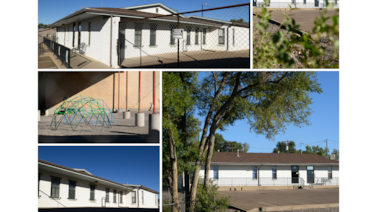
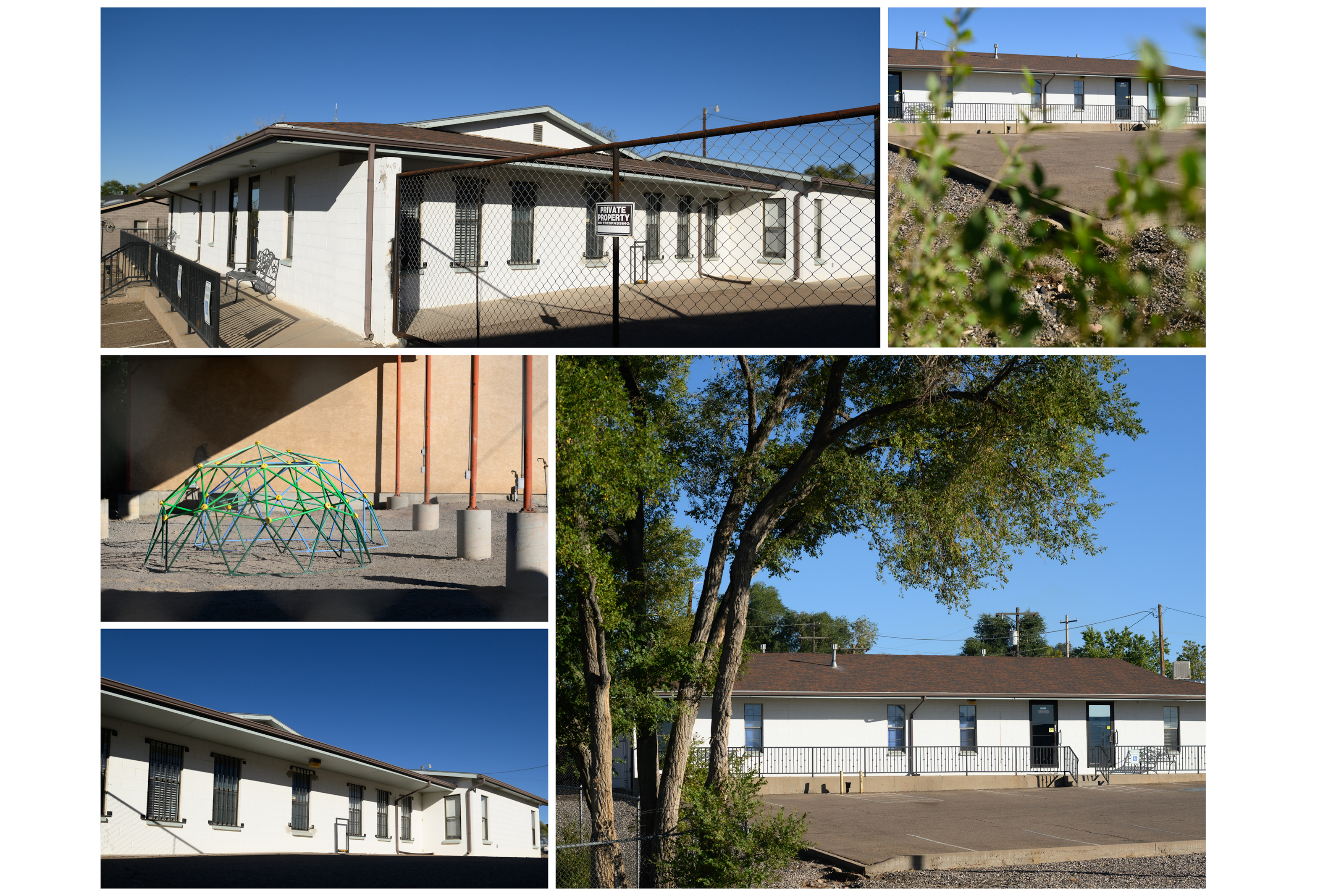
In early October, when Witt publicly announced Riverstone was the state’s “first public Christian school,” Pueblo County officials were surprised. They’d known that Friberg was interested in starting a school, but not that he’d opened it to students without ensuring the building was up to code. They quickly issued more than a dozen health and safety violations.
In late January, Riverstone leaders agreed to close the school building after orders from county officials. School leaders have since refused to disclose the school’s temporary location, and ERBOCES officials say they have no records showing the school’s current address.
Ann Schimke is a senior reporter at Chalkbeat. Contact Ann at aschimke@chalkbeat.org.