
Budget & finance

Voters will decide in November on an amendment that aims to overhaul Colorado's tax system to boost education and healthcare funding.

If passed, Proposition NN would raise money for K-12 education in the state, including teacher pay and funding smaller class sizes. Previous measures asking voters to increase funding for schools have failed.

With a median home price of roughly $550,000 in the state, a new program aims to help public school employees buy their first homes and stay in the communities where they teach.
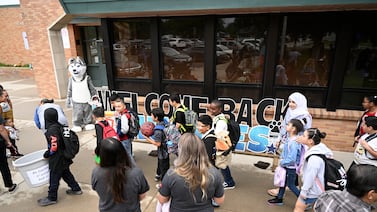
Jeffco Public Schools is asking voters to consider $133 million in tax increases as the district faces a looming budget shortfall.
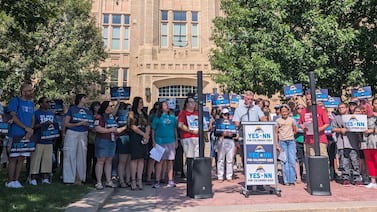
About 100 educators, parents, board members, and students rallied on Friday to start a statewide “yes” campaign for Proposition NN. If passed, the November ballot initiative would raise billions more for schools.

Here's a roundup of education bills that passed and failed this legislative session and how they could affect teachers, school districts, and others in school communities across the state.

“I can’t say it will be next year,” Superintendent Alex Marrero said at a meeting last week. “I have good confidence that it could be the following year. Surely the year after that.”

The one-time cut in the 2027-28 budget has sparked fears that lawmakers could decide to make cuts permanent in future years.
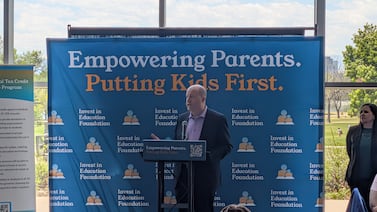
Colorado Gov. Jared Polis said the state shouldn’t decide which organizations are “worthy” of receiving money from the federal tax-credit scholarship program.

Colorado lawmakers decided to end the Teacher Recruitment Education and Preparation program to save money. They now plan to allow one last group of high school students to use it.

Some higher education leaders say the state’s current higher education funding formula has prioritized funding stability over how well schools serve students. They hope the newest iteration will change that.

Colorado lawmakers sought to preserve the core of K-12 funding in the budget process. The School Finance Act offers more details about how schools would be funded in the 2026-27 school year.

Lawmakers on the state’s budget committee have proposed eliminating the Teacher Recruitment Education and Preparation program. The program pays for about 250 students a year to stay enrolled in high school while going to college for teaching.
Spending on K-12 schools would increase to $10.2 billion statewide, or about $184 million more than this year.

Senate BIll 145 updates state law to create a uniform standard in how districts consider charter school needs on voter initiatives that raise money for school improvements or new facilities.

Colorado's CMAS social studies test is administered only at select schools to fourth and seventh graders. Two draft proposals under consideration by the Joint Budget Committee would either eliminate the test or cut state requirements back to test only seventh graders.

A bill aimed at enhancing data privacy for children would also subject online gaming add-on transactions to a 5% fee.

Colorado lawmakers said the ballot measure created by the bill wouldn’t raise state taxes. Instead, it would ask voters to allow the state to reserve some Taxpayer Bill of Rights money for schools.

Although a group of lawmakers say they’re committed to keeping funding promises, district officials worry that the state’s $850 million budget shortfall will force a shift.

The Colorado Succeeds proposal would fully separate Pinnacol Assurance from the state, with $150 million going into a trust to help residents gain job skills.