The Detroit school district settled contracts with six non-teachers unions Friday that include pay raises and onetime bonuses.
The one-year agreements provide a 2% salary increase and a onetime $2,000 payment. The $2,000 payments will be issued before the holidays, according to the district’s statement released Friday.
As of Monday, the full contracts were not available online. Some unions have already ratified the agreements, while others have yet to vote. Once the agreements are ratified by all six unions, the 2% pay raises will go into effect in early 2021.
District Superintendent Nikolai Vitti said the agreements are part of the district’s efforts to prevent layoffs, wage and salary reductions, or salary stagnation.
Vitti noted that the increases are not enough and said school officials will continue advocating for more state funding to boost employee pay.
The agreements cap off months of negotiations between the district and its non-teachers unions, which represent about 2,729 workers across 133 job classifications. They include paraprofessionals, clerical staff, aides, bus attendants, cafeteria workers, and campus police officers.
In October, school officials reached a one-year agreement with the Detroit Federation of Teachers, which represents about 4,000 educators. That agreement included a 2.74% wage increase, $1,500 bonuses for some employees, and bonuses for retirees returning to the district and long-term substitutes.
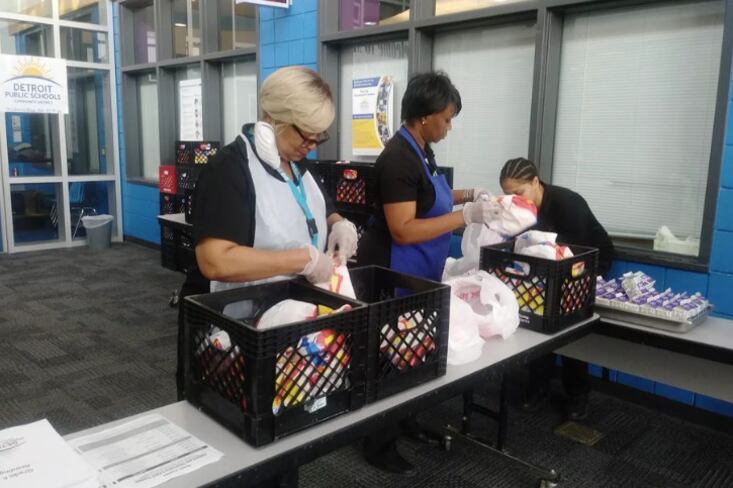
A district spokesperson said cafeteria workers are exempt from the 2% salary increase because of a revenue shortfall. The district’s food and nutrition budget is funded based on the number of meals consumed by students at schools, and those numbers dropped this year due to the shift to remote instruction. Instead, cafeteria workers will receive $1,000 in hazard pay and the $2,000 bonus.
“I’m satisfied that we have come together to come to an agreement. People worked so hard for this tough year,” said Donna Jackson, who leads the Detroit Federation of Paraprofessionals, which represents food service workers.
“I think it was great they were able to do something like this for the employees. This isn’t easy; none of it is easy right now. I’m pleased with what we were able to accomplish with the school system,” said Joseph Valenti, the president of the Teamsters union, which represent police officers, warehouse workers, and van drivers who transport students with special needs.
Although she’s pleased to have won some benefits for union members, Stephanie Carreker expressed some frustrations. Carreker is the head of the Detroit Association of Educational Office Employees, which represents the district’s clerical staff.
“Two percent for us is not a lot of money,” she said, noting that clerical staff are hourly employees. “I’m not pleased, but I’m OK with it.”