Sign up for Chalkbeat Detroit’s free newsletter to keep up with the city’s public school system and Michigan education policy.
As the sound of fireworks boomed around Detroit neighborhoods to mark the end of Ramadan Thursday night, Humayra Ahmed stayed up late weighing a heavy decision.
The 17-year-old had not yet decided if she would miss school at Cass Technical High School the next day to observe the sacred Muslim holiday Eid al-Fitr. If Ahmed didn’t go to school on Friday, she would not be eligible to receive a $100 perfect attendance incentive from the Detroit Public Schools Community District. She said she needs the money to cover the costs of activities for the end of her senior year.
Ahmed and other Muslim students in the district have expressed frustration over missing out on the attendance incentive for observing Eid, which can be celebrated for up to three days. The observances commemorate the end of Ramadan, a month of fasting, prayer, gatherings, and time with family. Eid is not recognized in the district’s calendar this year, despite years of student advocacy. However, observance is considered an excused absence.
“We’re not asking for the whole month off for Ramadan – it’s one day to celebrate with family and feel closer to God,” said Ahmed. “We still continue to show up to school while we are fasting to get the work done and score good grades.”
Superintendent Nikolai Vitti said in an email the district is “committed to including Muslim holidays in the calendar next year.” He added that will depend on factors outside of the district’s control, such as union negotiations.
The holiday is based on the Islamic lunar calendar, which means it falls on a different day each year.
The district’s attendance incentive began last year as one of its efforts to combat chronic absenteeism, which is defined as a student missing 10% or more of the days in a school year. In a typical 180-day school year, it amounts to about 18 missed days of instruction.
Students missing too much school due to systemic barriers such as inadequate transportation, chronic illness, and parents’ work schedules has long been an issue for communities like Detroit, where 84% of students come from low-income homes.
Last school year, nearly 61% of DPSCD students were chronically absent.
This year, students who showed up to each class every school day for a week got $100 Visa gift cards. There were 10 weeks students could get the incentive this year, giving them a chance to earn up to $1,000. This week is the last of the incentive, which is given in the winter and early spring months when attendance tends to drop due to inclement weather.
Vitti previously said the incentive helped improve attendance last year, with nearly half of all high schoolers receiving a payment.
Studies suggest attendance incentives may have minimal effects because researchers said the programs do not address demotivating factors like unsafe routes to school.
The district’s attendance incentive does not make exceptions for any excused absences – whether they are for religious holidays, chronic illnesses, deaths in the immediate family, or college visits.
Both excused and unexcused absences are included when the state calculates chronic absenteeism.
Vitti told Chalkbeat the district relied on state guidelines regarding which absences contribute to chronic absenteeism when it created the incentive.
Students, educators, and advocates asked during public comment at multiple board meetings this school year for a 2026-27 calendar without classes on the holiday.
Vitti said including Eid in the district’s 2026-27 calendar may require an agreement with unions to shorten midwinter break. Some other school systems in Metro Detroit, home to one of the country’s largest Muslim populations, do so to accommodate students.
Another option, said Vitti, is “adjusting the midwinter break and/or spring break” next year. Having a spring break that does not occur from March 29 through April 2, 2027, as mandated in the Wayne Regional Educational Service Agency’s common calendar, would require a waiver from the Michigan Department of Education and union approval, he added.
It is unclear what adjustments to the breaks the district may consider.
“We do not want to extend the school year into mid to late June by adding days off to the calendar because this leads to worsening student attendance, behavioral issues, and the risk of temperatures being too high in most of our schools,” he said.
After years of student calls for change, DPSCD recognized the holiday for the first time in its 2021-22 calendar. Union negotiations and considerations for extending the school year upended plans for observances other years.
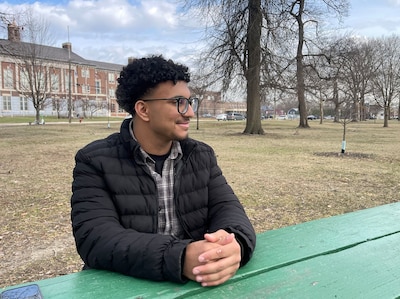
Muneer Taher, a Muslim Western International High School senior, planned to miss school on Friday. Instead, he planned to wake up early to go to a Mosque for hours of prayer, lecture, and spend the rest of the day practicing the tenets of Islam.
Taher exchanged emails with Vitti expressing his and his peers’ frustrations over not getting the attendance incentive.
The superintendent’s explanation of union calendar negotiations and why exceptions could not be made for excused absences fell flat to the 18-year old.
“There are a big number of Muslim students in DPSCD, and accommodating those students will help the community,” he said.
Ultimately, Ahmed, the Cass Technical senior, decided to attend school Friday. She said she needs the money to pay for an outfit for her senior pinning ceremony and supplies for an upcoming Muslim Interscholastic Tournament.
“I think it’s just unfair,” she said. “But I have this financial strain weighing on me.”
Hannah Dellinger covers Detroit schools for Chalkbeat Detroit. You can reach her at hdellinger@chalkbeat.org.