Did you know search engines like Google are changing the way you see news? Keep Chalkbeat’s valuable education coverage at the top of your feeds by clicking here and checking the box next to our name.
Months after Colorado officials began investigating a specialized school for allegedly improperly restraining students, former employees allege that the school has overcorrected.
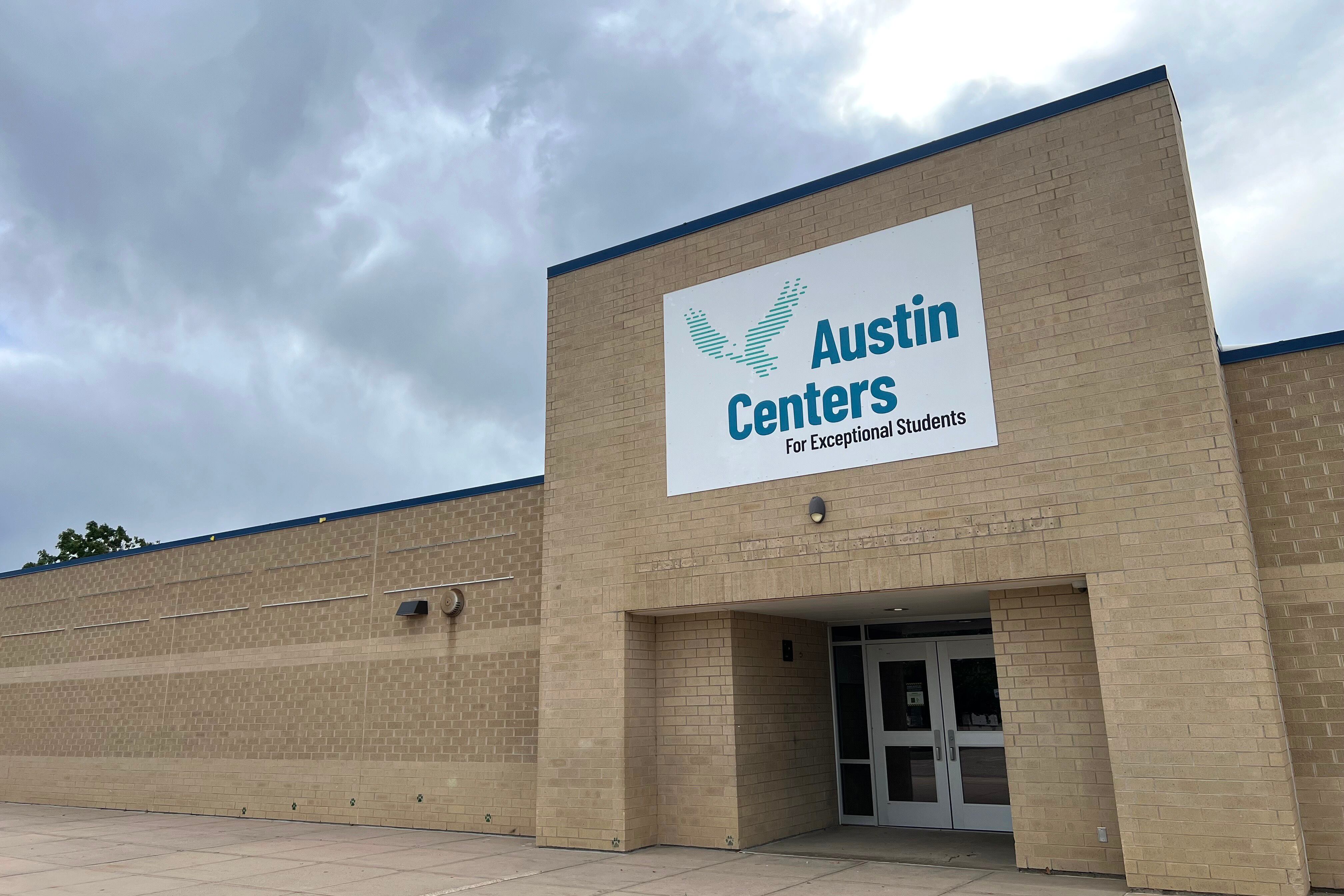
Four employees who left the Austin Centers for Exceptional Students in Westminster this fall told Chalkbeat they felt unsafe because of what they perceived as a shift in how the school handled challenging student behavior. Last school year, the former employees said they worried that the school was restraining students too often and too forcefully — concerns that sparked a review by the Colorado Department of Education that is ongoing. But this school year, the former employees said they became concerned that the school was being too lax.
“It was coming to the point that a lot of students were in risky situations and staff were in risky situations,” said Evelyn Her, who left in September after working for two years as a paraprofessional at the privately owned school, which serves public school students with severe needs.
Her and other former staff members described students fighting with each other, punching staff members, throwing feces, and running out of the school, concerns and incidents that are documented in police reports and emails to state officials. Westminster Police Department records show that the police were called six times in the first six weeks of the school year for reports that students had run away or had punched or kicked school staff.
“The best way I can describe to you what’s happening right now is Tom and Jerry,” said Roberta Ayala, a former teacher who in a complaint to the National Labor Relations Board said she was fired in September after trying to organize a meeting of her fellow employees.
“You know how Jerry just runs around and does all sorts of antics and Tom tries to catch him?” she said. “That’s what’s happening right now.”
In a statement, The ACES said its Westminster campus has a new principal who “has placed increased emphasis on consistency in school practices, clear staff expectations, meaningful academic engagement, and accountability.” The school said it also has a new behavior intervention specialist who works with students and staff on how to handle individual situations.
“Student and staff safety remain fundamental priorities at The ACES,” the statement says.
The shifting approach at The ACES is an indication of the difficulty of serving a population of students for whom schools like this are often a last resort. It also shows that scrutiny from state officials has already resulted in change before any investigation is complete, but that the change may have brought about a new set of concerns. At the same time, advocates are frustrated with the pace of that investigation and rulemaking meant to increase oversight.
At a recent meeting of a state oversight board, The ACES’ new principal, Michaele Pansza, talked about “a cultural shift happening at The ACES campus.” She gave kudos to the staff who she said were driving the change.
“They are not looking backwards,” Pansza said, adding that, “I will always do what is best for our students, no matter how difficult this transition might be.”
Advocates are frustrated by the pace of investigations
The ACES is what Colorado calls a facility school. Such schools are commonly run by nonprofit or for-profit organizations and serve students with intense needs whom public schools can’t or won’t serve. For years, the number of facility schools was dwindling. To reverse that, state lawmakers created a new, less clinical type in 2023 called a specialized day school. The ACES was one of the first approved.
Less than two years after The ACES opened, school districts complained to the Colorado Department of Education about the school’s use of “unnecessary force” after some parents reported that their children were coming home with scratches and bruises.
Restraining students is legal in Colorado, but parents expressed concerns about how The ACES did it. One parent told Chalkbeat his 11-year-old son, who has autism, said staff would hold him in a position he called “the crucifixion,” flat on his back with his arms and legs pinned.
In January, state officials put The ACES under a rare corrective action plan that forbade the school from using restraint as punishment, putting “excess pressure” on a student’s chest or back, or holding a student for more than 15 minutes.
In April, the state informed The ACES that it was opening a “broader review” due to the “volume and nature” of the information it uncovered. Officials said they would aim to complete the review in 90 days — and if they found The ACES lacking, the state could withdraw the school’s funding.
But that broader review was put on hold in May when a pair of advocates filed a state complaint on behalf of six students. Education department officials informed The ACES that because the issues in the complaint were “substantially similar” to the issues in the broader review, the latter would be temporarily suspended.
“When the state complaint is resolved, CDE will determine whether to close or continue the review and notify ACES of its decision,” Paul Foster, the assistant commissioner of exceptional student services, wrote in a June letter to The ACES.
It has now been six months, and the department has given itself multiple extensions to complete the complaint investigation. Advocates are getting frustrated.
“Who from the Office of Facility Schools has visited The ACES unannounced to see what is actually happening inside this facility you all approved?” advocate Meryl Duguay asked state officials during a recent public meeting.
That office had not done any surprise visits to The ACES between June and the end of September, Chalkbeat learned through a public records request. But the department did visit on Nov. 4, according to a letter it sent to advocates last week informing them of another extension. The letter says the department has “conducted numerous interviews of parents, as well as current and former Facility School staff and administrators.”
A Colorado Department of Education spokesman said the department is “continuing to review allegations” involving The ACES, including from the current school year.
“Because these investigations are ongoing, we cannot comment on specific allegations, potential findings or actions CDE may take,” spokesman Jeremy Meyer said by email.
The ACES said it is cooperating.
“We welcome visits and monitoring from CDE and the Office of Facility Schools, whether announced or unannounced, and remain committed to addressing any findings or recommendations that may result,” the school said in a statement.
Some members of a state facility schools oversight board are frustrated, too. Concerns about The ACES prompted the board to rewrite the rules for all facility schools, a lengthy process that is underway. The proposed rules would tighten the approval process, increase monitoring, and allow the state to defund a facility school and remove its students if the school breaks the rules.
But until the new rules are in place, the board can’t sanction The ACES.
“It feels like the rules — we have to let it go for now, but we’ll do better next year, which I am personally infuriated with,” Megan Coggins, a board member who works for Jeffco Public Schools, said at a meeting last month. “Children are being impacted.”
The ACES says it is emphasizing de-escalation
Several former staff members at The ACES pointed to what happened to T.J. Staggs as an example of the downside of the school’s new approach. Staggs worked at The ACES for two years as a paraprofessional. He alleged that he left the school in September after he got punched in the face by a student, which he said left him with a black eye and a loose tooth.
But Staggs said it wasn’t the punch or the injuries that caused him to leave. He said it was the environment that allowed the incident to happen and how school leadership treated him afterward, which he described as “a bit of victim blaming.”
When staff asked for more training on managing student behavior in the wake of the state scrutiny, Staggs and other former staff members said The ACES provided refresher courses on how to properly restrict students’ movement by restraining them.
“We should have been prioritizing prevention,” Staggs said.
In a statement, The ACES said it does not comment on individual student incidents or personnel matters “out of respect for the privacy and confidentiality of our students and employees.”
The ACES said it has updated its restraint and seclusion policy and put more emphasis on training its staff in positive behavioral intervention, trauma-informed care, and de-escalation techniques. The school said it has used restraint on “very few occasions” this year and that its current approach emphasizes verbal de-escalation, “environmental modifications,” and giving students access to calming spaces where they can regulate their emotions.
“There have been occasions when we have determined that contacting law enforcement was the most appropriate response to ensure student and staff safety,” The ACES said. “These decisions are made based on the circumstances of each incident, with the safety and well-being of everyone involved as our primary consideration.”
Melanie Asmar is the bureau chief for Chalkbeat Colorado. Contact Melanie at masmar@chalkbeat.org.