Did you know search engines like Google are changing the way you see news? Keep Chalkbeat’s valuable education coverage at the top of your feeds by clicking here and checking the box next to our name.
The schools Indianapolis Public Schools is planning to close tend to be smaller and have been losing students faster than other district-run and charter schools in the area, according to a data analysis by Chalkbeat.
In addition, the six schools tend to perform slightly worse than their peers on state standardized tests. And overall, they have a slightly greater share of non-white students and students who qualify for subsidized meals, a federal measure of poverty.
Those statistics tell just part of the story behind the attempt by IPS to balance its budget by closing schools while it still largely controls its own future. The plan unveiled Tuesday would require nearly 2,000 students — roughly 10% of district enrollment — to move to new schools and programs, unless they choose to leave IPS. A brand-new building meant for elementary students would instead house a career center. A popular and high performing elementary International Baccalaureate program would close.
And in a grim irony, schools that absorbed students displaced by IPS school closures three years ago would soon close themselves.
At the Tuesday meeting announcing the closures, Johnson said the decisions were made in part based on enrollment trends, building and transportation capacity, and program alignment. The district also sought to keep its enrollment zones and grade bands intact.
But Johnson also noted that the district has a narrow window of opportunity to sell school buildings at market value before the 2028-29 school year. That’s when the elected school board will lose control of buildings to the Indianapolis Public Education Corporation, or IPEC, which will eventually oversee facilities, transportation, and accountability for district-run and charter schools.
The plan released Tuesday could give the district six buildings to sell or repurpose, including several in rapidly developing areas of Indianapolis.
The IPS board is slated to vote on the plan at its Dec. 8 meeting. The schools IPS is proposing to close after this school year are:
- Ralph Waldo Emerson School 58
- Robert Lee Frost School 106
- Benjamin Harrison School 2
- Longfellow Middle School
- Frederick Douglass School 19
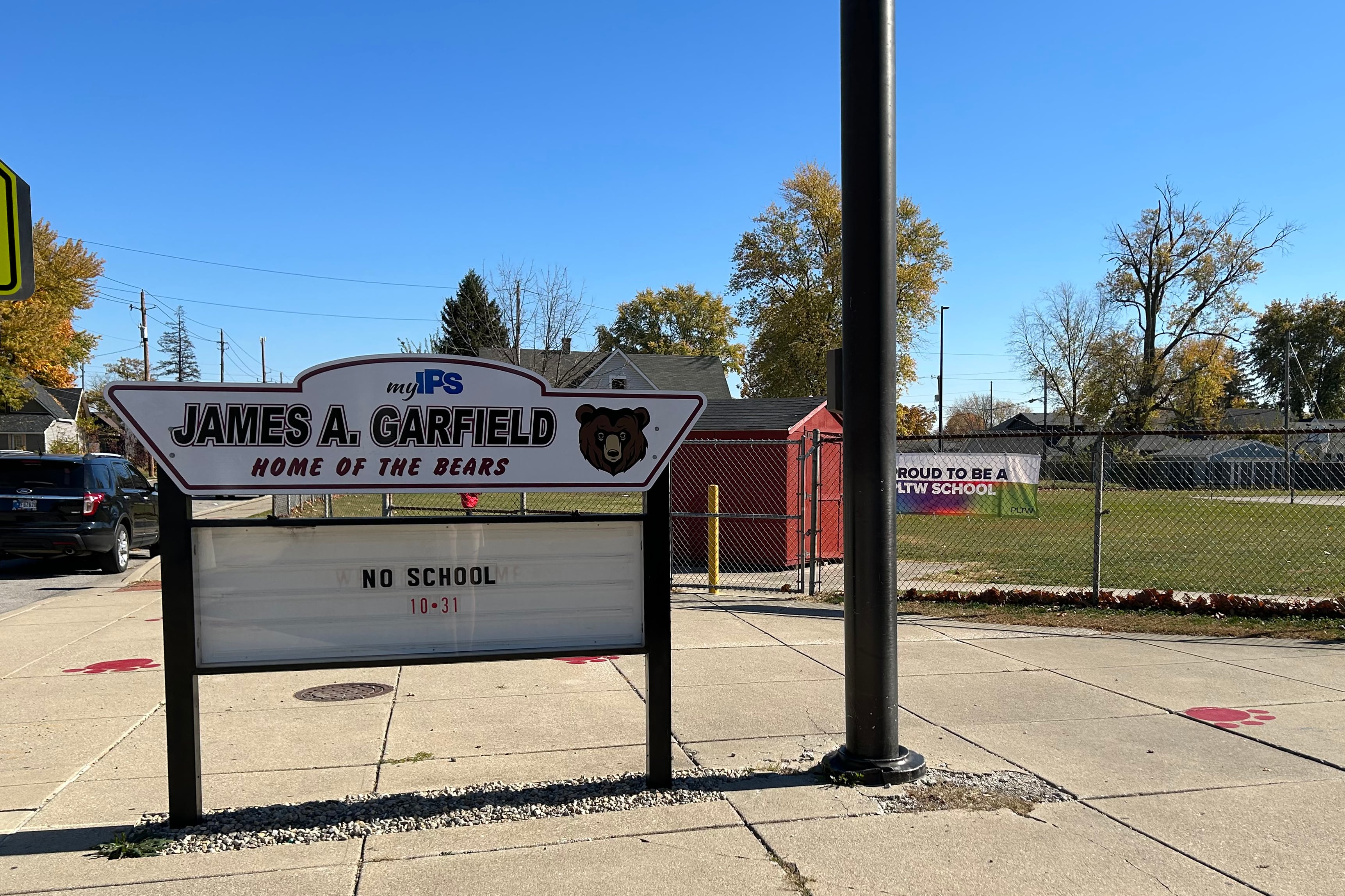
- James A. Garfield School 31
In addition, some programs would move into the spaces that the schools above would vacate.
Margaret McFarland Learning Academy (MMLA) and Positive Supports Academy would move to James A. Garfield School 31.
The high ability program for elementary students would move from Merle Sidener Academy 59 to the Benjamin Harrison School 2 building that formerly housed CFI 2.
The district had previously proposed moving Sidener from its northside location to a location that’s more central within the district. Most recently, Sidener was expected to move to a brand new building at Joyce Kilmer 69. But that building would instead house a career center under the district’s proposal.
The closures will also affect dozens of teachers and staff who are awaiting more information about placements, according to the district.
IPS did not immediately answer several key questions about details of the plan, including whether the new Joyce Kilmer building would need updates to house a career program.
IPS also did not immediately answer questions about the speed with which it decided on the closures. Before the board adopted the Rebuilding Stronger , compared to a much longer process during the Rebuilding Stronger campaign in 2022. That process involved several months of community meetings before the district ultimately closed six schools.
The district did not say it was considering academic performance in its closure decisions — but the issue could play a role in future closures under an accountability system being developed by IPEC. Under that system, the corporation could recommend closing chronically underperforming IPS and charter schools within IPS borders. But IPEC has not released details about how it intends to measure academic growth.
IPEC also would not say whether the closures announced by IPS this week would sufficiently address enrollment issues and stave off future closures by IPEC. The new corporation has the power to reassign underenrolled buildings.
The IPS board meets on Thursday at 6 p.m.
Aleksandra Appleton covers Indiana education policy and writes about K-12 schools across the state. Contact her at aappleton@chalkbeat.org.