Did you know search engines like Google are changing the way you see news? Keep Chalkbeat’s valuable education coverage at the top of your feeds by clicking here and checking the box next to our name.
Hundreds of New York City students still lack assigned school bus transportation more than two months into the academic year, education officials told City Council members Wednesday.
Roughly 2,000 students started the school year without bus service, and 467 remained without assigned transportation as of Wednesday, officials said at an oversight hearing. Most of the students initially affected have individualized education programs, or IEPs, that require transportation to and from school.
The figures point to persistent problems in a system that carries about 150,000 students daily, even as officials pour more money into busing. The city spent $2.1 billion on student transportation in fiscal year 2026, up from $1.46 billion five years earlier, and has budgeted $2.28 billion for fiscal year 2027. City officials had warned of potential bus shortages before classes began in September.
Kevin Moran, the Education Department’s deputy chancellor for school operations, acknowledged that “too many families have experienced delays, route changes, staffing shortages, or gaps in service.” He attributed some gaps to transportation requests submitted after an Aug. 6 registration deadline, including for students who moved, changed schools, or had their transportation needs updated.
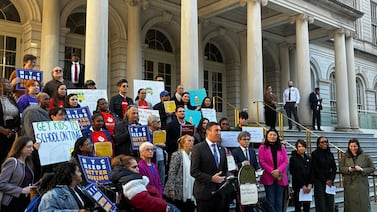
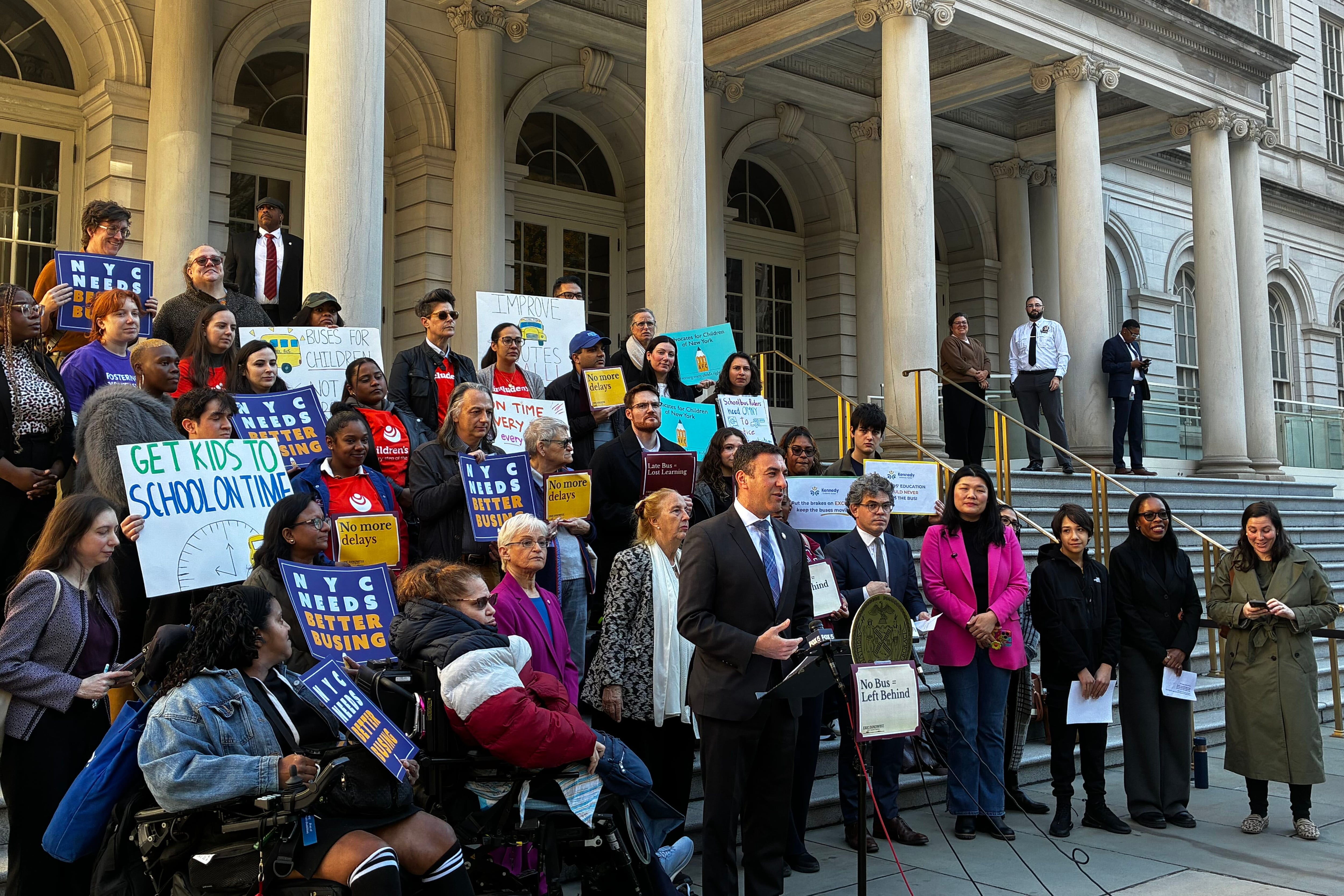
Before the hearing, dozens of parents, students, advocates, and elected officials rallied on the steps of City Hall to demand better bus service. The gathering, organized by the Road to Better Busing Coalition and ARISE Coalition, featured signs reading “NYC needs better busing” and “Late bus = lost learning.”
Parents described how transportation problems have disrupted their children’s education. Divya Mathew said the bus for her 7-year-old daughter, who attends a private school for students with disabilities, routinely arrived 30 minutes to more than an hour late at the start of the year. The delays threatened her daughter’s speech and occupational therapy services, Mathew said, so she began driving her daughter to school. Mathew said she filed nearly 25 complaints to the Education Department’s Office of Pupil Transportation before the problem was resolved.
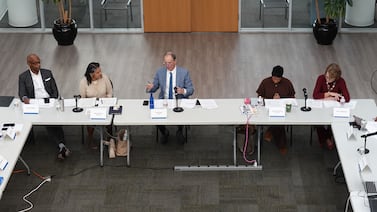
At the hearing, Council Member Eric Dinowitz, who chairs the Education Committee, called unreliable bus service a “perennial issue.” He described a student whose bus arrives an hour before school ends, forcing the family to choose between missed instruction and paying for private transportation.
“It is heartbreaking and unconscionable to receive emails and phone calls that a child didn’t get on the bus because it never came,” Dinowitz said.
Moran said every route that lacked a driver on the first day of school now has one, and the city has offered temporary rideshare transportation to some families awaiting bus assignments. He cited a parent survey showing nearly 90% satisfaction with transportation during the 2025-26 school year.
But staffing gaps remain for students who need additional support. More than 350 students are still waiting for the paraprofessionals their IEPs require to accompany them on the bus, officials said. Paraprofessional shortages have previously left students with disabilities unable to attend school.
Students with assigned routes face problems, too. Council Member Lincoln Restler said nearly 90,000 bus routes were delayed last school year, about 500 per school day, and said 56,000 students experienced delays of more than an hour.
Restler and Dinowitz are sponsoring legislation requiring the Education Department to publish monthly data on early, late, and missed pickups and drop-offs on a public dashboard. The data would go beyond the department’s existing vendor report cards, which initially lacked on-time performance figures. Education Department officials said they support the bill’s intent and want to work with the council on a feasible reporting timeline. Council members discussed the measure Wednesday without taking a vote.
Lawmakers scrutinize NYC school bus oversight
In 2019, the city contracted with Via Transportation to modernize its school bus system, including tracking buses and students and developing more efficient routes. The contract is now valued at $51.7 million, but the promised route optimization software remains unfinished years after its original deadline. Asked why the city still uses older routing software, education officials said the COVID-19 pandemic interrupted development and the department had not been ready to integrate some features into its systems.
Contractor oversight has also drawn scrutiny. A December 2025 comptroller audit found the department failed to consistently use available data to identify problem routes and hold bus companies accountable. The city could have assessed $44.3 million in penalties for violations of GPS tracking requirements during the 2024-25 school year, the audit found, but assessed just $1.7 million.
Drivers must log into the city’s tracking app, which launched in 2024, so families can locate their children’s buses. Moran said officials initially held off on penalizing some bus companies for GPS tracking violations because of technical problems and training needs. The department has since assessed about $270,000 in tracking penalties, he said, and drivers now log in about 93% of the time.
That scrutiny could shape the city’s next round of bus contracts. Last November, the Panel for Educational Policy approved three-year contract extensions after a dispute that threatened to disrupt bus service. The agreements expire in 2028, and City Council members have called for new contracts with companies committed to improving service.
Samantha Olander writes about Newark and New York schools.