Sign up for Chalkbeat Indiana’s free daily newsletter to keep up with Indianapolis Public Schools, Marion County’s township districts, and statewide education news.
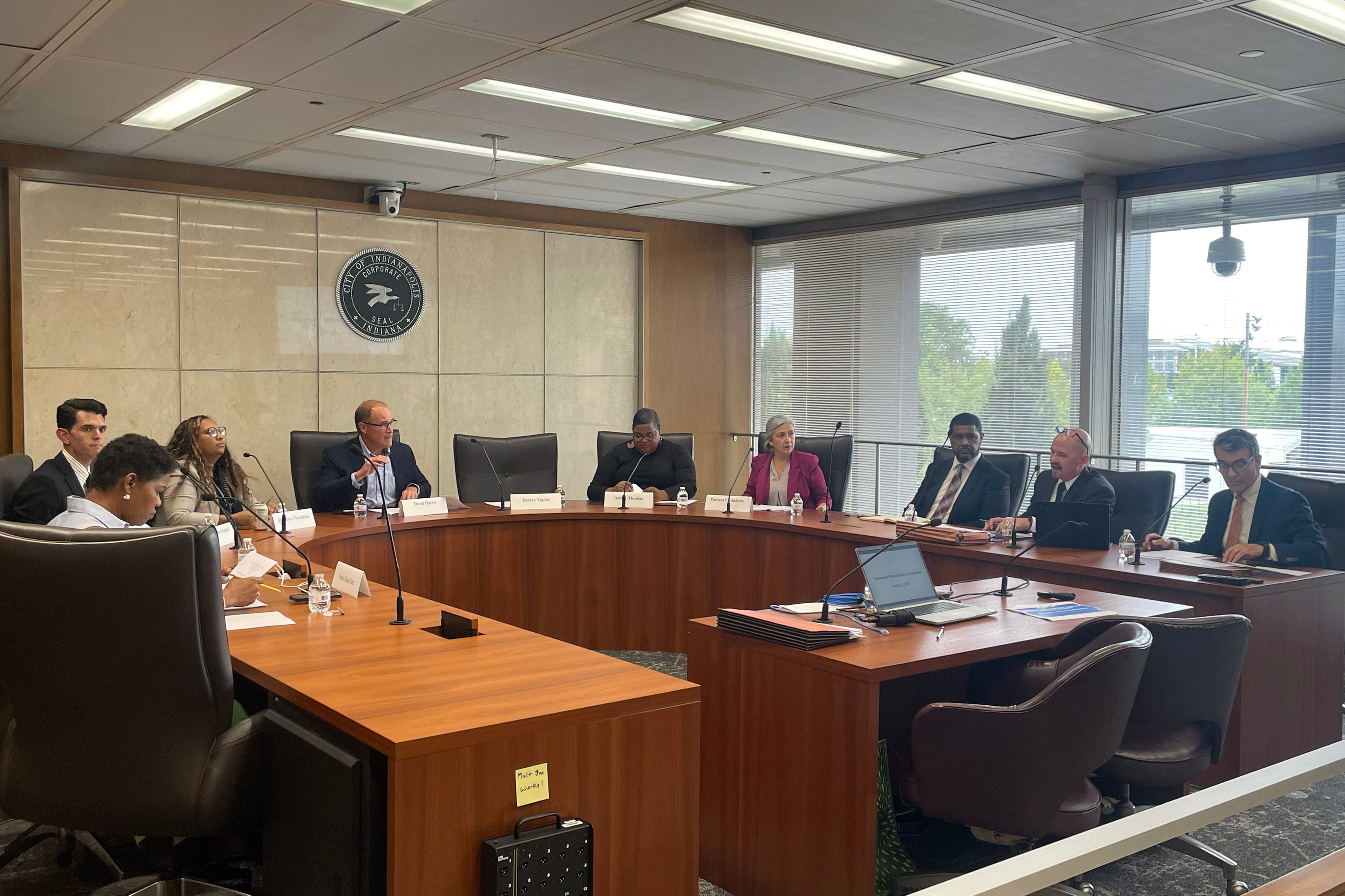
The Indianapolis Public Education Corporation will pay its executive director a salary of $285,000.
In a unanimous vote, IPEC members approved the salary for Karega Rausch, who was hired in July. His start date is Sept 17.
IPEC and Mayor Joe Hogsett announced last week that Andrew Strope would join as executive vice president. IPEC chair David Harris said Wednesday that the board was “extraordinarily fortunate” to have both staffers on board. It’s unclear if IPEC will hire more employees in the future.
Rausch comes to IPEC with a background in charter schools, similar to a majority of the IPEC board members, while Strope spent the last four years as deputy superintendent for Indianapolis Public Schools.
Strope helped to lead the district’s high school redesign, the reopening of schools after COVID-19, and the Rebuilding Stronger initiative. He was a finalist for the IPEC executive director role.
The duo will work with the IPEC board as it creates plans for an accountability system, transportation, and buildings for IPS and city charter schools, as required by state law adopted this year. IPEC is responsible for putting a property tax referendum on the November ballot to provide revenue to both IPS and charters and for creating its own budget.
Rausch’s compensation package includes a cellphone allowance, city benefits, and paid time off in line with city executives, acting executive director Michael O’Connor told IPEC members. However, other details such as vehicle use, specific holidays, and incentive bonuses are all things for the board to consider in the future, he said.
O’Connor told the board Wednesday that Strope’s compensation is not final, but his salary will likely be in the $250,000 range, and he is expected to start between Aug. 26 and Sept. 1.
Per state law, IPEC’s funding for an executive director, staff, and consultants comes from property tax revenues used for operating expenses for IPS and participating charter schools.
O’Connor’s contract with the city is through the end of the month. He originally started to lead the Indianapolis Local Education Alliance, a precursor to IPEC, through brainstorming sessions in 2025 at a rate of $40,000 a month. His contract was renewed twice since then at the same rate, he said.
IPEC is not expected to meet in September and will meet twice in October, O’Connor said. Those meeting dates are not set.
MJ Slaby oversees Chalkbeat Indiana’s coverage as bureau chief. Contact MJ at mslaby@chalkbeat.org.