Sign up for Chalkbeat Indiana’s free daily newsletter to keep up with Indianapolis Public Schools, Marion County’s township districts, and statewide education news.
Indianapolis Public School students can receive a zero on assignments again, but only if they make zero effort to complete them.
The IPS school board updated the district’s grading policy to remove the district’s no-zero grading policy for students in first through 12th grade in a unanimous vote on Thursday.
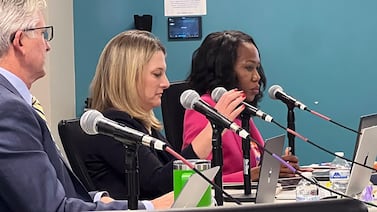
The change comes about six years after the no-zero policy was implemented and is largely due to teacher feedback, said Lela Simmons, IPS chief learning officer, during the school board’s agenda review session on Tuesday.
Now, students can receive a zero on an assignment if they make no attempt to complete it after getting multiple opportunities and support from the teacher. How that works is up to the teachers and will depend on the student and their grade level, Simmons said.
If students make a good faith effort, they will earn at least 50%, Simmons said. Anything 59% or lower is an F, while other letter grades are about 10 points each. For example, anything 90% or higher is an A and grades between 80% and 89% are a B. Earning at least 50% on an assignment makes it more likely students will pass the class.
She said the aim is to continue to give students opportunities to do better and try again.
The no-zero policy was approved in July 2020 and meant that the lowest score students could receive was 50%.
“The intention of that shift was because it is incredibly hard for students to come back from zeros in their grades,” Simmons said.
She said the change was also in response to the COVID-19 pandemic which led to students learning virtually and missing assignments for related reasons such as quarantine.
The policy had multiple critics, including some IPS staff and parents who said it was difficult to implement and to identify students who needed support. Simmons told the board that teachers said the change didn’t prepare students for college.
Based on that feedback, Simmons said the new policy is a “happy medium.”
MJ Slaby oversees Chalkbeat Indiana’s coverage as bureau chief. Contact MJ at mslaby@chalkbeat.org.