Sign up for Chalkbeat Newark’s free newsletter to get the latest news about the city’s public school system delivered to your inbox.
Newark Public Schools is considering a three-decade, $498 million property lease to open a school in the East Ward, as the district waits for the state to deliver on new buildings.
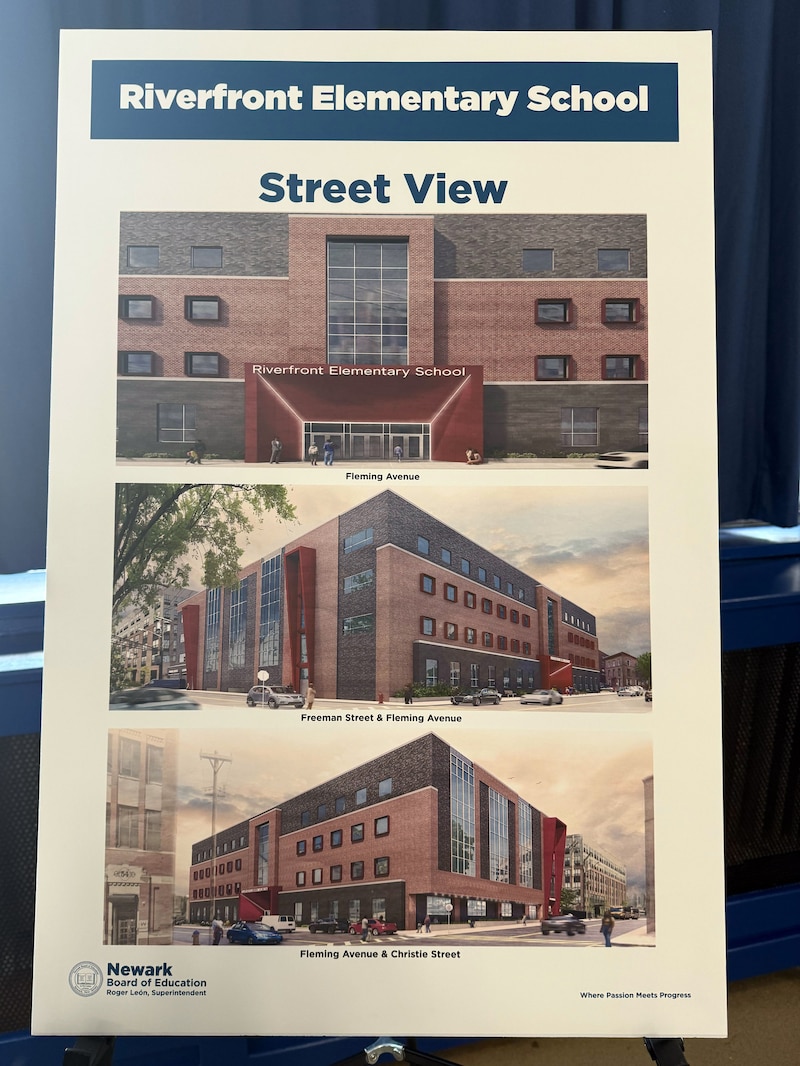
The new Riverfront Elementary School building would take over an entire block and be constructed from the ground up, said Valerie Wilson, the district’s school business administrator, during Wednesday’s school board hearing on the proposed school.
The proposal highlights the district’s efforts to ease overcrowding in Newark schools, particularly in the city’s East Ward, Newark’s most densely populated neighborhood, where new housing developments are underway.
The district would lease the property from 56 Freeman Street LLC, which owns and would manage the project at 56 Freeman St. across from St. Aloysius Roman Catholic Church. The district would have the option to purchase the building at the end of the agreement at a price yet to be determined, Wilson said.
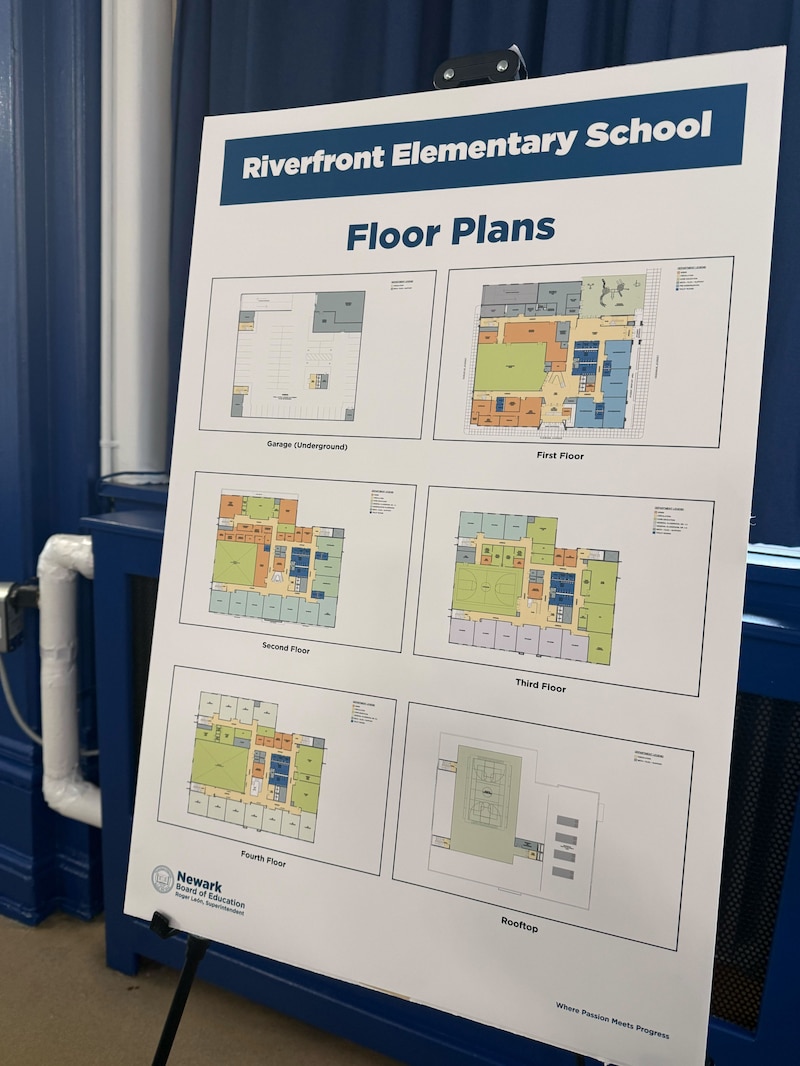
The new Riverfront school would take over an entire block, more than 150,000 square feet, and serve 667 students, district leaders said during the hearing. Envisioned as a four-floor building, the school would include an underground parking garage with approximately 60 parking spaces for staff, an enclosed rooftop playground for students, and pre-K and early childhood learning classrooms, as well as a full gym with locker rooms.
The district would spend over $1 million a month in rent for the property over 30 years, Wilson added.
The state is responsible for building new schools in Newark but the law allows the district to lease property to build a new school, Superintendent Roger León added.
The proposal highlights the challenges Newark has with the state when it comes to building new schools. Newark is one of 31 high-poverty school districts in New Jersey that are legally barred from building their own schools. That responsibility lies with the state’s Schools Development Authority but that agency lacks the funding to move forward on projects it has already identified in Newark and other high-poverty districts.
Several of the district’s oldest schools are in the East Ward, and require updates to maintain their infrastructure.
“We know that our schools are not providing enough seats,” Vereliz Santana, the school board’s co-vice president, said during the hearing.
The authority has built nine new schools in the district since 2006, including two in the East Ward: Oliver and South Street schools.
Mary Filardo, the executive director for the 21st Century School Fund, a nonprofit organization advocating for the modernization of public school facilities, said the Newark school district is in a “complicated spot” because not only is it trying to maintain old school buildings, but it is also responding to urgent problems like overcrowding through alternate solutions as it waits for the state to construct new buildings.
During Wednesday’s hearing, an East Ward-based real estate agent and a former school board candidate were the only people to raise questions about the new proposal.
Brendan Da Silva, a Newark based real estate agent said the proposed cost of the lease “seems outlandish.”
“The Newark Board of Education should be focused on education, not trying to navigate complex real estate deals without strong, independent oversight,” Da Silva added.
Yolanda Johnson, a former school board candidate and education advocate, asked why the district was considering investing in a new school when many of the district’s current schools “are in need of repairing.”
During the meeting, Superintendent Roger León noted how the district has been working to repair and maintain existing schools, including those in the East Ward, where the schools are 151 years old on average.
Board member David Daughety acknowledged that the East Ward needs a new school to minimize overcrowding, but asked for more transparency about the proposed cost. Board member Kanileah Anderson agreed and asked if the district had compared costs with other developers in the area.
After Wilson highlighted the district’s work to replace boilers at Arts High School and Chancellor Elementary School, along with facade repairs at East Side High School, León said, “We’ve already spent $400 million on all district school repairs.”
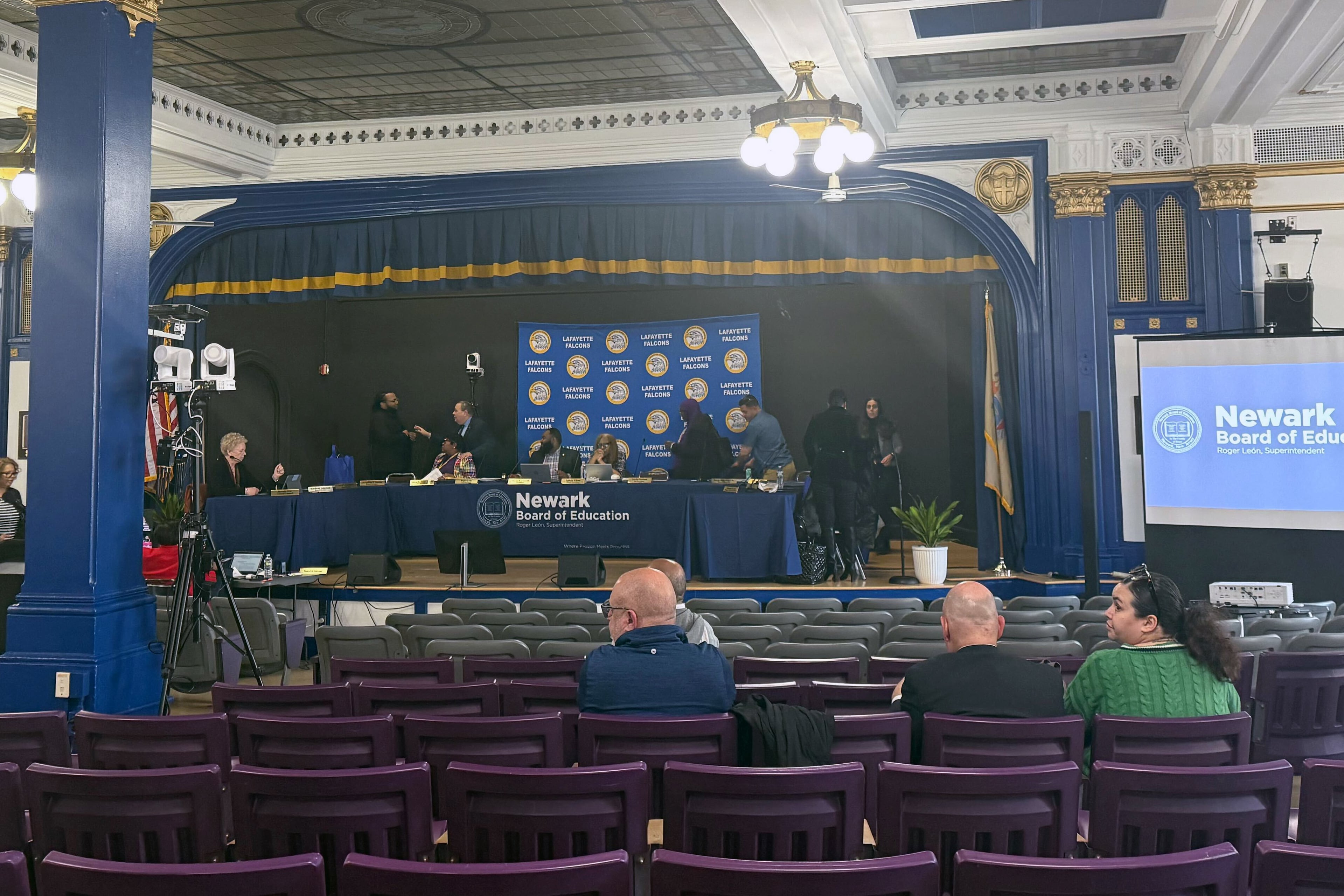
At the end of Wednesday’s hearing, the Newark school board unanimously voted to submit their plans to the New Jersey Department of Education, the state’s local finance board, and the Office of the State Comptroller for approval.
If the state approves the plans, the terms of the lease will be finalized and then the school board will hold a final vote on the lease, Board President Hasani Council said.
If approved, Riverfront Elementary School would be the second new school in the East Ward since the Newark School of Architecture and Interior Design opened in September through a 30-year, $300 million lease also funded with district dollars.
That school opened after a three-year delay, a problem Filardo says is not uncommon in the construction world.
“They’re complicated development deals. So districts should anticipate these kinds of problems and build into their contracts and their agreements and their processes, all of the kind of accountability and sort of due diligence,” Filardo added.
The SDA has promised to pay to replace Newark’s oldest school buildings, but the work to replace those buildings has not yet started.
The SDA receives funding through bonds, direct appropriations, and on a “pay-as-you-go” basis from the state legislature, but would not receive new funding under Democratic Gov. Mikie Sherrill’s proposed $60.7 billion budget this year.
Senator Majority Leader M. Teresa Ruiz, a Democrat, introduced a bill in February that could help unlock $10.5 billion to help fund school construction across all New Jersey school districts.
If approved, the bill would authorize a November ballot item asking voters to approve new state bonds for school construction, expansions, and renovation projects in all districts. Specifically, the bond would allocate $7 billion for high-poverty districts and $3.5 billion for grants in other districts.
Jessie Gómez is a reporter for Chalkbeat Newark, covering public education in the city. Contact Jessie at jgomez@chalkbeat.org.