Did you know search engines like Google are changing the way you see news? Keep Chalkbeat’s valuable education coverage at the top of your feeds by clicking here and checking the box next to our name.
About half of Aims Community College’s students report they don’t have insurance, are underinsured, or on Medicaid. Half also say they face mental health challenges.
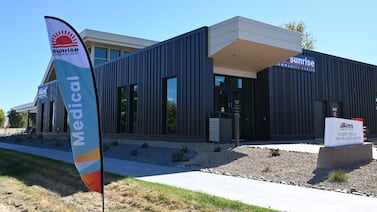
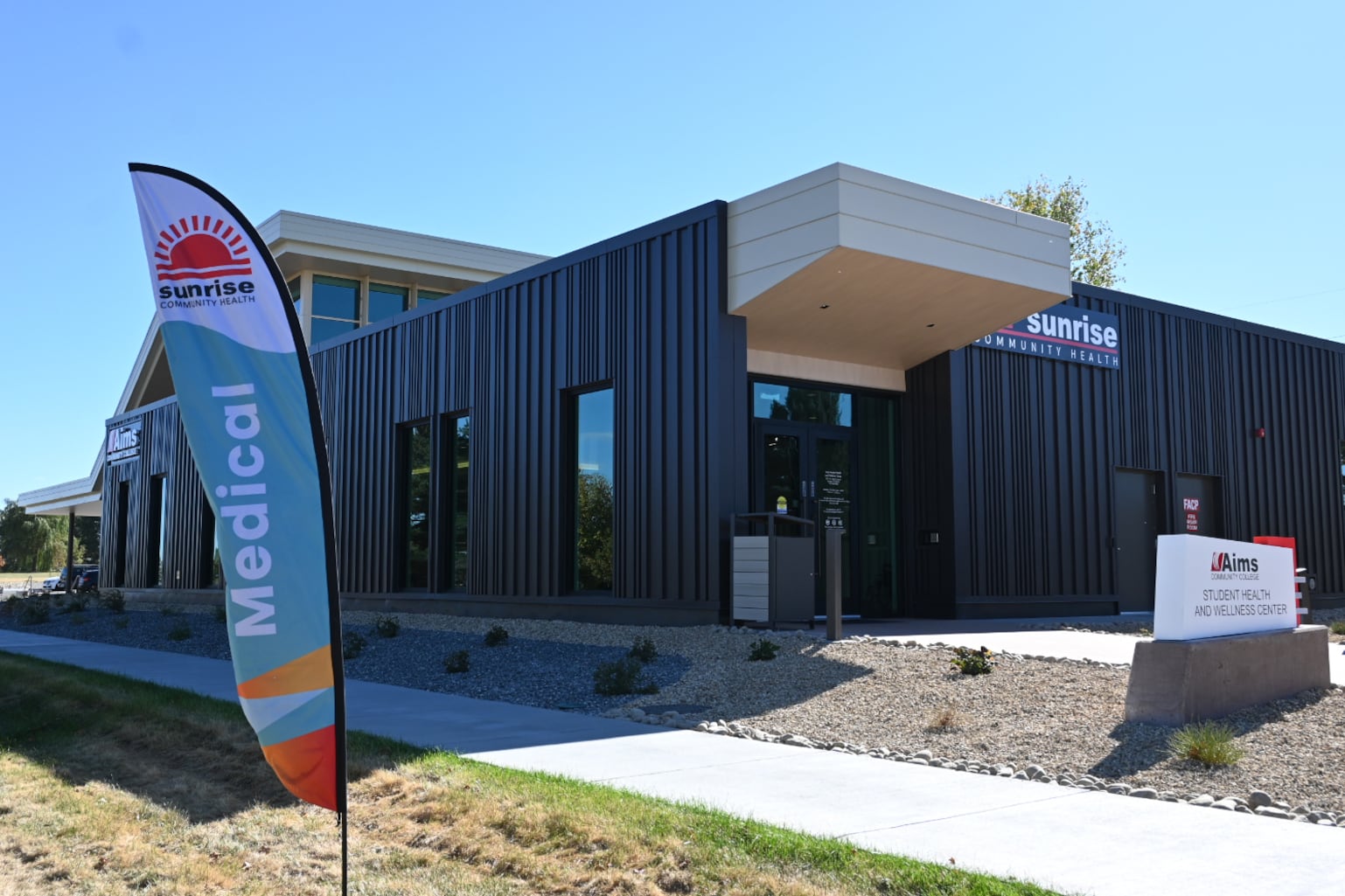
To address those student needs, officials at the two-year college in Greeley took an uncommon step for a community college; they built an $18.4 million, 30,000-square-foot Student Health and Wellness Center that offers low cost mental, dental, and physical health services.
Aims’ investment addresses a gap in community college support. Just 16% of two-year institutions offer on-campus medical services, compared with about half of four-year universities, according to an American College Health Association spokesperson. Research by the association shows access to mental and physical health resources can improve students’ likelihood of graduating.
The building, opened in August, is meant to offer students on-campus healthcare options and a one-stop shop for additional services such as addiction support and therapy, said Larry Pakowski, vice president for student affairs.
“We want students to focus on what it is that they’re trying to accomplish here,” he said. “And we want to take some of that burden off of students.”
The clinic on the building’s ground floor operates four days a week and is run by Sunrise Community Health, a local Greeley nonprofit health provider. It has 13 exam rooms and five dental treatment rooms.
Sunrise staffed the site with one physician to start and already has plans to add a second doctor because of demand, he said. Students with insurance typically only have to pay a copay of up to $20 and Sunrise Community Health offers financial assistance programs and payment plans based on what students can afford, Pakowski said.
On the building’s top level, students have access five days a week to therapists and an addiction resource center staffed by students. It also offers soundproof spaces where students can relax and private rooms for breastfeeding mothers.
Since the pandemic, colleges have reported that more students are struggling with mental health. There’s less data available on students’ physical health challenges.
Many colleges have food banks or mental health counseling but struggle to offer students more help such as healthcare, transportation, or childcare. Some two-year schools have found ways to offer free health events or drop-in clinics, often with limited services and sometimes led by students.
Red Rocks Community College in Lakewood provides a free community health clinic. Pakowski said Aims took inspiration from Pueblo Community College, which opened a campus medical center in 2007, after Aims students said in surveys they wanted the health clinic.
Demand for services has increased at Aims in recent years. In 2025-26, the school provided 685 students with basic needs assistance, such as food or housing resources, and 1,540 students scheduled mental health counseling sessions.
Since the building opened, student demand ticked up again compared to the same time last year, Pakowski said. Aims saw a 17% increase in students requesting basic needs and a 46% increase in mental health counseling visits. Plus, students can also now schedule healthcare visits, he said.
The building has made a difference for student Lyndon Reyez, 31. The single mother recently took her daughter in for a teeth cleaning before they both went to school. She also used the clinic’s mental health services when she felt overwhelmed by her responsibilities as a student, mom, and student government employee.
“I am not making another phone call to another provider, having to sit around and find someone,” Reyez said. “When I needed help, I came here, and they helped me the same day. They gave me all the resources that I could possibly need.”
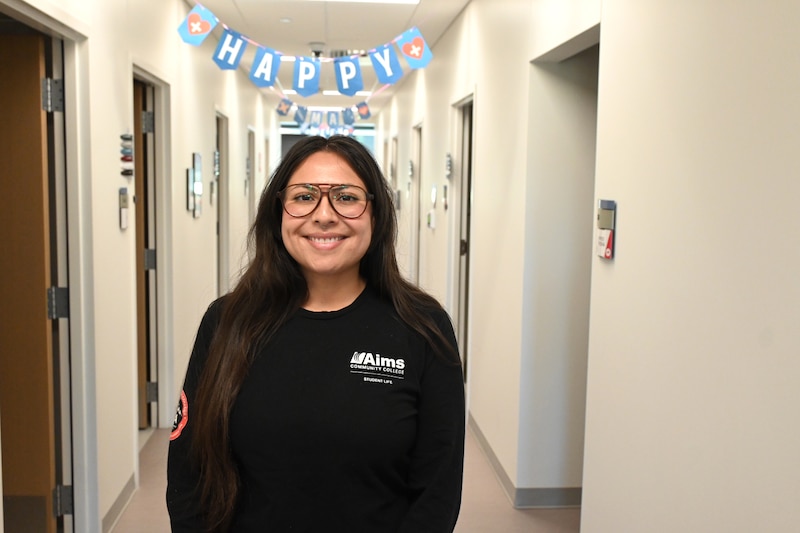
Aims had previously offered basic needs and mental health counseling services near its student commons area. Pakowski thinks the central location may have stopped some students from seeking help if they were afraid to be seen. The new building was built on a patch of grass on the south side of campus, away from other buildings but still within walking distance.
The building is inviting and convenient, Reyez said, because “you can just take a nice walk across campus and no one really knows what you’re coming for.”
Kady Hanson, a student who works in the center that helps students with substance use and other disorders, called Arty’s Recovery Connection, said students don’t need to be scared or overthink seeking help now. The building is helping normalize the idea that everyone needs a little help, Hanson said.
Jason Gonzales is a reporter covering higher education and the Colorado legislature. Chalkbeat Colorado partners with Open Campus on higher education coverage. Contact Jason at jgonzales@chalkbeat.org.