This story was originally published on July 16 by The City Reporter. Sign up here to get the latest stories from The City Reporter delivered to you each morning.
The City Council voted unanimously to approve a one-time $10,000 payment to most of the public school paraprofessionals on Thursday, an effort to boost retention and recruitment for the badly-needed – but low-paying – jobs with students.
But Mayor Zohran Mamdani, who could try to stop the bill, said it is in “direct violation” of state labor law.
The bill was sponsored by nearly every member of the Council, and passed 49 to 0, with two members absent.
$244 million price tag
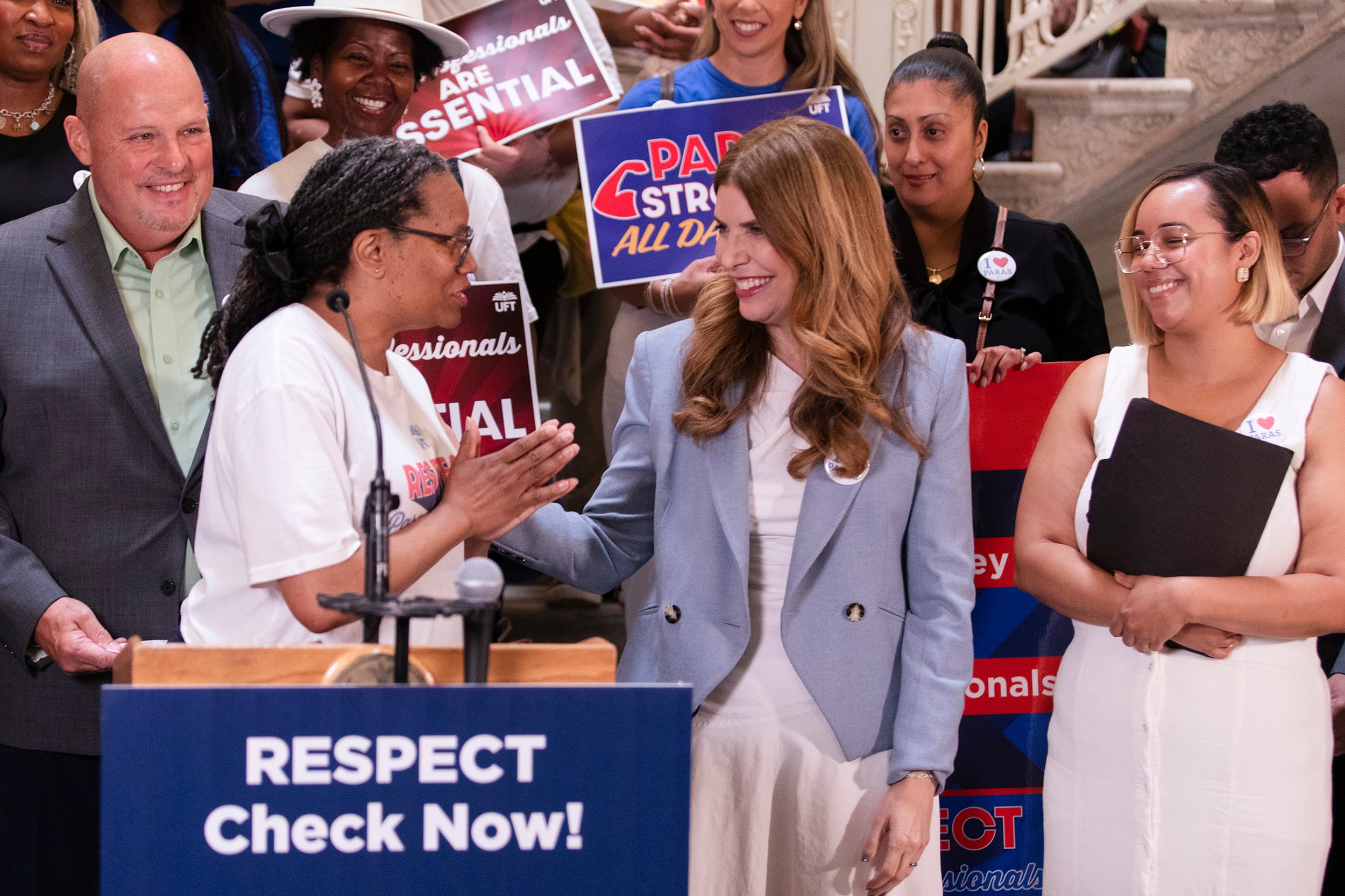
“This is a mandate from the entire city of New York. This is a mandate because we heard the numbers — $32,000 starting salary, in the most expensive city in the world,” Councilmember Carmen de la Rosa, the bill’s lead sponsor, said at a press conference earlier in the day.
“We know that we are in the throes of an affordability crisis, the way we can quell some of the issues of poverty is by putting money directly into people’s pockets,” De La Rosa said. “And this is what this bill does.”
The “Respect” check, as it’s called, would give public school paraprofessionals $10,000 in four installments, starting on Jan. 1, 2027, and going through Aug. 1 of the same year. Substitute paraprofessionals would have their money pro-rated based on how many days they worked.
The cost to the city would be around $244 million for payments to an estimated 26,000 paraprofessionals. The starting pay for paras is around $34,000, and rises to a top rate of more than $56,000 within 15 years, according to the United Federation of Teachers.
Labor law conflict?
Mamdani — who, as a candidate, supported an earlier version of the bill — expressed concerns as mayor over any payment made outside collective bargaining while also praising the work of paraprofessionals.
“I have been clear that questions of compensation are best resolved through the collective bargaining process that respects workers and their unions,” he said in a statement after the vote. “However, the Council’s passage of this legislation is in direct violation of the Taylor Law. Our administration is reviewing the final language carefully and working to determine the appropriate next steps.”
The mayor could veto the bill, but given the strong support in the Council they could then vote to override his veto.
United Federation of Teachers President Michael Mulgrew said Thursday that the bill was written in a way to not run afoul of the state labor law. The bill, he said, is a last-ditch effort to help his workers.
“We would prefer to do this through collective bargaining, but you need a willing partner on the other side,” Mulgrew said.
Katie Honan covers New York City Hall for The City Reporter and is co-host of the FAQ NYC podcast.