
Did you know search engines like Google are changing the way you see news? Keep Chalkbeat’s valuable education coverage at the top of your feeds by clicking here and checking the box next to our name.
Aside from P.E., Merci Ames didn’t like school much as a kid.
What was the point? How would the lessons ever be relevant to her life?
“I just always felt like there were so many other fun and interesting things to do than go to school,” she said.
Ames’ love of basketball, and parents who valued education, helped get her through. Today, she teaches science at Strasburg High School on the Eastern Plains and draws on those feelings of youthful ambivalence in her work.
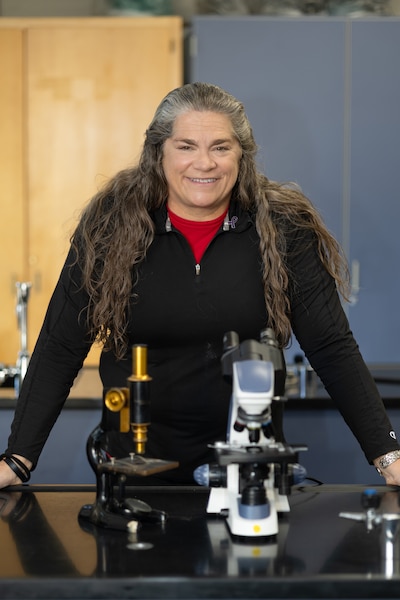
“I understand that not every student is going to love school or every subject we teach, and that’s OK,” she said. “They may never need to remember the specific steps of cellular respiration, but the ability to think critically, evaluate information, and ask good questions will serve them throughout their lives.”
Ames, who in October was named Colorado’s 2027 Teacher of the Year, talked to Chalkbeat about a biology lesson where students roleplay RNA, her approach to motivating players on the basketball team she coaches, and the family that pushed her to seek work-life balance.
This interview has been edited for length and clarity.
Was there a moment when you decided to become a teacher?
When I was in college, I helped with youth basketball camps and tutored students. I discovered that I really enjoyed working with young people, helping them learn something new, and watching that moment when something finally clicked.
After all these years, that’s still one of the things I enjoy most about teaching: Seeing students develop confidence, try new things, and accomplish something they didn’t believe they could do.
How did your own experience in school influence your approach to teaching?
I didn’t always enjoy school growing up. I loved PE, but I can’t say I was particularly excited about most of my other classes. I think it’s important to show students that there are multiple reasons for learning science and not all of them have to do with the actual content.
I relate this to situations students will encounter in their own lives. At some point, they are going to be sitting in a doctor’s office, either for themselves or someone they love. I want them to be able to reasonably understand what is being discussed, feel comfortable asking questions, and know how to research information rather than simply accepting something they don’t understand.
Another reason for helping students understand the value of what they’re learning is that they may think they know what they want to do after high school, and that’s great. But they’re young, and their interests, goals, and circumstances may change.
I don’t want a student to miss out on an opportunity down the road because they decided at 16 that they would never need biology or another subject.
Tell us about a favorite lesson to teach.
One of my favorite lessons is an activity in molecular biology called “Protein Synthesis and Words.” Protein synthesis can be really difficult to understand because everything happens at the molecular level. Students can’t actually see what’s happening inside a cell, so it can be pretty abstract.
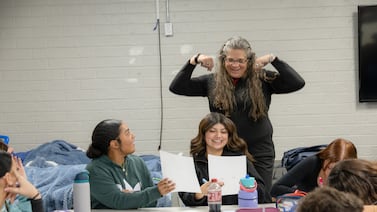
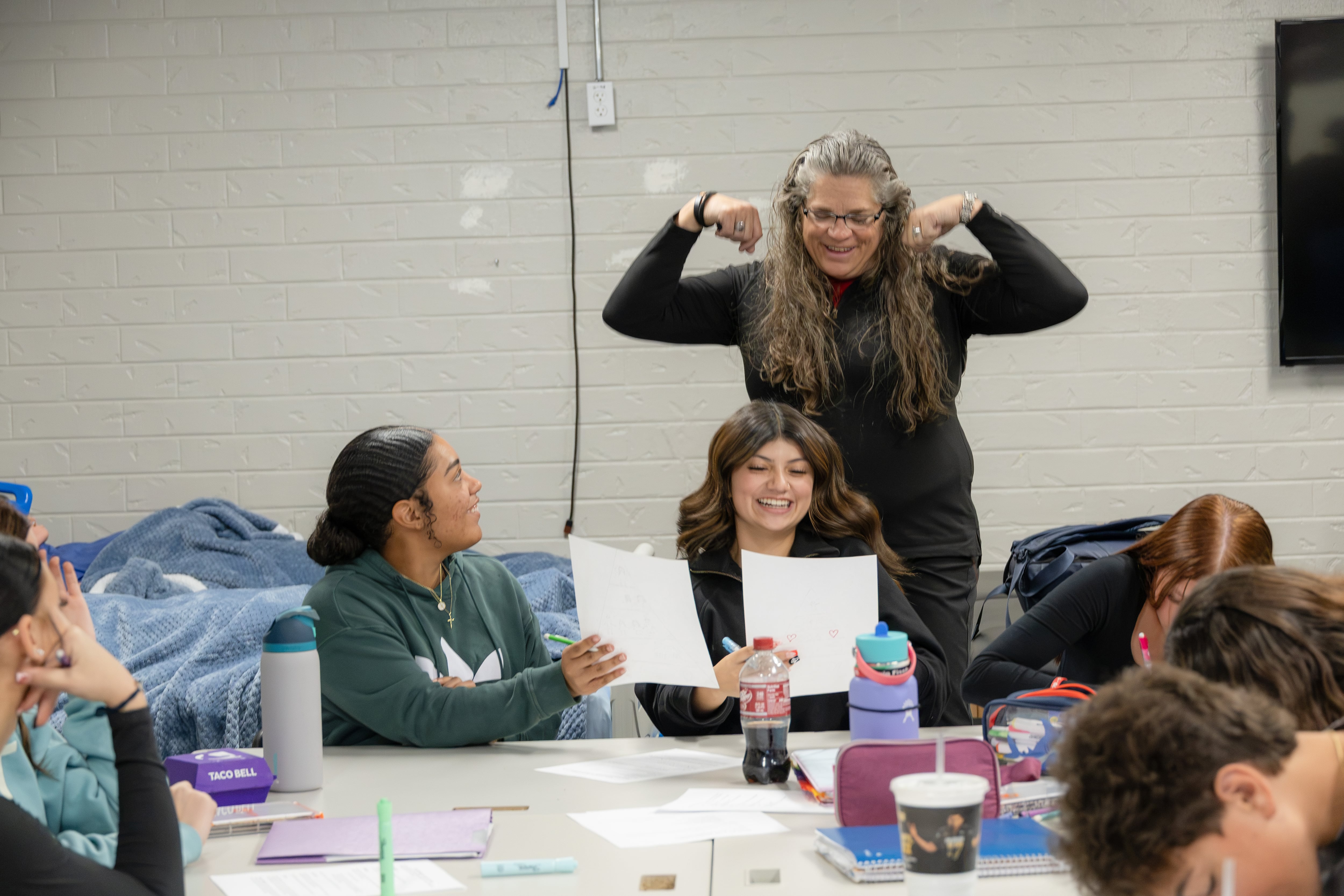
The activity is one I learned through the Cornell Institute for Biology Teachers. We turn the classroom into a giant cell and students become part of the process. They work in teams, taking on different roles as messenger RNA, transfer RNA, and ribosomes. They move around the classroom, transcribing and translating DNA sequences into sentences that represent proteins.
We add a little friendly competition, which the students really enjoy. I like watching students work together, solve problems, recognize mistakes, and help one another. Students who struggled initially begin to make connections because they’re actually experiencing the process.
You’re the varsity girls basketball coach. Do you have any secrets for motivating your players?
I love athletics, and I really credit sports, particularly basketball, with helping me get through school and, eventually, learning to enjoy it. One of the most important things you can do as a coach is really get to know your players. You need to understand what motivates them, how they respond to different situations, and what style of communication works best for each individual.
I’ve always felt that great coaches are great communicators. That doesn’t mean your standards or expectations change from player to player. But how you communicate, encourage, and challenge one player may be very different from how you approach another.
What are you especially proud of when it comes to career and technical education?
I am especially proud of helping bring a healthcare pathway to Strasburg High School. It includes human anatomy and physiology, patient care technician, phlebotomy technician, and EKG technician courses. We’re hoping to expand the program over the next couple years, possibly by offering EMT training and athletic training-related certifications.
So many young people aren’t sure what they want to do after high school, and this gives them a chance to explore healthcare careers, develop practical skills, and discover new interests. It also opens doors for students who may want to enter the workforce right after graduation.
What’s particularly meaningful is that we’re not just creating opportunities for students, we’re helping address a need in our rural communities where healthcare access can be limited.
Tell us about a memorable time — good or bad — when contact with a student’s family changed your perspective or approach.
When I was first starting out as a teacher, I became good friends with a family whose children attended our school. Both parents were educators and they would often invite me over for dinner.
Those evenings were really valuable to me as a young teacher. The parents reminded me that I didn’t need to spend all my time at school. It was important to make time for family, friends, and just having a life outside of teaching.
Unfortunately, one of the parents passed away unexpectedly. It was a tremendous loss, but it was also one of the first times I really saw how a small community could come together during a difficult time. It helped me appreciate that being part of a school community is about much more than what happens in the classroom. The relationships we build with students and their families matter, and those relationships often teach us just as much as we teach students.
What is something going on in the community that affects the students you teach? How do you address it?
As Strasburg continues to grow, it’s increasingly important that we maintain a strong connection between our schools and the community. In a small rural community like ours, school activities, athletics, and other events have traditionally brought people together, and there was a real sense of being part of something bigger.
As our community has grown, students and families have more opportunities and more demands on their time. Part of our responsibility as educators is to help students understand the importance of being involved in their community.
Our healthcare pathway is one way we’re doing that. We offer hands-only CPR training for community members, with our students helping teach those skills, and we hold an annual blood drive. We’re also working with the medical pathway program at Byers High School to offer a community health fair this spring.
Ann Schimke is a senior reporter at Chalkbeat. Contact Ann at aschimke@chalkbeat.org.