Sign up for Chalkbeat New York’s free daily newsletter to get essential news about NYC’s public schools delivered to your inbox.
With just two days until the start of the new school year and a preschool payment crisis still simmering, Mayor Zohran Mamdani on Tuesday named a new leader for the beleaguered office in charge of executing his ambitious childcare agenda.
Erica Phillips, a nonprofit leader with a history of supporting family childcare providers, will take over as deputy chancellor for the Education Department’s Division of Early Childhood Education at a critical juncture.
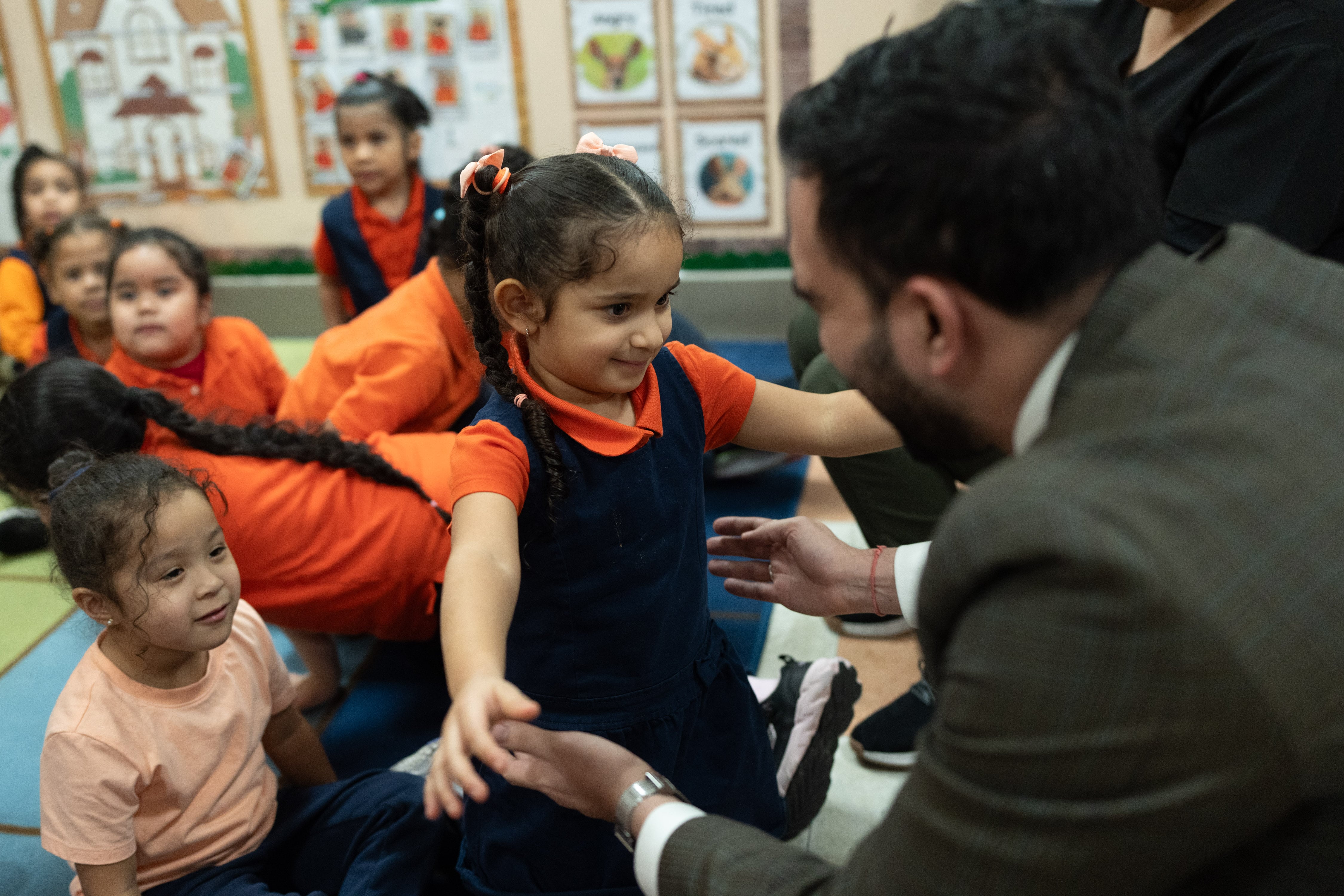
The inaugural year of Mamdani’s signature free childcare program for 2-year-olds is set to start Thursday, along with city-funded 3-K and pre-K programs for tens of thousands of 3 and 4-year-olds.
But the division is still digging out of a severe contract backlog that pushed some providers to the brink of closure. A Mamdani spokesperson last week called the delays “unacceptable,” and officials launched an “all government” effort to rush payments to providers before the start of school.
Phillips’ appointment will thrust her into a highly visible and challenging position managing the sprawling and disjointed childcare system. How she shepherds the division over the coming months will play a critical role in how effectively Mamdani delivers on perhaps his most high-profile policy pledge. The 2-K program launching this year for 2,000 toddlers is expected to grow sixfold by next fall, enrolling 12,000 kids. Mamdani has promised it will be available to every 2-year-old in the city who wants a spot by the end of his first term, though Gov. Kathy Hochul has only committed funding for the first two years.
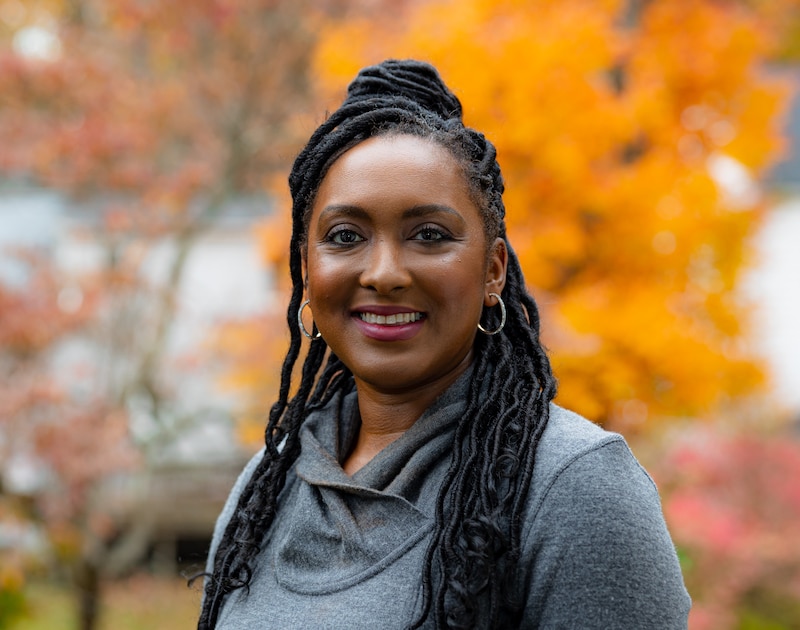
Phillips is beginning her preparations this week and will officially take over in mid-September, she said.
“I’m eager to get started,” Phillips told Chalkbeat. “What the city is doing is ambitious and exciting, and there is a lot of work and opportunities here.”
She added that she is “confident in the plan” Mamdani and schools Chancellor Kamar Samuels have put forward to ensure providers have what they need to start the school year.
“In the weeks, months and years ahead, Deputy Chancellor Phillips and Chancellor Samuels will show New Yorkers what it looks like when government works for every family,” Mamdani said in a statement.
Getting there will require a massive operational push in the Division of Early Childhood Education, which oversees publicly funded programs for some 150,000 kids under age 5.
Taking over a division that has been battered
Phillips steps into the leadership role of a division that has been battered by years of staff cuts and turmoil.
Former Mayor Bill de Blasio ramped up the division’s headcount and responsibility when he rolled out his universal prekindergarten initiative starting in 2014. By the time he left office in 2022, the division had roughly 1,170 employees, according to an Education Department spokesperson.
De Blasio’s successor, Eric Adams, scaled back de Blasio’s promise to make 3-K universal, emphasizing the need to fill the thousands of vacant pre-K and 3-K seats that emerged following the COVID-19 pandemic. He proposed hundreds of millions of dollars in cuts to the system, many of which were ultimately reversed.
Many of the key staffers who built up the division during the de Blasio years left when Adams took office, and former Chancellor David Banks and former division head Kara Ahmed reassigned hundreds of other division staffers as part of a broader reorganization.
By August 2024, the division had 495 employees — less than half of the number just two and a half years earlier.
Current and former staffers and people who work closely with the division say the deep staffing cuts have affected every aspect of the office’s work — from its capacity to monitor and support providers, to its ability to quickly respond to logistical and financial questions, to the speed at which the division can approve new contracts.
“It’s quite staggering,” said Nora Moran, the policy director for United Neighborhood Houses, an umbrella organization that represents childcare providers. “It’s going to take a long time to rebuild what was there.”
There are currently about 560 employees in the division, and 86 vacant positions that the Education Department is trying to fill, a spokesperson said. On top of that, Mamdani last week pledged a $43 million investment to hire an additional 200 staffers.
Phillips said rebuilding staffing is a “huge priority” and added that she’s “deeply appreciative of staff who have held together the division.” She said she doesn’t have a final headcount goal in mind yet, but said she hopes to “have a division that looks more like it did before the reductions.”
Phillips’ appointment reflects key role for family childcare
The July announcement that former early childhood chief Simone Hawkins was departing sent shockwaves through the early childhood sector. Hawkins, a longtime government employee in both the Education and Health Departments with expertise in the complex budget and contract processes that hold up the early childhood system, had served in the role since summer 2024.
Some advocates said Hawkins had made positive changes, including loosening a curriculum mandate imposed by her predecessor. Phillips told Chalkbeat that she supported continuing to give providers flexibility in their curriculum choices.
Other parent leaders expressed concerns about the departure of the only Black woman serving as a deputy chancellor in the Education Department. Phillips, like Hawkins, is a Black woman.
Phillips will work alongside Emmy Liss, the executive director of the Mayor’s Office of Childcare and Early Childhood Education — an office created by Adams and expanded by Mamdani to coordinate childcare efforts across city agencies.
Phillips most recently served as the director of the National Association for Family Child Care, an organization that does policy advocacy and support for home-based childcare providers. Before that, Phillips served as president of All Our Kin, another national nonprofit dedicated to supporting family childcare providers, and she founded multiple networks that help family childcare providers contract with the city government.
Phillips acknowledged she hasn’t worked directly in city government, but said she has a “deep understanding of the full early childhood landscape.”
Her appointment reflects the key role that family childcare providers, who often run small programs and operate on razor-thin margins, will play in the 2-K rollout and any later efforts to expand free childcare to babies and infants.
Many of those providers were largely left out of the previous 3-K and pre-K expansions. Some have bristled at the requirement to join a network that provides additional oversight, monitoring, and contracting support. And even with city funding, many home-based providers are just scraping by, earning an average of just $6 an hour, a recent report found.
Phillips said it’s “unacceptable” for home-based providers to earn so little, and it will be a “priority” to “really tackle what pay parity means to make sure that family child care providers and all early child providers are receiving compensation for the work that they’re doing.”
But she pledged to continue expanding the system, even as she works to shore up the foundation.
“We have to do both,” she said. “Fix those longstanding issues but also continue to work towards this vision of universal childcare.”
Michael Elsen-Rooney is a reporter for Chalkbeat New York, covering NYC public schools. Contact Michael at melsen-rooney@chalkbeat.org