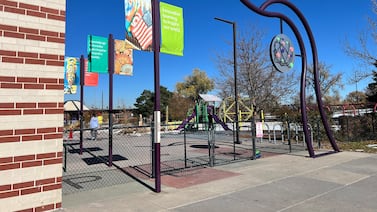
Strawberry Mansion is in one of the poorest neighborhoods in Philadelphia, the poorest big city in the country.
In the summer of 2020, the Philadelphia school district sought to become an antiracist organization and end discriminatory policies and practices. The district created an “equity coalition” of staff, parents, teachers, and community members to meet over the next year and recommend policy changes.
“I have students who live in shelters, who have been homeless, who are dealing with all kinds of trauma,” said Barry Wilkins, a math teacher at Strawberry Mansion. “They don’t have time to advocate for what they don’t get. Reaching out to them is a hallmark of our work. Now, they don’t have a voice. And our work doesn’t make sense if their voice isn’t driving the conversation.”
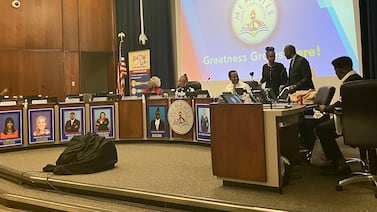
On Wednesday, Superintendent William Hite and other coalition leaders updated the community on the progress of the initiative and offered a look at next steps.
The work of the coalition “has ignited a new vision of bringing change to our district,” Hite said.
For the past year, the wide-ranging group divided into subcommittees and studied historical and demographic trends in schools and neighborhoods, held focus groups with stakeholders inside and outside the district, and began the serious work of helping people in schools view their practices through an equity lens.
“The coalition was started as a way to reshape the organizational structure and give space and place to individuals who don’t often get a seat at the table to talk about what it means to be an equitable and anti-racist school district,” said Sabriya Jubilee, the district’s deputy chief of equity.
But much of the most difficult work lies ahead, as the self-examination tackles long-standing and troubling trends, such as disproportionate discipline of Black and brown students, as well as their underrepresentation in honors and Advanced Placement classes and in the city’s most selective public schools.
That will require teachers and others who work with students to go deep into their own attitudes and behaviors.
“Equity means every student is afforded the opportunity to be in an exceptional learning environment,” said Estelle Acquah,executive director of the Office of Diversity, Equity, and Inclusion. “One of the things that is critically important is how we think about the mindsets of all the stakeholders, and what we are working to do is to ensure that we are putting in place the conditions for everyone in our district and our schools to really think a little bit differently about our young people and what they’re capable of.”
Part of that is “to ensure that every single person in our district is able to engage in anti-racism training, and that is going to be critical in ensuring that we are starting to shift the mindsets in our schools.”
Accomplishing this will require more than one-day professional development sessions, she said, but a “multi-year, multi-pronged” plan that will be tailored to every school.
“We’re working across the district to make sure that students understand the cultural shift going on in classrooms and in instructional practices,” Acquah said. This means examining the “intersection of equity and instruction” and making sure students “are taught in ways that are culturally affirming for them...and making sure we are celebrating the cultures of all students in a systematic way.”
It is still too early to determine how this might look in individual schools.
“How it impacts my school, we haven’t gotten quite there yet,” said Wilkins, who is on a coalition subcommittee dealing with external partnerships, mostly with organizations, advocacy groups, and corporations that work with students. Going forward, he said, the initiative “will help school leaders drive the equity conversation and give staff and teachers the tools they need to provide an equitable educational experience for young people.”
Philadelphia has a poverty rate of more than 25% and a child poverty rate above 50%. In the district, more than 70% of the enrollment is Black and Latino. In some schools, the poverty rate is close to 100%. Many of the surrounding districts are mostly white and affluent, a demographic reality that is a result of systemic racism over generations that limited housing and other opportunities for Black people.
The district is also underfunded compared to most of the surrounding suburbs, even though, on average, students have more needs.
Conditions at a school like Strawberry Mansion are the result of “systematic and institutional racism over generations,” Wilkins said. “We will not have solutions in one year. But, in a year, we will have more concrete things to show you. This is an iterative process.” And, issues faced by our students and their families “have to be front and center with our work.”