Did you know search engines like Google are changing the way you see news? Keep Chalkbeat’s valuable education coverage at the top of your feeds by clicking here and checking the box next to our name.
Rachel Cooper leaves her home in Rifle at 4 a.m. for the 45-minute daily commute to her teaching job in Carbondale. Her goal is to get ahead of the traffic that can clog the mountain canyon during rush hour.
The pre-dawn departure is just one of the ways Cooper, a longtime science teacher at Roaring Fork High School in western Colorado, has adapted to the region’s high cost of living. She also shares her home with a friend and works at Petco on the weekend and during the summer.
Cooper and her colleagues in the 5,600-student Roaring Fork district could soon get a bit of relief if local voters approve a property tax measure on Election Day. It would generate about $5 million a year, most of it for staff salaries and benefits.
The Western Slope district is among 20 Colorado districts with property tax measures this year that would devote new dollars to staff recruitment and retention. They include large districts like Denver, Jeffco, and Douglas County, mountain resort districts like Eagle County, Summit, and Telluride, and small rural districts like Hayden, Hanover, and Prairie.
The number of tax measures reflect the state’s high cost of living and the constant competition for quality teachers, including in areas that frequently have shortages, such as special education and certain STEM subjects. The average Colorado teacher salary was $77,000 last school year, with the average for individual districts ranging from $38,000 to $100,000, according to Colorado Department of Education data.
Justin Silverstein, executive director of the Colorado School Finance Project, said the number of districts with property tax measures — officially called mill levy overrides — fluctuates a bit from year to year, but earmarking money for teacher compensation is a consistent theme.
The number and diversity of districts seeking new dollars for teacher pay shows the need for more money in Colorado’s education system, he said.
Two statewide ballot initiatives — Proposition NN and Amendment 87 — could do just that, but Colorado voters have rejected several ballot measures that would support K-12 education over the last 13 years.
Roaring Fork Superintendent Anna Cole said her district has the fourth-highest cost of living in the state and has lost ground since 2021, when local voters last approved a property tax hike for schools.
“Boy, we’re struggling to keep our salaries competitive and keep our people here,” she said.
Just outside Cole’s office window is a former elementary school that houses some of the more than 100 subsidized apartments the district offers to staff members. A nearby soccer field could eventually make way for another staff housing complex.
Cooper, who teaches biology, chemistry, and forensics, used to live just outside Carbondale with a close friend who’d long owned a home on five acres there. When that friend died three years ago, Cooper realized staying close would be impossible.
The cheapest rental Cooper found in Carbondale was $3,000 a month, plus a $500 deposit for each of her three dogs — two inherited from her friend — and a $300 deposit for each of her two cats.
“The cost of living here has become insane,” she said.
Cooper, 54, has worked in the district for 23 years and wasn’t ready to leave her job, so she settled on the shared house in Rifle, 40 miles “downvalley” from Carbondale.
Others can’t make it work.
“Two years ago, we lost an amazing English teacher because she was alone with a dog and just could not afford rent anywhere, and she didn’t want to do the commute,” Cooper said. “We’ve lost so many just because of that.”
Cooper said if the property tax measure passes and she gets a salary boost, she might use it to get a car with better gas mileage than her 2012 Toyota Highlander.
“I’ve gotten used to the commute,” she said. “It’s just the cost involved in it.”
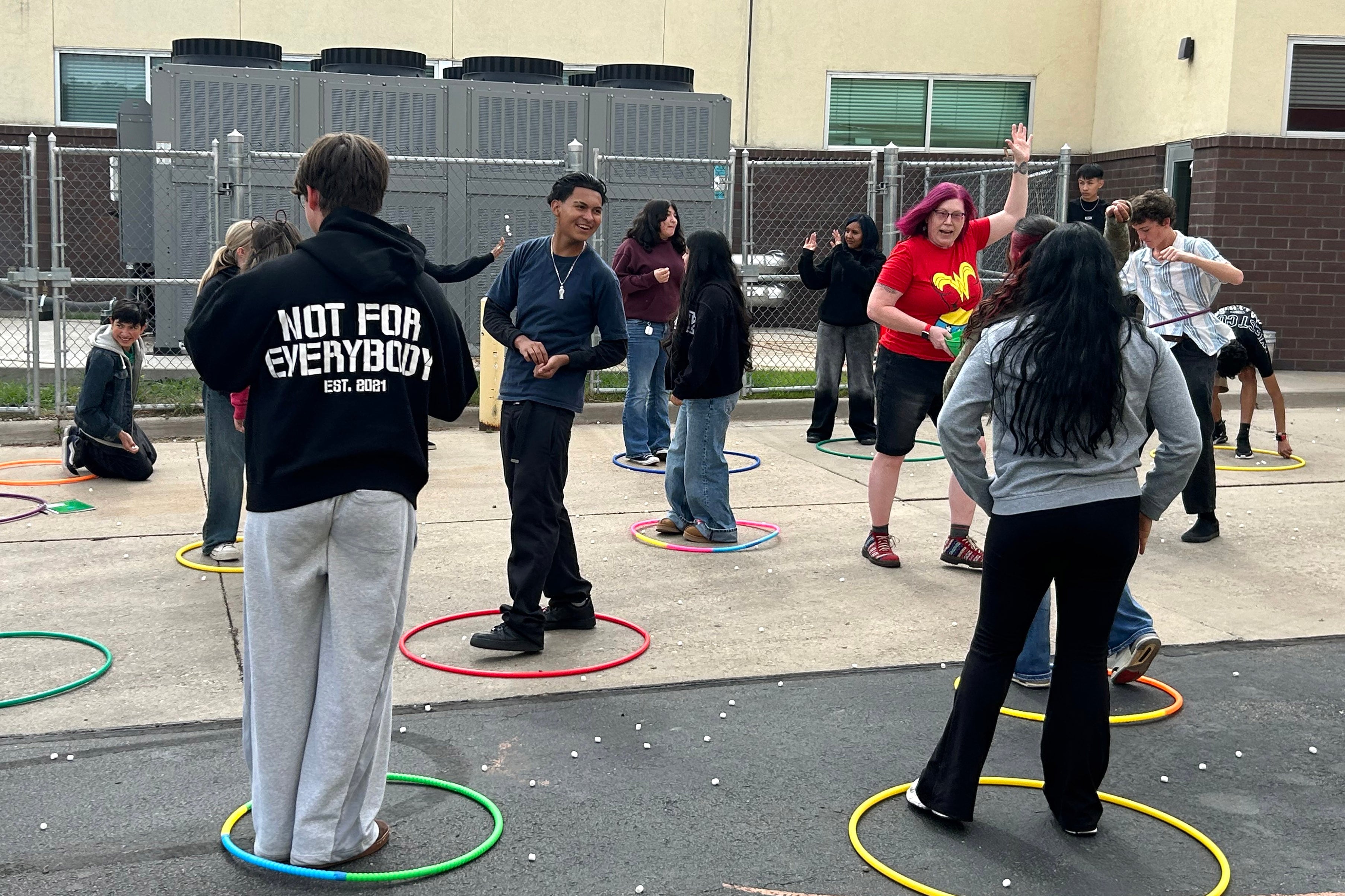
Part of Cooper’s paycheck also goes toward supplies to make her lessons pop.
She spends $200 on the first zoology dissection lab of the semester, fabricating large gummy bears out of ballistics gel and using candy for key parts of the bears’ innards. On a recent trip to Spirit Halloween, she spent $100 on skeletons, blood spatter materials, and black lights for her forensics class.
Cooper hopes the ballot measure passes, but she understands the burden on local taxpayers.
“I’m sad … that we’re in the condition that we have to go to our community and ask even more from them,” she said, “but I think in the long run it’s going to help our community with retention of really good teachers that are passionate about it.”
Ann Schimke is a senior reporter at Chalkbeat. Contact Ann at aschimke@chalkbeat.org.