Did you know search engines like Google are changing the way you see news? Keep Chalkbeat’s valuable education coverage at the top of your feeds by clicking here and checking the box next to our name.
It’s not an easy time to be leading the Memphis-Shelby County school board.
A state-appointed oversight board is waiting in the wings to take over district operations. School closures are imminent this year as facility costs grow and enrollment declines. Plus, the local board faces increasing pressure and scrutiny from parent advocacy groups to raise student achievement.
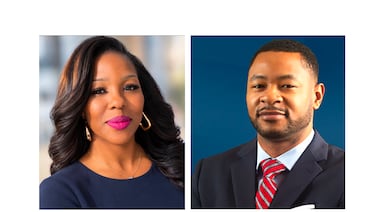
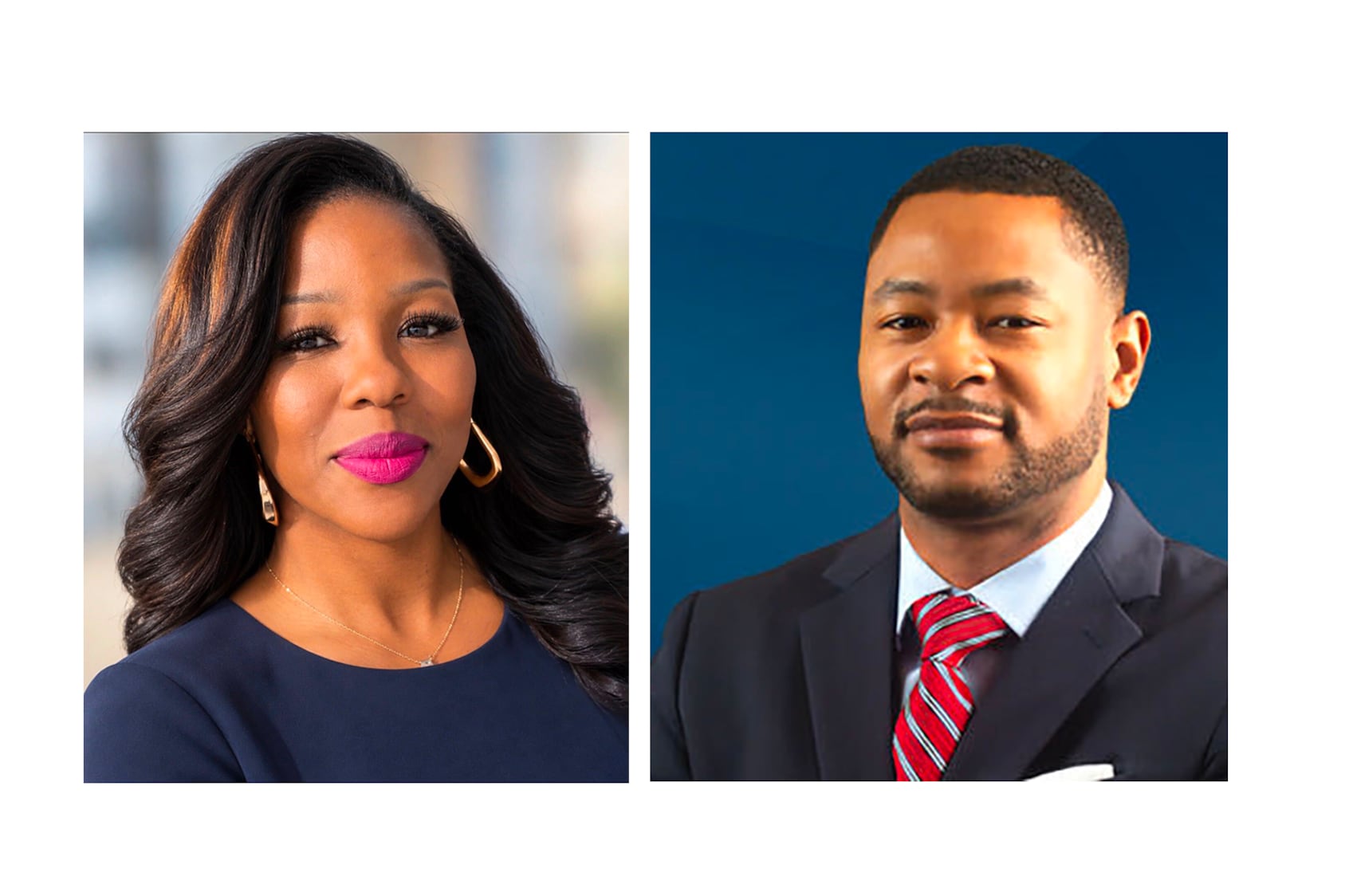
But Tamarques Porter and Sable Otey, two MSCS board members recently elected as this year’s chair and vice chair respectively, say they’re confident they can weather the storm.
“There are significant governance questions being asked outside the classroom, but our students can’t afford for adults to become distracted from the work happening inside of our schools,” Otey said in an exclusive interview with Chalkbeat Tennessee.
Porter and Otey joined the school board in August 2024, months before the controversial firing of former Superintendent Marie Feagins that sparked widespread mistrust of MSCS leadership.
Porter was one of only three board members to vote against that ousting. He said his top priority as board chair now is to create a “more disciplined and effective governing body.”
“We always talk about student achievement as the ultimate goal, but our responsibility as the board is to create conditions that make that possible,” he said. “That means strong oversight, strong financial management, and clear policies, accountability, and stability.”
That stability is hard to achieve with so much uncertainty around leadership, Porter added. In June, MSCS and Shelby County leaders sued the state over the politically appointed oversight board, and the takeover has been blocked by the federal court ever since. On Monday, a judge signaled that the oversight board can begin its tenure as soon as members say they’re ready, which could happen within days.
Porter said that the state takeover “definitely isn’t ideal” but could be an opportunity to reignite outside investment in Memphis schools.
“Regardless of the oversight board, we need more of our community partners to step in and help,” he said. “Whether it’s our corporate citizens or our local community partners, we have to come out of this attitude of silos and blaming each other.”
Editor’s Note: The following responses have been edited for length and clarity.
What do you plan on doing this year as new board leaders to rebuild trust in MSCS?
Porter: Rebuilding trust definitely requires being more transparent. Public trust isn’t rebuilt through a slogan or a press conference; it’s rebuilt through behavior. I don’t believe leadership requires us to defend every decision that has ever been made by the district. But as chair, I want to be more consistent in how we govern, more transparent around major decisions, and give more opportunities to the public to understand why we’re what we’re doing and how we’re doing it.
Otey: I want our community to see a board that is prepared and professional. We should focus on governing rather than micromanaging day-to-day operations of the district. We have to create more opportunities to meet people where they are, and that means engaging with parents, students, educators, neighborhood leaders, and faith-based organizations. People should not feel like the only time they can interact with us is by doing a few minutes of public comments.
A faction of parents in the district are calling for the board to drop the lawsuit against the state takeover. Why are you continuing to fight?
Porter: The people who were appointed by the state, they’re going to be held accountable not to the community but to those state officials. We were elected to be the voices of the community, and so dropping the lawsuit ultimately signals ‘Hey, we give up,’ and we have a constitutional right to be in these elected positions. And it speaks to a broader picture of what’s happening with the redistricting as well.
Otey: It’s about protecting democracy and making sure that the local voices are still at the table and the power is with the people. At the end of the day, our vote is the only thing that we have to speak to, and so we don’t want to lose sight of that.
If the state takeover does come to fruition, how do you plan on working with the oversight board? What would that look like?
Porter: If the law passes and ultimately goes into effect, I think my responsibility is going to be to just keep protecting the interests of our students and our families and our employees, and the taxpayers’ dollars. I do think that everybody, to the core, wants to see what’s best for our children. So the mission doesn’t change, but responsibilities may shift. We’re still trying to really figure out what they look like on a day-to-day basis. We want to have clear communication between the elected board and appointed board and have clear communication going out to the public.
Otey: We have the responsibility to approach that relationship professionally, and again with the students at the center. Obviously, we don’t want a state takeover, but we do want to collaborate and work with the state. We know we have antiquated systems. We know that we’re not perfect. We know that we have a huge school district, and we have a lot of students with so many different challenges, and we can use some additional support. We would love to have that support from the state. And so, when it comes to us working with the oversight board, we might not always agree on decisions or how the decisions should be made. But a disagreement can’t prevent communication.
We talk about improving student achievement as the main goal for MSCS each year. What does the board need to do to make that happen?
Porter: It’s about curating and investing in more resources for teacher development. I think we can always talk about increasing teacher pay and increasing teacher support in general. Oftentimes it’s not just about the pay, but you have to pay a good amount to get the right people. So I want to award the top teachers for continuing to do well.
Otey: Put more resources into the classroom. That could be expanding tutoring, having more intervention, more literacy and math support. We can make sure we’re maximizing using the data to identify what additional resources are needed most, and we’re bringing in the resources that we need and getting rid of resources that have not been effective. At the end of the day, our priorities have to show up in our investments, and our investments have to show up in better outcomes for students.
Bri Hatch covers Memphis-Shelby County Schools for Chalkbeat Tennessee. Reach Bri at bhatch@chalkbeat.org.