Sign up for Chalkbeat’s free weekly newsletter to keep up with how education is changing across the U.S.
The modern school choice movement has complicated roots.
It connects to the free-market theories of economist Milton Friedman; Catholic activists’ efforts to put their schools on equal footing; white parents’ efforts to circumvent federally mandated school integration; and the Black Power movement that fought for community control of education.
Friedman’s vision appears to be winning. A growing number of Republican-led states are adopting universal vouchers or education savings accounts that give public money to families, regardless of their economic status or access to high-performing public schools.
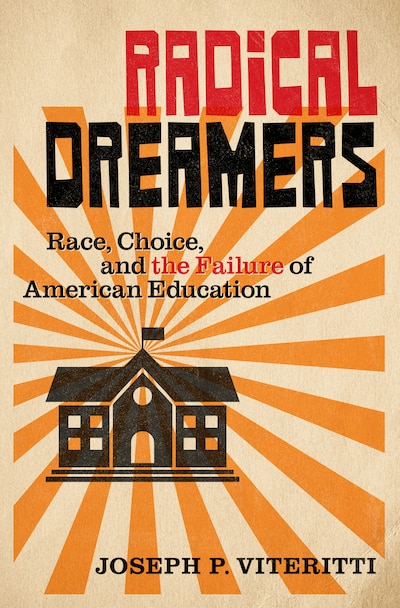
In “Radical Dreamers: Race, Choice, and the Failure of American Education,” political scientist Joseph Viteritti turns the focus back to the most progressive thread of the school choice story, chronicling the contributions of education researchers, lawyers, theorists, and activists — many of them Black men and women — who believed that all children could learn and that what happens in schools matters.
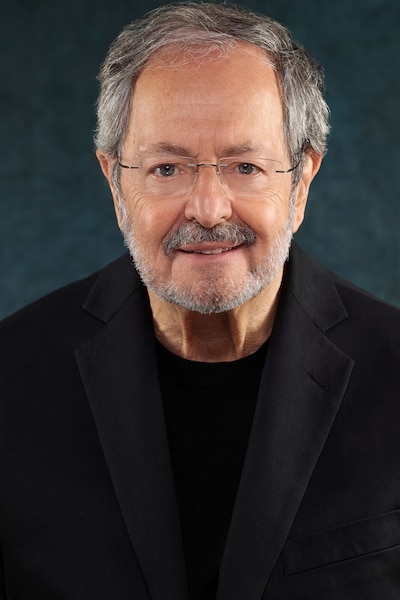
Viteritti, a professor at Hunter College in New York, describes his front row seat to fitful efforts to improve public schools, his evolution into a supporter of school choice, and the uneasy alliance between conservatives and Black activists that shaped early school choice policy.
After the Brown v. Board of Education decision, disillusion with integration efforts drove support for community control of schools, historically Black independent schools, and school choice policies targeted at the most disadvantaged students. In that context, Viteritti challenges the notion that it is “conservative” to support school choice, or “progressive” to oppose it.
Viteritti has had close personal and professional relationships with many of the people profiled in his book.
There is Ron Edmonds, a researcher on effective schools who sought to disprove the idea that demographics determined students’ destinies. There is Derrick Bell, the father of critical race theory, who argued that white power structures only support Black interests when they converge with white interests.
Howard Fuller, the civil rights activist, former Milwaukee Public Schools superintendent, and fierce champion for school choice, gets two chapters. So does Diane Ravitch, an education historian who helped persuade Viteritti of the merits of school choice, only to become one of the most vocal critics of that movement.
Viteritti still believes in school choice as a critical tool for educational justice. He dismisses the idea that modern school choice traces back to the South’s whites-only “segregation academies,” — “segregation began in the public schools,” he notes. But he acknowledges that critics like Ravitch have proved prescient as more states expand vouchers without any accountability measures or limits on who participates.
This conversation has been edited for length and clarity.
What prompted you to write this after being less involved with education policy for a good while?
Someone asked me how I arrived at my positions, and I realized that I had an opportunity to work very closely with some major movers and shakers in education policy: Ron Edmonds, Jack Coons, Diane Ravitch, Howard Fuller. They all interacted with each other, looking through the history of school reform, going back to the days of desegregation and bussing, battles over fiscal equity, the frustration of Black families demanding community control, where they said, “If you’re not going to educate our kids, let us do it.”
And when community control didn’t work, they said, “We need access to good schools.”
And what do the people you feature tell us about the evolution of choice and the education moment that we’re in now?
Ron Edmonds was a researcher at Harvard when he came to work in New York as deputy chancellor for instruction. And I was on the chancellor staff. He was kind of a mentor. Ron was very much against segregation, but he said there was so much of an obsession with desegregation among white civil rights attorneys that they really left out the importance of students getting access to good schools. He said you cannot have equity in education if kids aren’t learning.
Jack Coons argued the first case in California court [Serrano v. Priest] to demonstrate that rich school districts spend more than poor districts and that was inequitable. He developed a model of progressive choice, an alternative to the Milton Friedman market model.
Diane is the one who convinced me [of the merits of school choice], and she finally turned around and said, “well, it doesn’t work.” I would say we haven’t done enough to make it work. She makes some very important points that we agree on about where the choice movement has gone, and what the consequences are.
Howard Fuller is the real deal. He’s the one who helped realize the vision of the progressive school choice model. One distinct lesson I got from him, as a political scientist, is that choice is not just about opportunity. It’s about power.
Derrick Bell really explains it when he talks about systemic racism, about racism as a perpetual feature of American life. It sounds provocative, but when you look at it, when you look at the whole story of interest convergence, it makes sense.
You wonder why people are angry and frustrated? Look at the numbers today. The schools are segregated, and kids are not performing. Race and class are still the best predictors, the most reliable predictors of educational achievement in this country.
Today’s school choice policies have moved away from a focus on low-income students or students in low-performing schools. What is the ability of these policies to fulfill the school choice vision that some of the folks that you write about advocated for?
If you look at the beginning of the [modern] choice movement, we were basically trying to meet the needs of underserved, underprivileged Black and brown kids, for the most part. And the biggest opponents to that were people who identified with liberal causes, for example most Democrats, the teachers unions, civil rights organizations like the ACLU, and First Amendment advocates like Americans United for the Separation of Church and State.
What you have now is a conservative movement that’s really taken over the momentum and they’re spending with abandon, and it’s not clear what kind of checks there will be and how much spending will result from all of this.
One thing [liberal and conservative approaches] both have in common is who gets hurt. It’s Black and brown and disadvantaged kids. Derek Bell had a theory called the interest-convergence dilemma, and what he said was that white people will support Black people only so long as their interests converge. School choice history is a perfect illustration.
Charter schools have a lot more accountability for their outcomes than private schools. What does this suggest to you about the regulatory structure we might want to have?
I think if you’re accepting public money, then you should be susceptible to public scrutiny. And that’s not where it’s going. We have a lot of schools opening up because of money. It’s going to get worse when the federal [tax-credit scholarship] law hits. Who’s opening the microschool? The lady or the guy down the block? They might be very nice neighbors. Should they be running schools? I don’t know. This is moving so quickly it concerns me.
There are certain people within the school choice movement who support universal programs because they think that’s what’s politically tenable. Universal programs, Social Security for example, get more political support.
What do you make of that argument for universal programs?
Milton Friedman said if you let the market do its thing and create competition, parents will choose the better schools, poorer schools will close, and all will be fine. And there are people who believe in that. I don’t.
I think we need to be reminded of how this could be designed to work better, because I don’t think it’s sustainable. There’s no understanding of how much money is going to be spent on it.
But I don’t think people who identify as liberal or progressive can continue to pretend that leaving children in underperforming [public] schools generation after generation is an example of educational and political justice.
At some point, reality will hit, and maybe we will have an honest conversation when it becomes unsustainable for conservatives who all of a sudden are spending all this money, and unsustainable for progressives to continue to warehouse children in failing schools.
If there was a world in which white liberals had a different response to these earlier iterations of choice, whether it was charter schools or more targeted voucher programs, where do you think that we would be today?
This started as an alliance between Blacks and conservatives. You look at the case studies of Milwaukee and Cleveland, that’s who got this through. Liberals should have been part of that conversation. Instead, they just kind of closed their eyes, stamped their feet, and said, “No, we’re not doing it.”
We could say that there were Republicans who wanted to do a full Milton Friedman model all along. And that’s true, some of them did. But it would have been a lot better to start off with a cooperative agenda focused on poor kids.
I’m not suggesting at all that choice is going to resolve all the problems. What I did believe and still believe is that, if crafted in the right way, it can move us in the right direction.
Erica Meltzer is Chalkbeat’s national editor based in Colorado. Contact Erica at emeltzer@chalkbeat.org.