Chalkbeat Ideas is a new section featuring reported columns on the big ideas and debates shaping American schools. Sign up for the Ideas newsletter to follow our work.
An obscure university report has unleashed a cascade of criticism over high school grade inflation and university admissions standards.
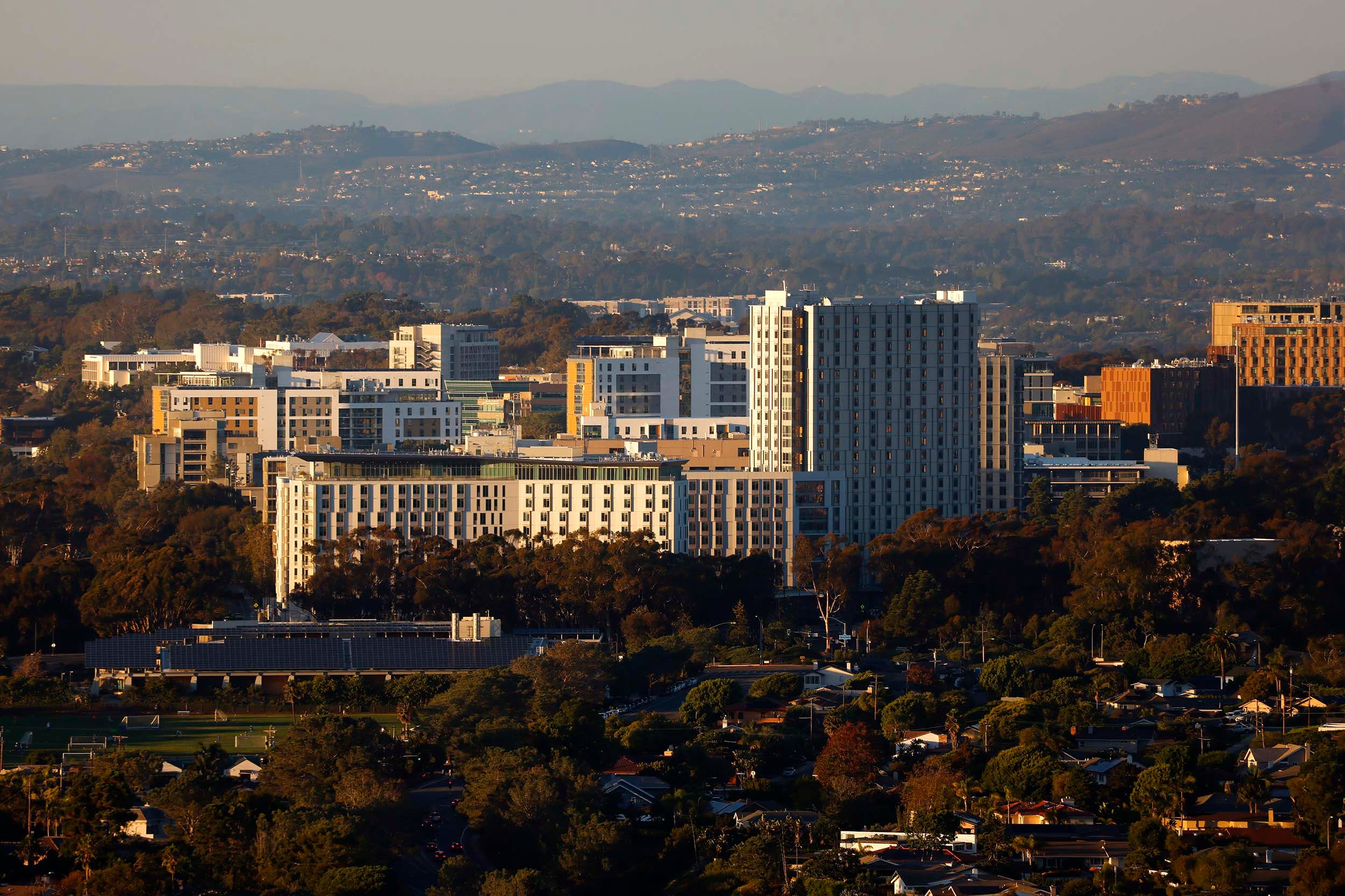
Last month, a committee at the University of California San Diego described a sharp increase in the number of college students there who need remedial math, in some cases even below middle school levels. The report pointed to California’s decision to drop standardized tests from admissions and the increasing number of students from the state’s high-poverty public schools.
“Admitting large numbers of students who are profoundly underprepared risks harming the very students we hope to support, by setting them up for failure,” warned the 13-person committee of faculty and administrators. This report caught fire across the internet because to critics it represents something bigger: an example of lower standards in education and equity efforts run amok.
The learning declines in American schools are indeed alarming and present new challenges for colleges. I want to focus, though, on a specific claim in the report and many associated commentaries: that students with weak math scores are harmed by being admitted into UCSD.
In reality there is a significant body of research that suggests precisely the opposite, says Zachary Bleemer, a Princeton University economist who has studied University of California admissions extensively. “There’s no advantage to the student to being pushed into a less selective university,” says Bleemer. “Instead, you’re just taking away the advantages that a school like UC San Diego offers them.”
This suggests that selective universities like UCSD aren’t helping underprepared students by rejecting them, even though that might be the easier option for professors and administrators.
In one paper, Bleemer examined a policy from the early 2000s that automatically admitted students to certain UC schools, including UCSD, based on their high school class rank, without regard to their SAT scores.
At first glance, these good-GPA, low-SAT students, who were typically from high-poverty high schools, struggled in college. They had lower grades and were less likely to graduate than their UC peers.
But that’s not the right point of comparison, says Bleemer. The better question is what would have happened to those students had they not been admitted to a UC school. He was able to disentangle this by comparing them to an essentially identical group of students who just missed getting in.
Here the results flipped on their head: Attending a UC school increased students’ chances of graduating college on time by several percentage points and their early career wages rose by several thousand dollars annually.
This undermines the notion that students suffer if they are admitted to selective schools where they may have weaker preparation than their peers. In the context of affirmative action, this is often referred to as a potential “mismatch.” In another paper, Bleemer examined this directly. He found that banning race-based affirmative action in California hurt underrepresented students’ chances of earning a college degree as well as their income later in life. Again no evidence of mismatch — just the opposite.
A separate study of Bleemer’s looked at a more narrow access question. In 2008, UC Santa Cruz’s economics department set a GPA threshold for majors of 2.8. The likely logic here was understandable: Students who couldn’t manage even a B average in introductory economics weren’t well equipped to major in the subject. Yet Bleemer found that students who were just short of the GPA cutoff earned substantially less money in their early 20s as a result.
I’ve focused on Bleemer’s work because it’s on the UC system. Other research generally finds similar results.
Jack Mountjoy, an economist at the University of Chicago, studied students in Texas who were denied admissions to certain public colleges because their test scores were too low. Several years later, he found, those students were less likely to hold a degree and made less money compared to all-but identical students who barely reached the admissions threshold.
The students who did get in were typical high school graduates, not academic superstars. Some didn’t graduate or struggled in college. Yet overall their “outcomes are significant improvements over the typical trajectories these marginal students would have experienced had they been rejected instead,” writes Mountjoy.
Although there remains some debate about the mismatch theory, an overview from the Manhattan Institute, a conservative think tank, acknowledged that in the undergraduate context “students are at least as likely to graduate if they attend more elite schools—indeed, often more so.”
The takeaway from these papers is the same: Limiting students’ access to colleges or courses because they are deemed underprepared does not seem to do them any favors. It actually just holds them back, at least in many contexts where this has been studied.
This makes sense. Selective colleges tend to have more resources, so may be better equipped to help students who need remediation. Students themselves are opting into these schools, so they apparently think it’s the best choice.
All of this is relevant to the current discussion over the admissions standards at UCSD and other selective schools. Obviously we want high schools to better prepare students academically. (I spend much of my time writing about how K-12 schools can improve.) But when students graduate lacking specific skills, as inevitably will be the case for some, colleges have to decide how to respond.
The UCSD committee recommends more aggressively screening out students who struggle in math. It also proposes scaling back the number of students from high-needs public schools. This figure has increased particularly sharply at UCSD recently and accounts for some of the rise in remediation.
The report emphasizes the university’s “limited instructional resources.” Yet less-selective public universities in the state tend to have even less funding than UC schools.
A spokesperson for UCSD did not make someone from the committee available for an interview and declined to respond to written questions.
For his part, Bleemer understands the preferences of faculty for fewer students who need extra help or who attended higher-needs high schools. “There’s nothing easier than teaching a class where everyone gets an A,” he says. (“I’m at a university that passes the buck. I should emphasize my own hypocrisy here,” acknowledges Bleemer, who teaches at Princeton.)
In competitive college admissions, there are many potential objectives for a school. Some applicants will always lose out. Faculty and staff at UCSD are free to make the case for whatever admissions standards they like. But we should be skeptical of the suggestion that students are being rejected for their own good.
Correction: A prior version of this story imprecisely described a study’s conclusion about the effect of attending a UC college. The study found that attending such a school increased students’ chances of graduating on time, not their chances of ever graduating college.
Matt Barnum is Chalkbeat’s ideas editor. Reach him at mbarnum@chalkbeat.org.