Sign up for Chalkbeat’s free weekly newsletter to keep up with how education is changing across the U.S.
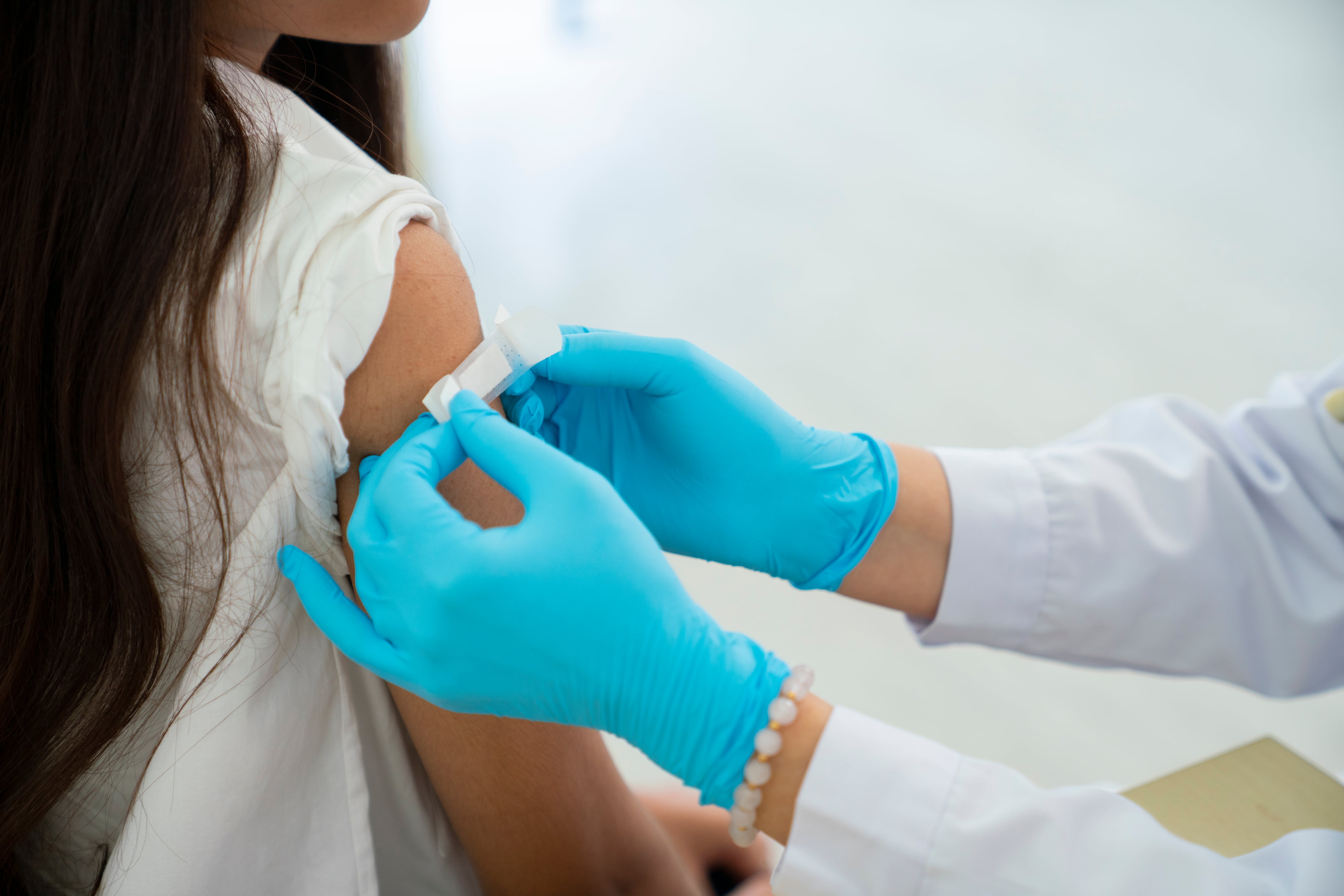
What does the book “Pride Puppy!” have in common with a measles vaccine?
Some religious parents don’t want their children exposed to either one.
But is that position enough to overturn New York law and force the state to offer a religious exemption to Old Order Amish parents and others who say their faith does not allow them to vaccinate their children? That’s a question the U.S. Supreme Court recently told a lower court to consider.
In its Mahmoud v. Taylor ruling last summer, the Supreme Court’s conservative majority found that Montgomery County Public Schools’ interest in having all children learn from an LGBTQ-inclusive curriculum was not greater than parents’ rights to direct their children’s religious upbringing. Parents must have the ability to opt out, the court said.
On Monday, the Supreme Court vacated a decision by the U.S. Court of Appeals for the 2nd Circuit upholding New York’s vaccine mandate, which does not allow for religious exemptions, and told the lower court to reconsider it in light of the Mahmoud decision.
Legal experts told Chalkbeat that doesn’t mean the Supreme Court is poised to require religious exemptions. It’s not unusual for the Supreme Court to ask lower courts to re-examine rulings in light of new decisions that have even a tangential connection, they said. Often, the outcome remains the same.
But if the Supreme Court were confident Mahmoud had no bearing on vaccine law, the justices could have simply declined to take the case and let New York’s law stand, said Dorit Reiss, a law professor at the University of California San Francisco who has studied religious exemptions. Vaccine supporters should be concerned by the court’s decision not to take that course, she said.
“At the very least, they think there might be something there,” Reiss said. “But how much they believe it is up in the air.”
The case is playing out during a tenuous time for public health and as the Supreme Court steadily expands the bounds of religious freedom. An investigation by NBC News and Stanford University found vaccination rates falling and the use of exemptions rising in many communities. A measles outbreak killed two unvaccinated children in Texas, and the United States is at risk of losing its measles elimination status.
Many public health experts fear that under Health and Human Services Secretary Robert F. Kennedy Jr., the federal government is dismantling a vaccine infrastructure that saved countless lives and actively undermining public trust in vaccines.
In a Dear Colleague letter earlier this year, Kennedy warned states they risk their federal funding if they don’t allow religious exemptions.
Most states already have religious or personal belief exemptions. Any change in the legal status quo would have limited effect. But it would take away a tool — narrowing or reducing exemptions — that has been shown to increase vaccination rates. Four of the five states without religious exemptions — California, New York, Connecticut, and Maine — tightened their requirements in recent years in response to disease outbreaks.
“It adds worry at a time when we have a lot to worry about with vaccines,” Reiss said.
Religious exemptions raise questions about sincerity
School vaccine mandates go back to the 19th century, and the courts have repeatedly upheld their validity, even without religious exemptions.
A 1970 measles outbreak in Texarkana underscored the role mandates could play in increasing vaccination rates — nearly all the cases occurred on the Texas side of the city, where there was no school mandate. Arkansas, in contrast, had a school mandate and had conducted mass vaccination campaigns. Along with federal incentives, the Texarkana example contributed to more widespread adoption of school vaccine requirements.
Many states adopted religious exemptions, Reiss said, with the assumption that only very small religious minorities would use them. Most major faith traditions allow or even encourage vaccination. But over time, these exemptions became widely abused and hard to police, she said. The government could not make religious exemptions conditional on membership in a particular faith, nor could the government require, say, that a Catholic follow the Pope’s teachings, or that a Jewish person listen to their rabbi.
But more significantly, Reiss said, people lie. Anti-vaccine Facebook groups coach non-religious parents on what to say to obtain a religious exemption, and studies find that parents claiming religious exemptions often cite safety concerns when questioned.
That dynamic contributed to states like California and New York removing religious exemptions. They now allow only medical exemptions.
The Texas-based First Liberty Institute, which is representing the Amish parents, argued in its petition to the Supreme Court that because New York allows medical exemptions, the lack of a religious exemption amounts to discrimination.
“Today in New York, if a vaccine would harm your lungs, you may be exempted; but if it would harm you soul, you may not,” attorneys wrote.
While not all Amish families reject vaccines, no one doubts the religious sincerity of the families suing the state, Reiss said. That makes the case one to watch.
“Yes our Almighty God wants us to fully put our faith + trust in Him,” Joseph Miller, one of the Amish parents suing New York, said in written testimony. “Which is in conflict to put our trust in vaccines. We are also commanded to not be conformed to this world.”
West Virginia’s vaccine mandate, with no religious exemption, has been in place since 1905, and the state enjoys very high vaccination rates. Gov. Patrick Morissey, a Republican, issued an executive order allowing religious exemptions shortly after taking office in January, but the state Supreme Court blocked the order from going into effect. The mandate remains in place for now.
That shift highlights how views of vaccines are increasingly partisan, with support declining among Republicans. In a related development, vaccine legislation became nearly as partisan as abortion even before the pandemic, according to research by Kevin Estep, a sociologist and associate professor of health administration and policy at Creighton University.
“The most dangerous thing right now, in my mind, is putting fuel on the fire of the idea that the government is infringing on parental rights,” Estep said. “That might create new vaccine hesitancy where there wasn’t before.”
It’s unclear how expanding religious freedom affects vaccines
Richard Katskee, an assistant clinical law professor at Duke University, authored an amicus brief in support of the school district in Mahmoud, and he believes the case sets a dangerous precedent. But the justices were careful to stick to curriculum, which could limit how widely it applies.
“I still think there will be real wariness from the court to hurt public health,” Katskee said. “There has been a history of deference.”
Douglas Laycock, a professor emeritus at the University of Texas and the University of Virginia, wrote a brief in support of the parents in Mahmoud. But he agrees that applying Mahmoud to vaccine exemptions could be a stretch.
“One [case] is about asking kids to listen to these stories that are about topics that are pretty religiously sensitive,” Laycock said. “The other is about a medical requirement that protects every kid in the school from diseases that are at best a problem and at worst disabling or fatal.”
Mahmoud isn’t the only Supreme Court decision potentially weighing on vaccine law.
In Tandon v. Newsom, the Supreme Court overturned a California restriction on in-home gatherings during the depths of the pandemic that was challenged by a couple that held Bible study in their home. A federal judge in 2023 cited that case in ruling that Mississippi must allow religious exemptions to its school vaccine mandate.
The reason Mississippi had no religious exemption at the time was because the state Supreme Court had struck it down in 1979. In that ruling, the justices could not believe that the First Amendment requires that “innocent children, too young to decide for themselves … be denied the protection against crippling and death that immunization provides because of a religious belief adhered to by a parent or parents.”
Mississippi regularly boasted the highest vaccination rates in the nation. Now that religious exemptions are allowed, Mississippi still has high overall vaccination rates, but it’s no longer No. 1. Rates for children under 2 years old are now below the national average.
Erica Meltzer is Chalkbeat’s national editor based in Colorado. Contact Erica at emeltzer@chalkbeat.org.