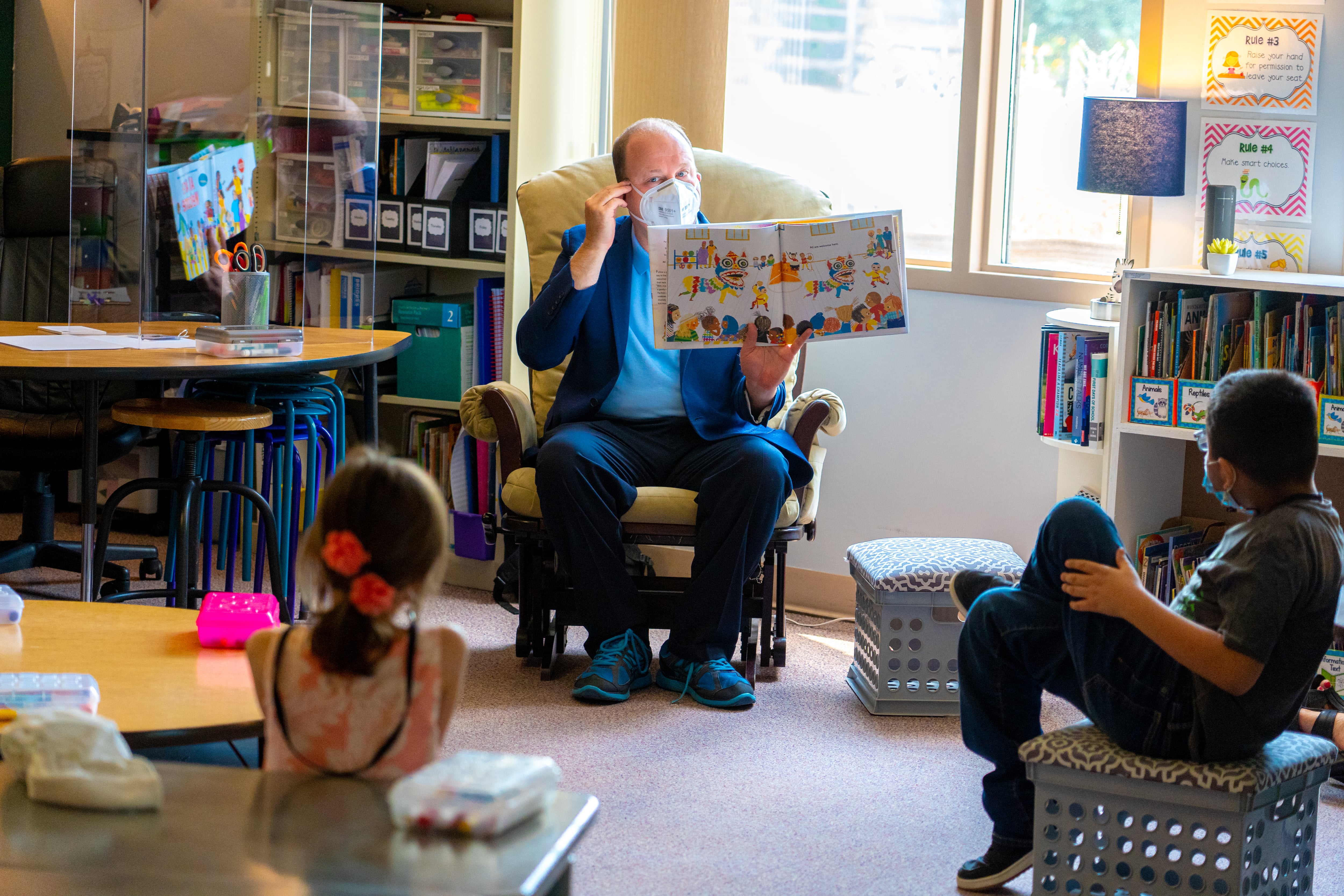
Colorado Gov. Jared Polis said Tuesday that he has established a “back-to-school task force” to help school districts offer as much uninterrupted in-person learning as possible in the second semester. Most districts have shifted to virtual instruction as COVID-19 cases rise.
“Schools are a reasonably safe place,” Polis said. At the same press conference, he said Colorado is at “a height of infection,” with an estimated 1 in 41 Coloradans contagious, and warned residents against gathering with anyone outside their household for Thanksgiving.
The task force will meet for the first time Wednesday. Polis said it will work with parents, educators, school board members, and public health officials to look at protocols and “examples of what works.” He did not offer details about members or the process of selecting them.
Colorado does not have a statewide strategy for opening or closing school buildings during the COVID-19 pandemic. Rather, each of Colorado’s 178 school districts is making its own decision based on guidance from state education and local public health officials.
Polis said the task force is an attempt to “be more hands-on” in providing support to school districts. He has continued to say that schools are relatively safe, even as more districts announced shifts to remote learning. A majority of the state’s 30 largest school districts, which serve more than 80% of Colorado students, will be remote after Thanksgiving.
“Not only do parents rely on it,” Polis said of in-person school, “but frankly, we can’t let the future of our kids become yet another casualty of this pandemic.”
In switching to remote learning, many districts have cited staff shortages due to the number of teachers in quarantine at home after being exposed to COVID-19.
Bret Miles, executive director of the Colorado Association of School Executives, said the state’s quarantine guidelines are the biggest barrier to reopening school buildings. In counties with high COVID-19 transmission, the guidelines call for entire classrooms or cohorts of students to quarantine if a teacher or classmate tests positive. In counties with lower transmission, only that person’s close contacts need to quarantine.
The organization sent a letter to Polis late last week imploring him to grant districts more flexibility. Miles said the superintendents have faith that state public health officials can do that while at the same time making sure the guidelines “aren’t so loose that we get to an unsafe place.”
Miles and several superintendents and assistant superintendents met with Polis Tuesday morning before the press conference. Miles said he was heartened by the governor’s quick response and the formation of the task force.
“That sends the message that he understands the sense of urgency,” Miles said. “You can’t have schools open for very long when you have your staff in quarantine.”