A Denver charter high school focused on hands-on learning will close at the end of this school year after it did not enroll enough students to continue operating.
The board of directors of The CUBE High School voted Monday to close the 2-year-old school, which currently serves 142 ninth- and 10th-graders.
Denver schools are funded per pupil. Although The CUBE was able to attract financial donors, founder Bret Poppleton said the school’s low enrollment, coupled with rent expenses, proved too much to overcome. Unlike some Denver charters, The CUBE was not located in a building owned by the school district. Instead, it was renting space in a Boys & Girls Club.
“We’ve put our lives into this place, truly, and this is a situation where we’ve built something really, really cool,” he said. “This isn’t a situation of, ‘We have to close because things are bad.’ We have to close because there are these things that are insurmountable.”
Enrollment is a challenge districtwide. Whereas Denver was once the fastest-growing urban district in the country, the student population has begun to decline. The decrease is due in large part to declining birth rates and rising housing prices that push families out of the city. COVID-19 also played a role this year, as districts across Colorado saw their enrollment drop.
In the past three years, six other Denver charter schools have cited low enrollment in their decisions to close. They include Venture Prep High School, STRIVE Prep Excel, DSST Henry Middle School, Roots Elementary School, The Boys School of Denver, and the middle school at Wyatt Academy, which transformed Wyatt from a K-8 to an elementary school.
The CUBE opened in fall 2019 in northeast Denver. The idea for the school was unique. Instead of offering classes like history or physics, the school has courses called The History of Rap or Smart Rockets that are “mashups” of two or more academic subjects.
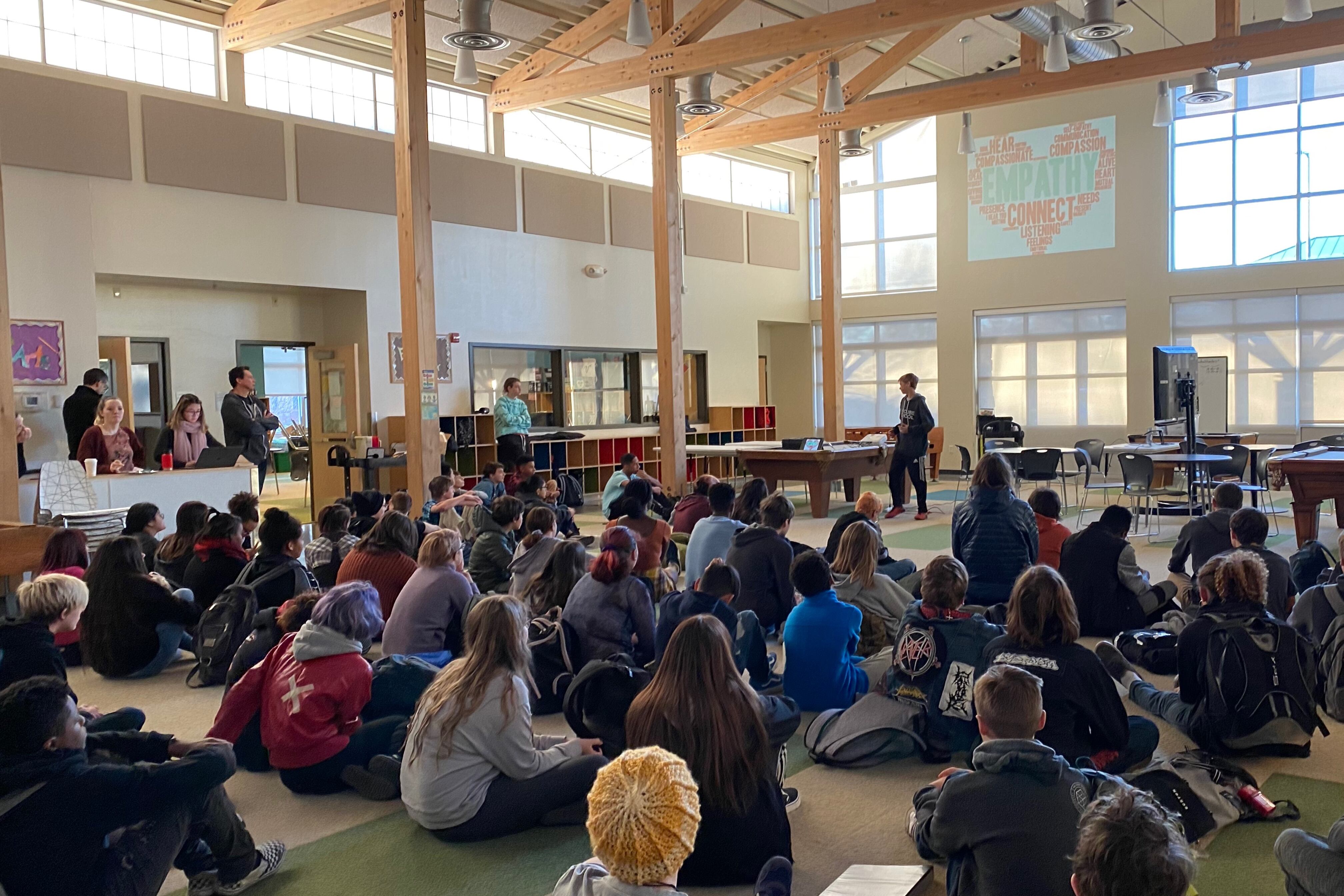
The CUBE splits the school year into five six-week blocks. In between each block is a chance for students to learn in the community. In the past two years, Poppleton said students have done behind-the-scenes tours at the science museum and collaborated with a professional writers workshop to write their own poetry, for example. The CUBE also incorporated technology into its lessons; the school has its own laser cutter and virtual reality setup.
“Students rarely learn at our school sitting at tables or desks,” Poppleton said.
As a charter school, The CUBE was tasked with enticing students to enroll through the district’s choice process; no Denver students were automatically assigned to attend. This year, 48 students listed The CUBE as their first-choice school for next year, Poppleton said. That was fewer than last year, and short of the school’s goal of 75 first-choice listings.
Poppleton said he doesn’t know why The CUBE struggled with enrollment.
“All these people keep telling us, ‘That’s an amazing school and an amazing model and we should send our kid there,’ and we don’t get kids to sign up,” he said.
But he thinks that not having a permanent facility was a contributing factor. The CUBE would have liked to open in a district-owned building, but it was not offered any space, he said. A district policy allocates facility space based partly on enrollment demand. With declining enrollment in most parts of the city, the district has hesitated to make space available.
Part of the reasoning to close this spring, rather than wait another year to see if the situation improved, was to ensure CUBE sophomores could transfer to another school for both their junior and senior years, rather than just their senior year, Poppleton said.
“Through every decision, we’ve tried to keep what is best for families at the top of our hearts and the top of our minds,” Poppleton said.