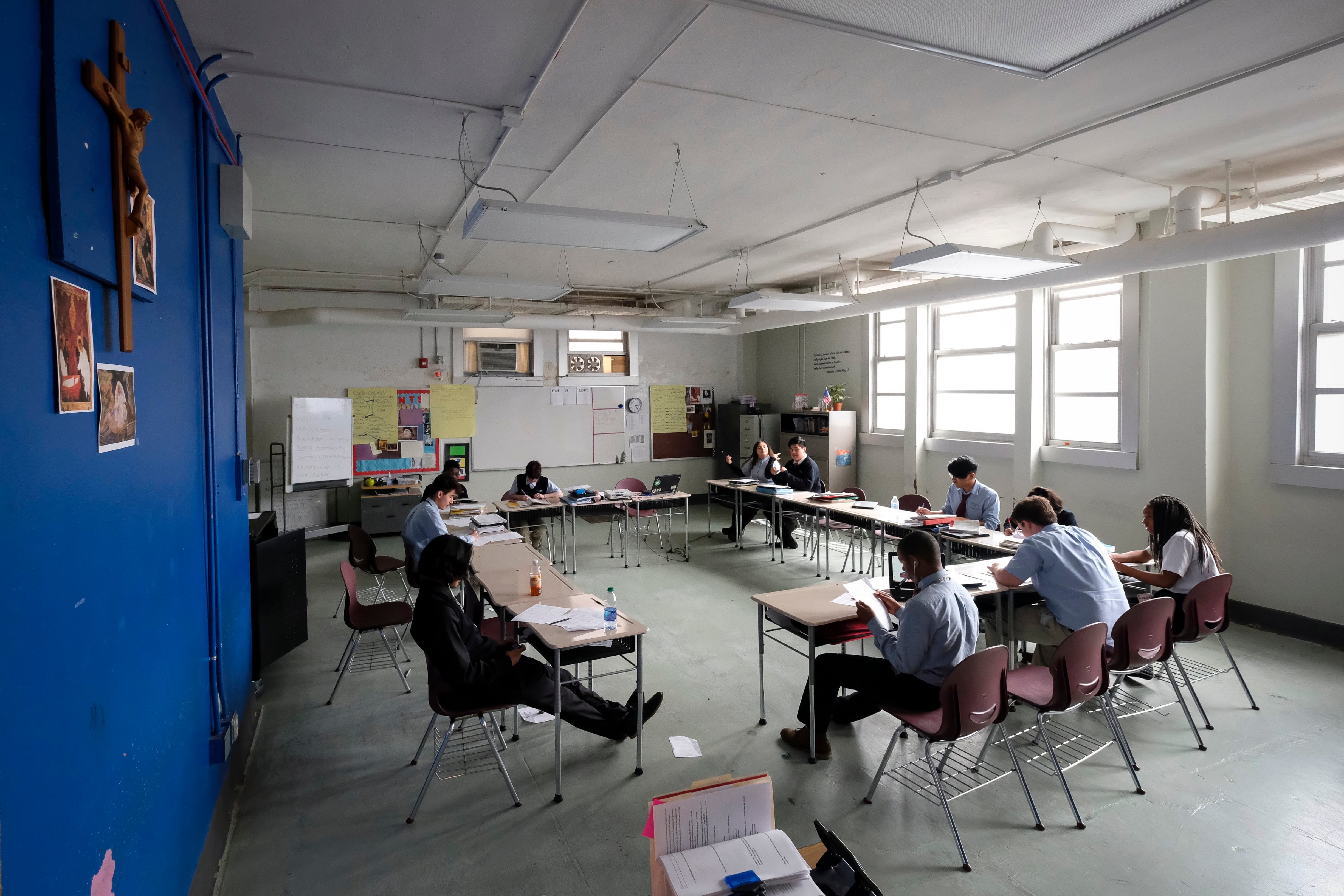
Gov. Gretchen Whitmer vetoed bills Friday that would allow state funds to subsidize private school education.
The veto was expected, and sets up an attempt by Republicans to circumvent the Democratic governor’s veto with a state ballot proposal petition drive.
The two bills, passed along party lines in October, would have provided tax credits for anyone contributing to scholarships covering private school tuition, or for tutoring fees and other services that supplement educational costs at private or parochial schools.
At issue are provisions in the legislation allowing funds from tax-free scholarship programs to go toward tuition for private or religious schools. Eligible private school students could receive up to $7,830 per year or 90% of the per-pupil funding provided to public school students.
Democrats and public school advocates view the effort as a backdoor attempt at legalizing school vouchers, which a 1970 state constitutional amendment banned, with a similar effort rejected by statewide voters two decades ago.
Critics of the bills said the funds that would go primarily to subsidize private and parochial school tuition would take money away from the state’s public schools.
In a letter to the Legislature explaining her veto, Whitmer said the legislation “would require Michigan taxpayers to foot the bill for any money a person gives to certain private education organizations, costing as much as $500 million in 2022 alone. Simply put, our schools cannot provide the high-quality education our kids deserve if we turn private schools into tax shelters for the wealthy.”
The Mackinac Center for Public Policy, which advocates for free-market principles and limited government, blasted Whitmer’s veto.
“Many Michigan parents are crying out to be trusted as key partners and decision-makers in their children’s education, to get them the help and opportunities they need,” Ben DeGrow, director of education policy at the Mackinac Center, said in a release. “It’s extremely disappointing to see Gov. Whitmer wield her power to … placate the union officials and bureaucrats who don’t want to share even a little control of education dollars.”
The issue isn’t going away anytime soon. This week, a group launched a petition drive that, with enough signatures, could allow the program to become law over Whitmer’s objections.
If the group collects 340,000 signatures — 8% of the voter turnout in the last gubernatorial election — and the GOP-controlled House and Senate approve the legislation, it automatically becomes law without the governor’s signature.
By approving the ballot proposal themselves, Republican legislators would avoid taking a chance that voters would again nix with the idea – Michigan citizens rejected a voucher proposal in 2000, with 69% voting no, despite an aggressive campaign by a leading advocate, Betsy DeVos.