Sign up for Chalkbeat New York’s free daily newsletter to get essential news about NYC’s public schools delivered to your inbox.
Despite shrinking enrollment, New York City schools will not see their initial budgets take a hit next school year.
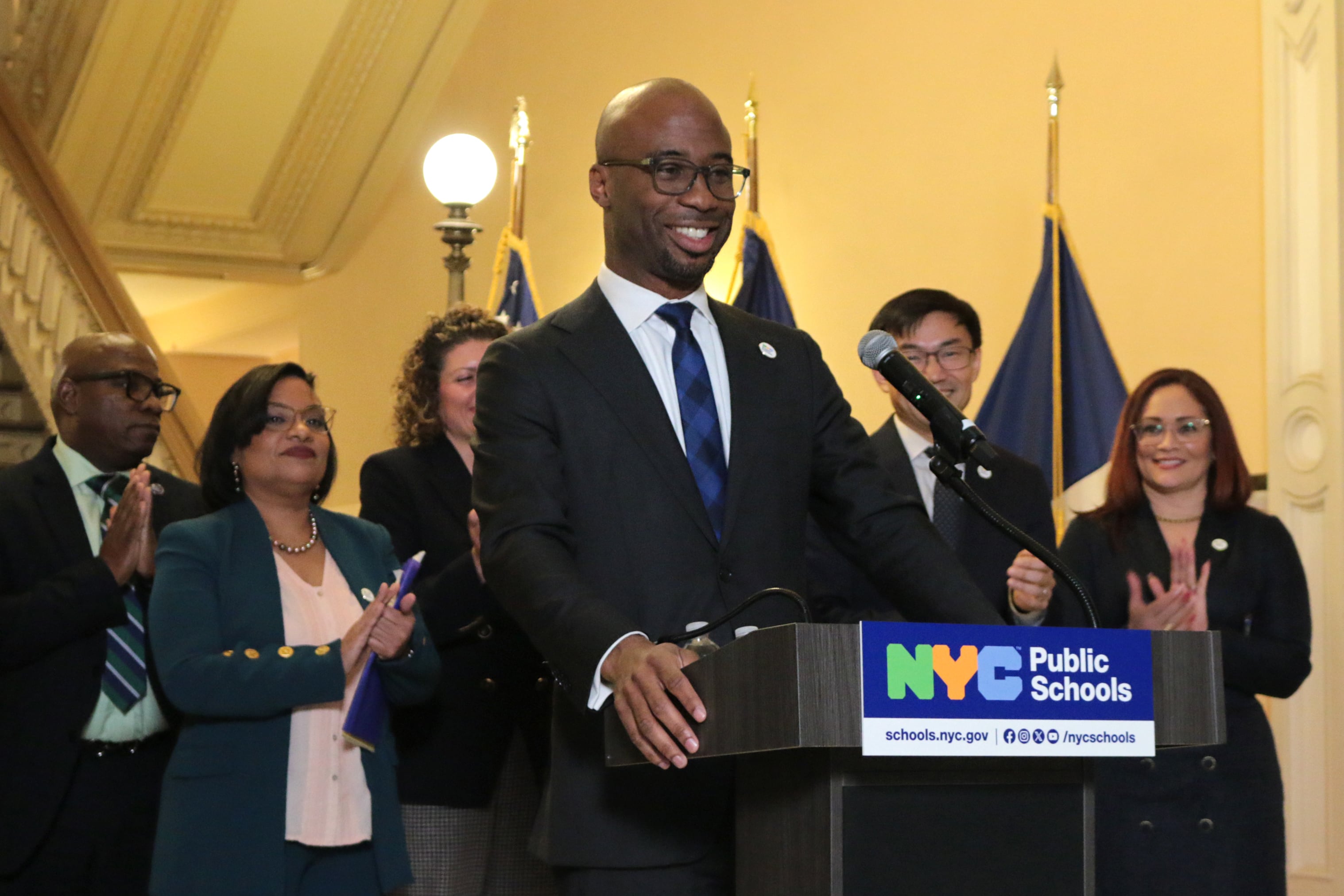
New York City principals are soon expected to receive their budgets for the 2026-27 school year, and schools Chancellor Kamar Samuels gave them a heads up that even if they’re projected to have fewer students, their budgets won’t drop.
Though school budgets are typically tied to student head count, the city began its “hold harmless” policy — propping up school budgets despite enrollment losses — during the height of the pandemic. The Education Department’s coffers were flush with billions in one-time federal relief funding, and officials were concerned about catching kids up after prolonged learning disruptions. So they kept budgets steady even as students left the nation’s largest school system.
Over the past six years, the city has spent $1.6 billion to stave off enrollment-related cuts, according to the Citizens Budget Commission, a watchdog group. Meanwhile, K-12 schools have lost nearly 10% of students during that time, dropping below 800,000 students this school year — and declines are expected to continue. The decision from Samuels pushes any eventual financial reckoning further down the road.
“Our hold harmless policy began during the pandemic to provide stability amid a crisis—and while we are no longer in a pandemic, stability and predictability remain critically important for our school communities,” Samuels wrote in a Sunday email to principals.
“To that end,” he continued, “we will be holding schools harmless for their SY26-27 initial budget allocations. This investment will provide stability and predictability for school communities as principals plan staffing, programming, and supports for the upcoming school year.”
Some school funding experts warn against allowing budgets to drift away from schools’ actual enrollment, which disproportionately benefits schools that have lost the most students. But some educators and parent leaders note that many schools have come to rely on the money and abruptly removing it could force them to scale back programs such as music and art and let go of teachers.
Plus, cuts are likely to invite backlash and are politically unpopular, especially as Mayor Zohran Mamdani vowed to prioritize funding for public schools on the campaign trail. When former Mayor Eric Adams initially began winding down the program, the blowback ballooned, with families making T-shirts declaring that Adams defunded their schools. Subsequently, Adams decided to keep propping up budgets.
Samuels’ email made no mention of what the city will do midyear, when it will be faced with another inflection point whether to hold schools harmless if their enrollment is lower than anticipated. Again, before the pandemic, the city would claw back money in the middle of the school year if a school’s roster failed to match projections.
But principals this year did not have to give back money despite nearly two-thirds of the city’s roughly 1,600 schools having fewer students than projected. The policy cost the city more than $250 million.
Samuels is expected to testify Monday before City Council on the budget.
“Going forward,” he told principals, “I am committed to engaging with you and your school communities about our school budgets—to ensure both long-term fiscal sustainability and comprehensive school support.”
Amy Zimmer is the bureau chief for Chalkbeat New York. Contact Amy at azimmer@chalkbeat.org.
Alex Zimmerman is a senior reporter for Chalkbeat New York, covering NYC public schools. Contact Alex at azimmerman@chalkbeat.org.