Did you know search engines like Google are changing the way you see news? Keep Chalkbeat’s valuable education coverage at the top of your feeds by clicking here and checking the box next to our name.
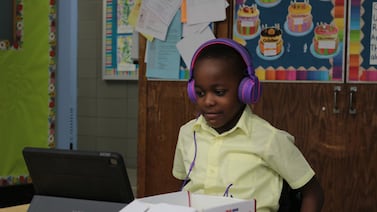
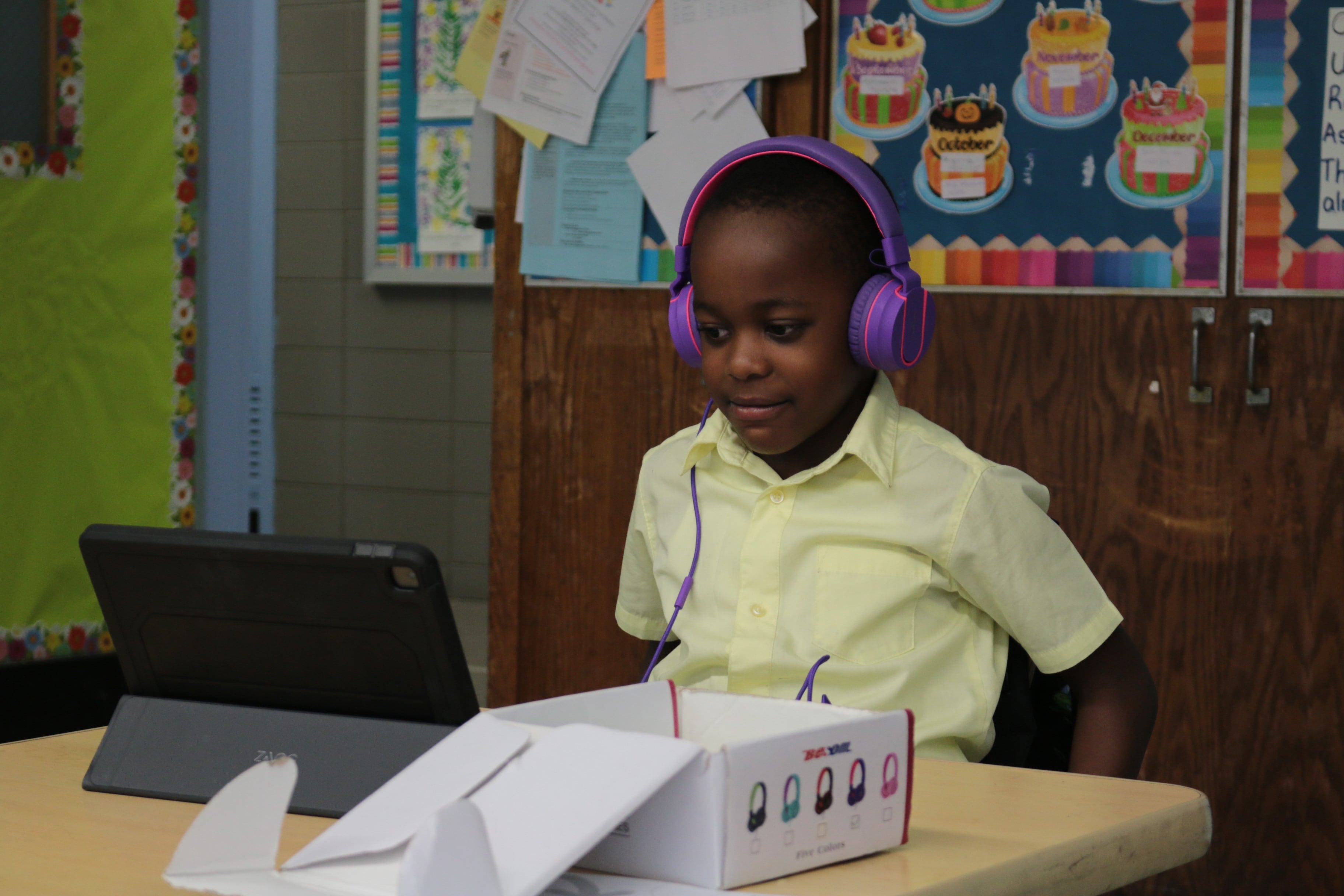
New York City has granted its first exemption to a sweeping ban on digital devices in classrooms serving young students, allowing a major tutoring program to provide one-on-one virtual instruction.
Just days before the school year started, Mayor Zohran Mamdani announced that students in second grade and below would be barred from using laptops and other individual devices as part of a broader set of restrictions on tech and AI in classrooms.
That policy threatened to disrupt the CUNY Reading Fellows program, which trains tutors to provide literacy support to public school children in grades K-2. It reaches struggling readers in dozens of high-need neighborhoods and relies on videoconferencing when tutors can’t travel to a student’s school.
About 30% of the 1,600 students who received tutoring last school year participated virtually because it isn’t always practical for tutors to travel to their schools. Roughly 900 additional students received in-person tutoring over the summer.
Last month, an Education Department spokesperson said the program would not be allowed to offer virtual instruction, alarming some literacy experts who feared vulnerable students would lose access to scarce tutoring opportunities. But officials publicly reversed course this week after Chalkbeat asked about potential disruptions to the program, which typically begins in October.
“NYCPS wisely made an exemption for the remote tutoring option,” said Katie Pace Miles, a Brooklyn College professor who created the CUNY Reading Fellows program. The program “has repeatedly demonstrated its ability to improve outcomes for vulnerable populations of emergent readers.”
Education Department spokesperson Nicole Brownstein did not directly address why the city changed its position on the tutoring program. But officials said programs that use human teachers for real-time instruction, as opposed to platforms where instruction is delivered by software, could qualify for exemptions. Decisions about exemptions will be made on a case-by-case basis, Brownstein said.
Some observers expressed frustration that the city had apparently not more carefully considered the implications of its 1-to-1 device ban on the tutoring initiative, one of the largest programs of its kind in the country.
“Making these quick responses based on legitimate concerns from the public often forces them to eat their words a little bit,” said Susan Neuman, a literacy expert at New York University and former federal education official who is familiar with the CUNY program. She added that there are legitimate uses of education technology.
One study of the Reading Fellows program randomly assigned students to virtual and in-person tutoring found no statistically significant difference in student outcomes, though students who participated virtually attended fewer sessions.
The city’s decision to sharply limit technology in public schools came after many families and educators protested the growing presence of digital products in classrooms.
Kaliris Salas-Ramirez, a parent leader who is part of a coalition pushing for stronger limits on technology, said she was disappointed with the city’s decision to issue an exemption. In cases where tutoring can’t be provided in person, she said schools should have resources to provide face-to-face support to students.
“We’re trying to replace that with a screen of some sort instead of investing in the people,” she said.
High-dosage tutoring is widely considered to be an effective strategy for catching up students, even if it doesn’t always live up to the hype.
CUNY Reading Fellows work with students on a range of foundational literacy skills, including phonics lessons that help students understand the relationships between sounds and letters. Students typically meet with their tutors at least three times a week, mostly one on one, for 20-45 minutes depending on the intervention.
The CUNY Reading Fellows program, previously known as the CUNY Reading Corps, launched in fall 2020 as the school system was grappling with remote learning amid the coronavirus pandemic and scrambling to stanch learning loss.
Alex Zimmerman is a senior reporter for Chalkbeat New York, covering NYC public schools. Contact Alex at azimmerman@chalkbeat.org.