While the Tennessee House voted overwhelmingly this week to force the transfer of three Memphis schools to an affluent suburban district, the legislation could face a tougher fight next week in the Senate.
Sen. Brian Kelsey of Germantown delayed the Senate’s scheduled March 31 vote on his bill to let the House vote first on April 4, signaling that the Senate bill could be in trouble.
Several senators have since acknowledged their discomfort with passing state legislation to intervene in a local dispute between Germantown and Memphis-Shelby County Schools.
“Any time that you get a local issue like this in front of us, we don’t like doing that type of stuff,” said Sen. Ferrell Haile, a Republican from Gallatin, north of Nashville.
But Kelsey, also a Republican, said Thursday he’ll bring the matter before the full Senate on April 11. “It was a successful vote in the House,” he said, “and I expect the same in the Senate.”
The Senate vote will set the course for the future of three schools located in Germantown and operated by the Memphis district under the terms of a 2013 federal court agreement. The valuable properties have been part of a dispute since the town seceded from the newly merged Memphis-based school system and created its own district in 2014.
Under the terms of their federal settlement with Germantown, the suburban town received the deeds to five schools that previously were operated by legacy Shelby County Schools, while the three Germantown namesake schools were retained by the Memphis district. Even if the bill becomes law, Memphis school officials have promised to challenge it in court.
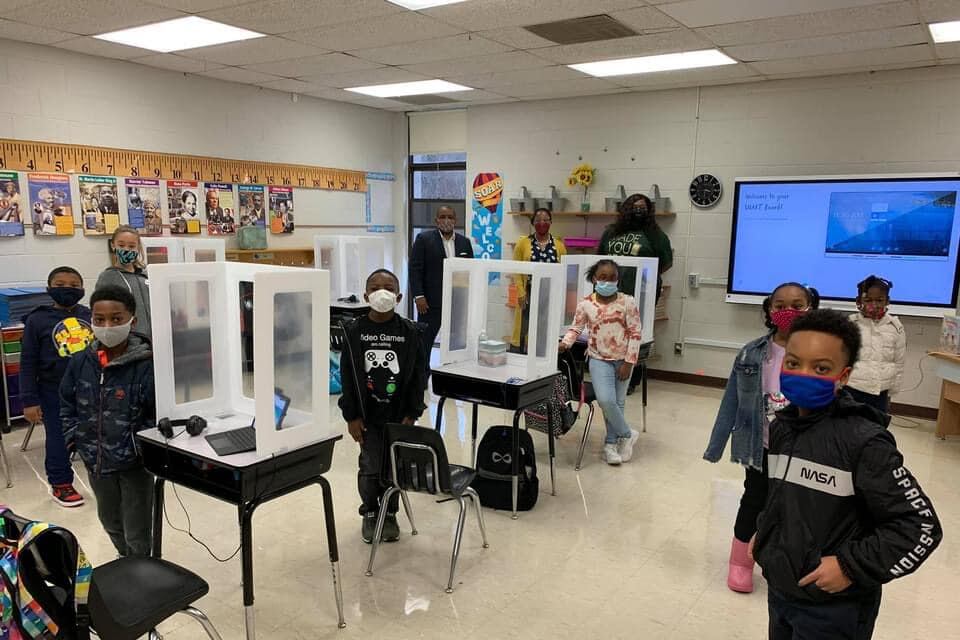
Known locally as the “three Gs,” Germantown elementary, middle, and high schools serve 3,300 students living in unincorporated areas outside of Germantown limits in Shelby County.
Germantown Mayor Mike Palazzolo has pushed to take control of the three campuses. He’s also pledged to let current students complete their education through a lease arrangement with Memphis-Shelby County Schools. But he has not provided a plan for serving future students zoned for those schools — a dealbreaker for Memphis leaders who would have to build a new high school and absorb younger students at several existing schools.
Some Memphis officials have said there are undertones of race and class in the tug-of-war. Most students at the three Germantown schools operated by Memphis-Shelby County Schools are Black, and about a third come from economically disadvantaged backgrounds. Most students attending schools in the Germantown municipal district are white, and about 5% come from low-income families.
During debate before the House’s 68-23 vote, Democrats characterized the bill as a land grab by Germantown at the expense of students and their families.
“You can vote yes and you’ll put these schools in the hands of noneducators who are anxious to get the kids out of the schools as soon as possible,” said Rep. Dwayne Thompson, a Democrat from Cordova, another bedroom community of Memphis.
But Republican Rep. Mark White, the bill’s co-sponsor, argued it is time to place the schools under the authority of the town where the schools are located. He spearheaded 13 meetings last year in Shelby County to get local officials to negotiate a new settlement, but without success.
“This is a local issue that I’ve been asked to bring before the (General Assembly) to put it to rest,” said White, whose Memphis district includes Germantown.
The bill passed easily last month out of the Senate Education Committee, including a yes vote from chamber speaker pro tempore Haile.
“There’s been a lot of lobbying on this by both sides of the issue,” Haile said Thursday. “Both sides have some good points and both sides have some bad points. And so we’ll just have to work through that and see where the chips fall.”
Marta W. Aldrich is a senior correspondent and covers the statehouse for Chalkbeat Tennessee. Contact her at maldrich@chalkbeat.org.