Sign up for Chalkbeat Tennessee’s free newsletter to keep up with statewide education policy and Memphis-Shelby County Schools.
The Memphis-Shelby County school board is now suing the county commission in its fight against the 2026 election that could cut short five board members’ terms.
The MSCS board filed an initial lawsuit against the Shelby County Election Commission in December, blaming the local entity for unconstitutionally shortening terms by putting all nine board seats on the May 2026 ballot. That original filing didn’t mention the Shelby County Commission, which voted in September to enact the state law that allows for the election reset in the first place.
Commissioner Michael Whaley, who sponsored the final version of the reset bill, said then that he hoped omitting an official start year in the bill language would protect the county commission from a lawsuit.
But the MSCS lawyer filed an amended complaint last week with the Shelby County Chancery Court, saying the commission acted “wholly outside the scope of the local government’s authority” by enacting the September resolution.
“The Shelby County Board of Commissioners has no authority under the Tennessee Constitution to remove any elected school board member or to abridge their terms of office by any means,” the Jan. 15 amended complaint states.
A 2024 Tennessee law permitted local governments to realign election cycles to put school board races on the same ballot as other county offices. But it did not “expressly authorize” the Shelby County Commission to remove “duly elected, qualified and acting school board members” from office or shorten their terms, the lawsuit says.
A spokesperson for the Shelby County Commission said the body does not comment on ongoing litigation. The county attorney’s office did not immediately respond to a request for comment Wednesday.
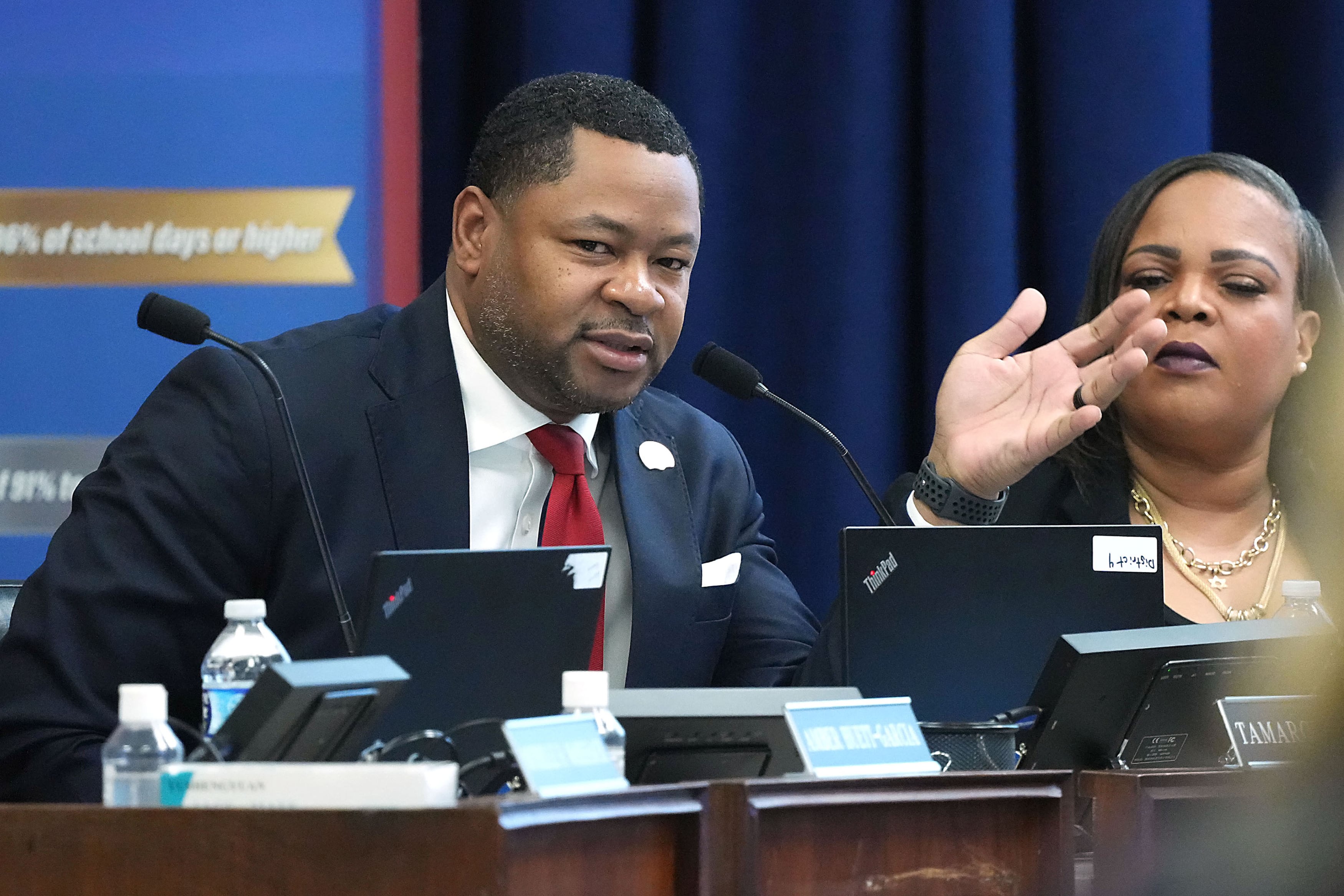
The revised lawsuit also claims that board member Tamarques Porter, who represents District 4, will suffer “unique harm that will be immediate and irreparable” by being forced to run again in 2026. Porter works as a federal employee in the Department of Treasury, which means he cannot participate in partisan elections under the Hatch Act.
The local Republican and Democratic parties voted this year to make the May 5 school board primary a partisan race for the first time.
Porter is the only member among the five facing shortened terms – including Board Chair Natalie McKinney, Stephanie Love, Sable Otey, and Towanna Murphy – who did not vote to fire former Superintendent Marie Feagins in January. Board members have called the election changes retaliation for that decision, a claim the lawsuit echoes.
The Shelby County Chancery Court issued a temporary restraining order to pause 2026 candidate petitions in the five contested districts – 2, 3, 4, 5, and 7 – earlier this month, marking an early win for the MSCS board.
A hearing is set for Jan. 26.
Bri Hatch covers Memphis-Shelby County Schools for Chalkbeat Tennessee. Reach Bri at bhatch@chalkbeat.org.