For the last several months, President Donald Trump has had a simple message for schools: reopen your buildings.
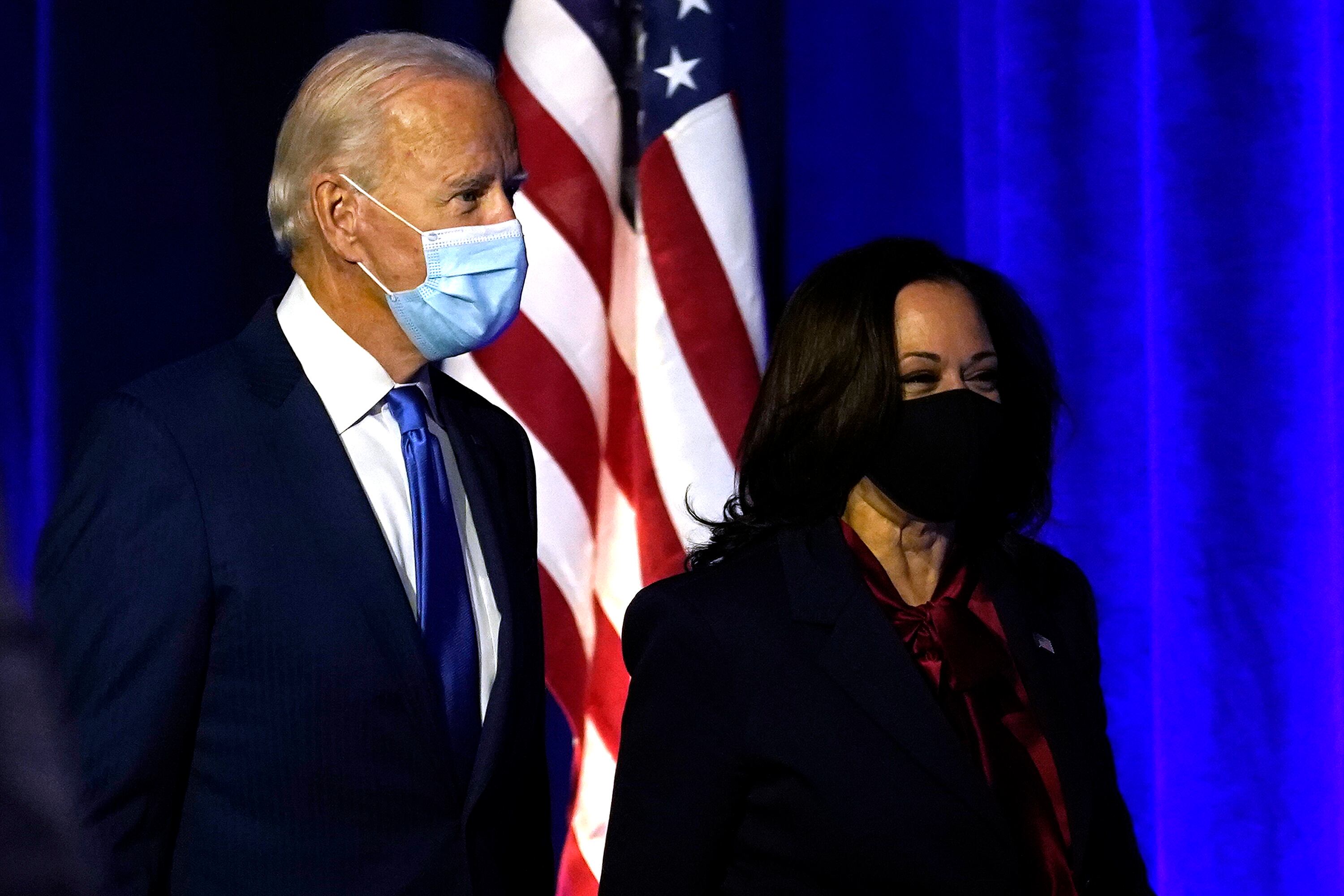
President-elect Joe Biden has a more complicated one: the federal government is on the way with better guidance and — hopefully — money, but no mandates.
“Schools need clear, consistent, effective national guidelines, not mixed messages and political ultimatums,” the Biden campaign plan for reopening schools says.
The race has been called, and the incoming Biden administration is set to inherit a country still struggling with the coronavirus pandemic. Though more schools are reopening their doors, COVID cases are still rising. Schools will still be grappling with exactly how to balance public health and education concerns for months to come.
A Biden administration is set to play a different role than Trump officials have, by pushing for additional resources for public schools and efforts to make up learning loss, while making no demands of schools on Twitter.
It’s not clear that those changes will actually affect reopening decisions made by local officials. School reopening so far has split along racial and political lines, and one of Biden’s top priorities — getting more money to schools — hinges on Congress, where the Senate may still be controlled by Republicans.
Still, some public school groups say a move away from Trump’s bellicose rhetoric will be welcome.
“The best thing that could come from the Biden administration would be a significant shift in tone,” said Noelle Ellerson Ng, associate executive director of AASA, the school superintendents association. “Under a Biden administration, a more tempered message would hopefully have a spillover effect.”
The Biden campaign laid out a “roadmap to reopening schools safely” back in July.
A major focus is money for schools. Biden supports a bill passed by House Democrats to provide $58 billion for public schools, plus hundreds of billions for state governments facing budget shortfalls. His plan also calls for a separate bill to provide additional funding schools could use for items like personal protective gear. (Private schools aren’t mentioned in the Biden plan, and are unlikely to be a priority of his administration.)
“Vice President Biden would be working with leaders in Congress right now to pass an emergency package for schools so they have all the resources they need,” Stef Feldman, the Biden campaign policy director, said last month. “That’s money for things like ventilation and other health measures, but also money for things like hiring additional teachers so we can keep class sizes small.”
By contrast, outgoing Education Secretary Betsy DeVos has downplayed the need for additional money for public schools, pointing to the money already allocated for schools by the CARES Act passed in March. She has also focused on providing more resources for private schools.
Even under a Biden administration, any additional aid will be shaped by who controls the U.S. Senate, likely to hinge on two runoff elections in Georgia. Senate Republicans have already rejected the House bill Biden supports and have backed a significantly slimmed-down package that includes money for schools, but no money for state and local governments. Their package ties some school funding to physical reopening requirements.
Trump and DeVos have said schools must reopen, but have not made good on threats to withhold funding from those that didn’t.
Biden’s plan rejects any talk of federal requirements for reopening. Instead, he promises to provide “basic, objective criteria to guide state, tribal, and local officials in deciding if and how reopening can be managed safely in their communities.”
The Centers for Disease Control and Prevention has issued guidance for school reopening, but Ng said it hasn’t always been trusted by school district leaders, thanks to reports that the White House pressured the CDC to play down the risks of reopening schools amid Trump’s fierce reopening push this summer. (Some recent data has bolstered the case for reopening schools, but experts say there remains substantial uncertainty about the role schools play in community spread of COVID.)
Ng said when viruses have threatened in the past, like during the 2014 Ebola scare and the SARS outbreak in 2003, the CDC was perceived as apolitical. “That is not what we had during COVID,” she said.
Biden’s plan also says there is a pressing need for schools to improve remote learning and develop plans to help students make up lost learning after months of disrupted schooling.
His plan promises “a White House-led initiative to identify evidence-based policy solutions that address gaps in learning,” and says the U.S. Department of Education would “develop, adopt, and share the latest tools and best practices to ensure high-quality learning during this pandemic.”
“So many children are falling behind due to remote learning, and we need to be thinking now about how to help them catch up,” said Feldman.
But Biden’s plan here is thin on details. Some ambitious ideas for making up learning loss, like a large-scale tutoring program, would almost certainly require more money from Congress.