Sign up for Chalkbeat Chicago’s free daily newsletter to keep up with the latest news on Chicago Public Schools.
An increasingly vocal contingent of Illinois education advocates, including a Chicago school board member, are calling on Gov. J.B. Pritzker to opt into the Trump administration’s federal tax-credit scholarship program.
Pritzker has about four months to decide whether he plans for Illinois to join the federal program, which offers tax credits to individuals who make donations toward private and public schools. The looming decision has created a growing schism between school advocacy groups, as some see the program as an opportunity to better fund Illinois schools while others worry it will just funnel more money into private schools.
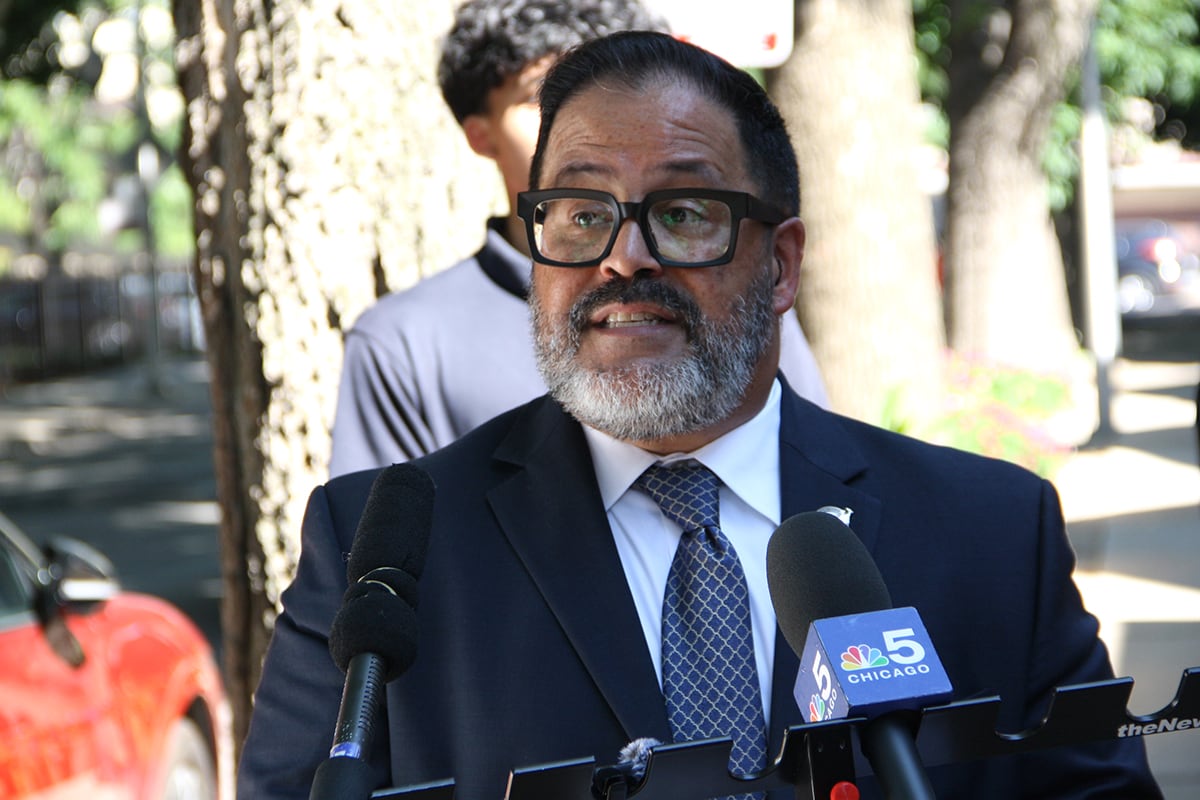
One of the most prominent declarations against Illinois joining the Trump administration’s initiative was from the Chicago Board of Education itself. Earlier this year, it decisively passed a non-binding resolution urging the state not to opt in. However, in a noteworthy break from most of the school board, Angel Gutierrez — the only member who was absent from the vote — came out in support of Illinois’ program participation at a Thursday news conference outside South Loop Elementary School.
“I think it was politically driven,” Gutierrez told reporters, referencing the board’s resolution. “But I think that, in the space and place that we’re in now, we have to be really cognizant of any type of potential dollars that may help and directly benefit the students.”
Republican lawmakers included the creation of the federal tax-credit scholarship program in President Donald Trump’s “Big Beautiful Bill” last year. The initiative, called the “Education Freedom Tax Credit,” is meant to promote school choice nationwide. Taxpayers can choose to contribute up to $1,700 originally owed in federal income taxes to an education-related scholarship organization.
But the major caveat to the program that has fueled debate is the critical role of governors in choosing to opt into the program. If a governor — or whatever government entity has authority to make the choice — doesn’t decide to join, students in that state won’t be eligible to receive money generated from the program.
In Illinois, a Democratic stronghold, many advocacy groups approached the program with skepticism. Those who have come out against participating point to the intentions behind the initiative — creating an environment that drives more families toward private schools — as evidence that it will not provide equitable outcomes for public schools. It could also exacerbate existing disparities in funding, as wealthier school districts are more likely to get contributions from their families than poorer districts.
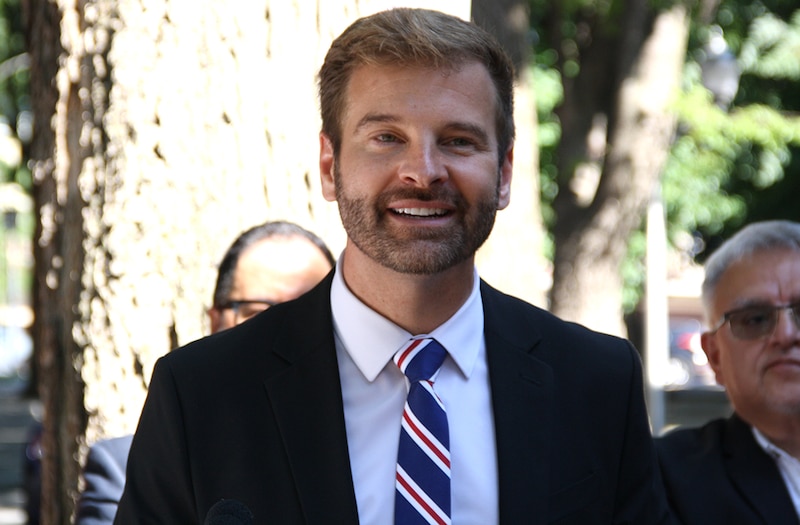
Some Illinoisans may be familiar with previous efforts this year to sway Pritzker to join, most notably a ballot measure campaign in more than 20 counties from Illinois Policy Institute, a libertarian-leaning think tank. Other education officials at Gutierrez’ news conference argued that the program will roll out with or without Illinois’ participation, meaning donations for education organizations would wind up out-of-state.
“It indeed is a set, settled, and passed law at this point. We’re not interacting with it in terms of advocating for or against it, “ said Joshua Stafford, superintendent of Vienna High School in southern Illinois. “Instead, each state now gets to make a determination, and that determination really boils down to whether boys and girls and schools are going to be able to participate in this opportunity.”
Statewide education advocacy organizations are also backing Illinois’ participation in the program, including Stand for Children Illinois, a group that aims to improve children’s access to public schools.
Jessica Handy, Stand for Children’s executive director, acknowledged in a virtual news conference earlier this month that the federal initiative was not made with educational equity in mind. Instead, Handy suggested Illinois avoid using the program as designed and implement “creative and innovative approaches” to prioritize equitable access for all students. Illinois school districts will need to make sure they establish a scholarship granting organization to receive tax credit money, which Handy emphasized as a key reason to opt in sooner rather than later.
Further guidelines and regulations for the program’s implementation are expected to be released this fall. The governor’s office said earlier in this summer that it is waiting to see what the federal rules look like before deciding whether to join.
So far, it has been a slow trickle of Democratic governors who enrolled their states in the program. Colorado Gov. Jared Polis led the pack to opt in, and New York Gov. Kathy Hochul has indicated that she plans to, as well. There have also been flat-out rejections from some Democratic governors, including in Hawaii, Minnesota, New Mexico, and Oregon, according to the federal Education Freedom Tax Credit resource website.
Makiya Seminera is a reporter covering how the state and federal government affect education in Chicago and across Illinois. Contact Makiya at mseminera@chalkbeat.org.