Did you know search engines like Google are changing the way you see news? Keep Chalkbeat’s valuable education coverage at the top of your feeds by clicking here and checking the box next to our name.
A student in Whitney Chase’s class told the high school Spanish teacher this week that every time they see an airplane flying over their San Diego community, they fear the sound of a bomb will follow.
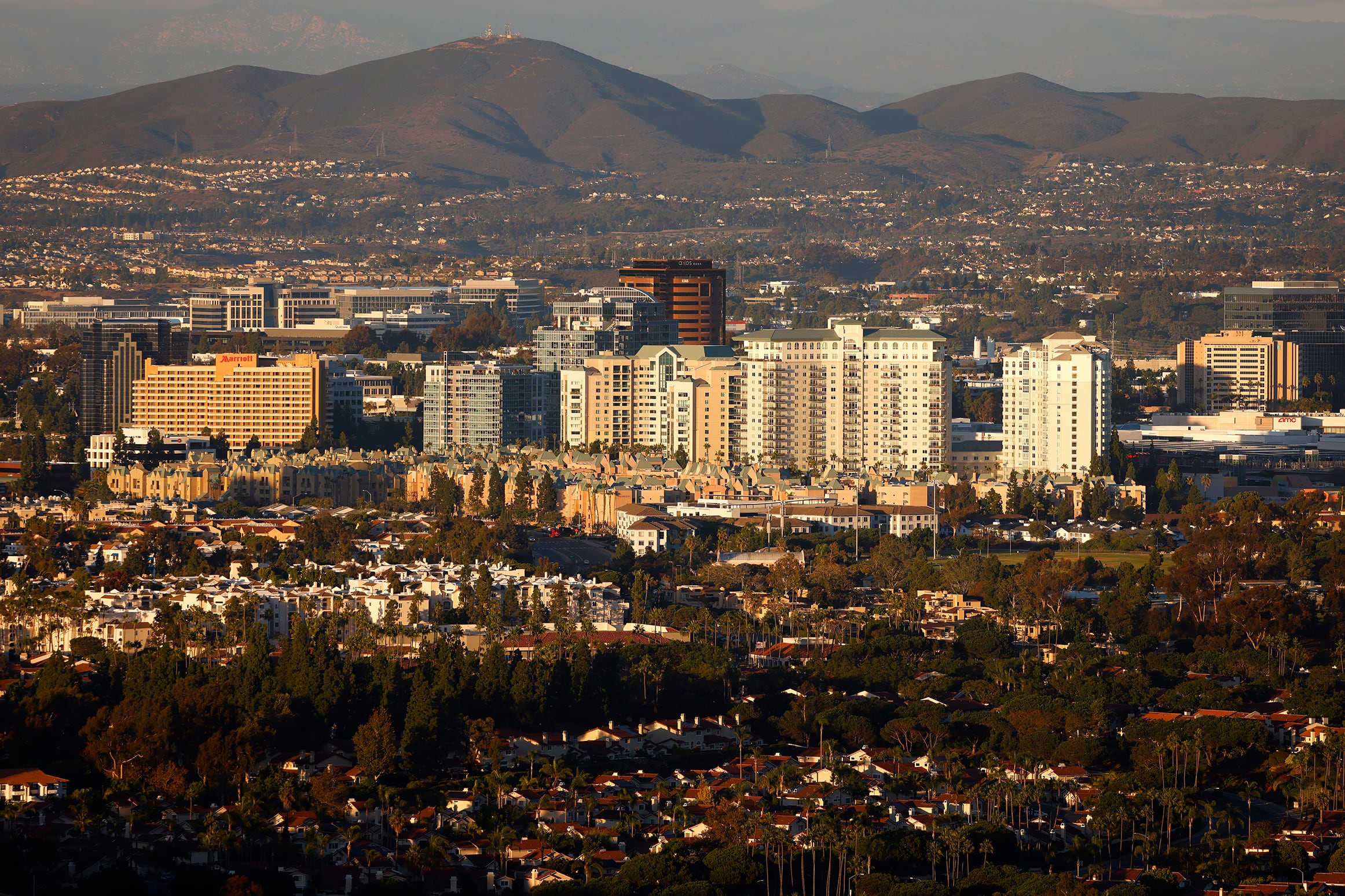
To some, San Diego is a tourist destination known for beaches and burritos. A southern California oasis where the sun is always shining. A border city with a landmark zoo. But on Oct. 5, San Diego and its residents became the subject of contentious remarks made by President Donald Trump. At a rally in Nebraska, while speaking about how the war with Iran is keeping the world safe, he said: “Let them take out Los Angeles; let them take out San Diego. That’s — this is a very small price to pay, and it’s going to be over with very soon.”
The line was instantly polarizing. Scores of Californians and progressives nationwide said it was another hostile affront to a state Republicans have long labeled a liberal inferno, and blasted Trump for suggesting San Diego or Los Angeles could be attacked and that the government would “let them.” The Trump administration said the comments were widely misinterpreted — an assertion some news organizations said was supported by the context of the speech — and that the president was saying cities would have been in danger if Trump hadn’t acted.
As for kids in San Diego? They took it as though the threat of a bomb from Iran aimed at their community could be imminent, said Chase. But more broadly, the remark felt like another dig on a community already feeling wrung out by the current presidential administration’s policies. It also highlighted the difficulties for educators when they consider whether and how to discuss current events, especially when they can’t assume every student’s political background.
The surge in immigration enforcement arrests in Trump’s second term has taken a toll on local students and educators. So has the war with Iran. With more than 115,000 active-duty service members, San Diego is also a military town, and just welcomed back the U.S.S. Lincoln after a perilous and lengthy month deployment. Reports of supply shortages and mental health issues among crew members also added to families’ stress.
The fears created by the Iran remark and the broader alarm coursing through San Diego schools prompted the school district this week to publish a resource for its educators about how to talk to students about Trump’s “let them” comments. The nine-page, slickly formatted document includes screenshots of tweets from California Gov. Gavin Newsom, and suggestions for facilitating conversations with students — conversations that officials say students want to have.
For younger students, teachers should emphasize that they’re safe, and ask students what makes them feel safe, the guide says. For older students, conversations might tackle media literacy and civics concepts. The guidance tries to spark conversations about leadership, and how to respond thoughtfully when a public figure makes a hurtful comment.
Education leaders, including district Superintendent Fabi Bagula, also held a press conference where they denounced Trump’s words. “No child should ever be asked to answer for a government or be treated as responsible for its actions,” she said. “Our words and our willingness to listen matter.”
Richard Barrera, president of San Diego Unified’s school board and a contender in November’s state superintendent race, said in an interview with Chalkbeat that while Trump “might not appreciate or care about the impact of his words, but when he says something like Iran should take out Los Angeles or San Diego, that scares young people.”
Students’ desire to talk about Trump’s Iran comments runs parallel to their stories of how the president’s immigration policies have fractured their families, with federal agents detaining parents or surrounding students on their way to school.
Chase, who teaches at a school with a high population of economically disadvantaged students and Latino students, said the kind of fear expressed by the student about airplanes overhead has spread.
Managing student emotions and answering questions in the wake of comments like Trump’s Iran remark entail delicate conversations.
At the same time, the district’s guidance advises educators to stress safety to students, “and talk about how news can feel scary even when we are safe.” Chase has also tried to steer conversations from fear to more optimistic topics, like what students hope for in the world, stressing that humans have rights to dignity. One student wrote her a letter, she said, stating that their generation won’t “accept hate” from Donald Trump.
Still, bringing up politics in school can be treacherous, particularly when some Americans believe schools should behave in ways that are politically neutral. San Diego’s resource includes the Trump administration’s defense of the comments.
While many San Diegans are Democrats— 57% voted for Kamala Harris in 2024 — Republicans do represent portions of the San Diego region in Congress and the California Legislature. Barrera said teachers should talk to students in a way that doesn’t show a political preference.
But he said that doesn’t mean people should just accept the “rationalization” from the Trump administration about the president’s comments: “It doesn’t matter whether he was joking. It matters what he said.”
Chase said she tries to be as objective as she can in conversations with students. But that doesn’t mean she’ll stay silent.
“What we’re trying to get the kids to understand is, this is not normal,” she said of Trump’s remarks. “This is not normal behavior for a politician.”
Lily Altavena is a national reporter at Chalkbeat. Contact Lily at laltavena@chalkbeat.org. Lily is on Instagram, Tik Tok, and Facebook.