Sign up for Chalkbeat’s free weekly newsletter to keep up with how education is changing across the U.S.
Education Secretary Linda McMahon said states will be able to put conditions on scholarship organizations as part of the federal tax-credit scholarship program, weighing in on one of the biggest questions for governors considering whether to opt into the program.
The Treasury Department, not the Education Department, ultimately is responsible for setting the rules that will govern the federal tax credit, and those have not been finalized. It was not clear whether McMahon’s comments reflect the Trump administration’s position. The Education and Treasury Departments did not immediately respond to requests for clarification.
Allowing states to pick and choose which scholarship groups are included in the program would be at odds with how many conservative school choice advocates believe the program will work. But it would align with the Trump administration’s pledge to return education to the states.
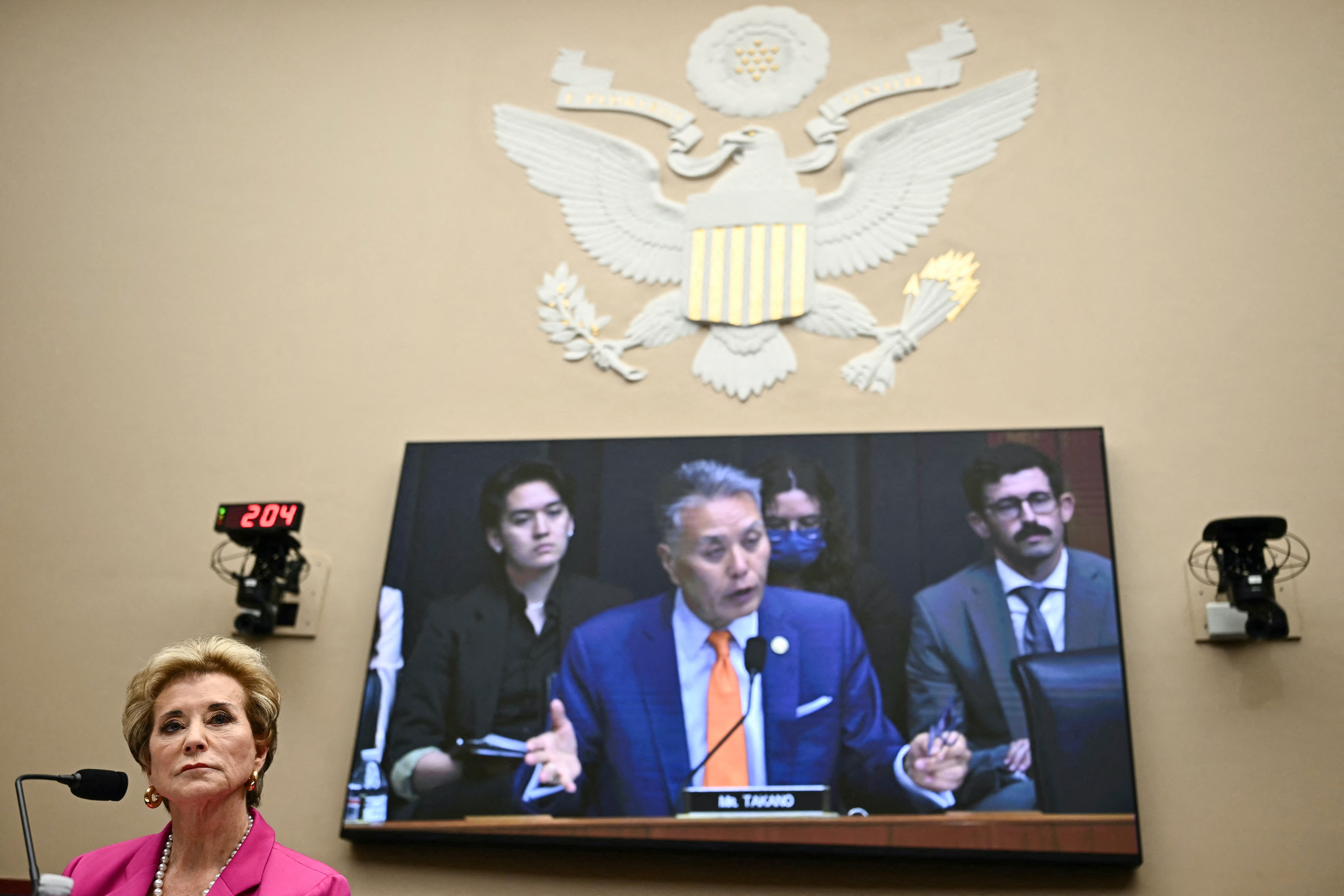
McMahon’s comments came during an exchange with Rep. John Mannion, a New York Democrat and former classroom teacher, at a House Education and Workforce Committee hearing on Thursday.
Just last week, New York Gov. Kathy Hochul said she intends for her state to participate in the program, which allows taxpayers to donate up to $1,700 to eligible scholarship organizations and get a refund or credit on their federal taxes for the full amount. However, Hochul said through a spokesperson that she’s waiting to see the rules and will review them carefully for any “poison pills.”
“You had mentioned that we need to return education to the states,” Mannion said. “Will the states have the ability to set rules around these scholarship-granting organizations? And some of the questions might be assuring that there will be scholarships for low income families or minority families or public institutions. Will the school boards or the boards of regents or the governors have control over that at the state level?”
“Yes, that’ll be done at the state,” McMahon responded. “Of course, the 501(c)(3) status is granted through the federal government, but those decisions would be made at the state.”
Mannion sought additional clarity: “Gotcha. So they will be able to set rules around scholarship-granting organizations and the scholarships themselves?”
“That is my understanding,” McMahon said.
The federal law that established the tax credits lays out bare-bones requirements for scholarship-granting organizations. They must be federally recognized nonprofits and serve students from more than one school, and scholarships must go to educational expenses. Governors can decide whether their states participate, and those that do must submit lists of eligible scholarship organizations each year.
Some education advocates have called for the Treasury Department to allow governors to set criteria for scholarship groups in their state. Those could include requiring these groups to serve students from low-income families, requiring that schools that receive scholarship students meet certain standards, or perhaps most significantly, that scholarship groups and participating schools abide by non-discrimination rules.
That could pose a problem for some religious schools and scholarship groups. In Colorado, Democratic Gov. Jared Polis warded off an attempt by lawmakers of his own party to place just such requirements on scholarship groups. He said Colorado risked losing out on money and not being able to participate if it imposed non-discrimination requirements.
Many Democratic governors have said they are waiting to see Treasury rules before making a final decision.
In a statement to Chalkbeat, Mannion said he hopes McMahon’s answers to his questions show up in official policy.
“Secretary McMahon is now on the record saying that state governments will be able to set their own rules around scholarship granting organizations,” he said. “She should make that clear to the Treasury Department, and I fully expect to see it reflected in the upcoming guidelines.”
For their part, conservative education choice advocates have insisted the only requirements for scholarship groups should be those already in the law. Governors, however, would be free to use their bully pulpit to promote their preferred causes.
Leslie Hiner, vice president of legal policy for EdChoice, a school choice advocacy organization, said her organization expects initial rules from the Treasury Department in July. Hiner said the federal law appears to limit governors’ role in the program. EdChoice would oppose governors attempting to place any kind of restrictions on the program that the group would view as motivated by politics, she said.
“Yes, we oppose that and we’ll oppose that all day long,” Hiner said. “The ultimate beneficiary is that child who needs some help and that parent who needs some help in taking care of that child.”
National reporter Lily Altavena contributed.
Erica Meltzer is Chalkbeat’s national editor based in Colorado. Contact Erica at emeltzer@chalkbeat.org.