A pandemic-era program that provides free therapy sessions to Colorado children and teens moved a little closer Wednesday to becoming permanent, easily clearing its first legislative hurdle.
The bill to make the 2-year-old I Matter program permanent passed 7-2 in the Senate Health and Human Services Committee and will now go to the Senate Appropriations Committee.
Supporters of the bill say I Matter has made mental health counseling easy to access for thousands of Colorado students who’ve struggled with unprecedented levels of depression and anxiety in the wake of the pandemic.
The program provides six free telehealth or in-person counseling sessions to students in elementary through high school. Students 12 and over can sign up for the therapy sessions by filling out a simple online form. Children under 12 can use the service, but need to fill out a form with a parent. Currently, the annual cost of I Matter is $6 million, but state officials expect it could cost $11 million next year as use increases.
If the bill under consideration doesn’t pass, I Matter will expire this summer.
During Wednesday’s hearing, one mother, Laura Love, told the story of her 14-year-old son Sam, who died by suicide last May.
After his death, she went through his phone and discovered he’d recommended I Matter to three friends who’d been facing their own mental health struggles in the month before he died.
“This program even got the attention of a teenage boy who had a hard time sitting still long enough to finish his homework,” she said. “He shared it with friends who were hurting.”
Love urged lawmakers to support I Matter’s continuation.
“While I can’t bring Sam back, I can help give a voice to so many other kids who are just as incredible as our Sam,” she said.
Since I Matter launched in the fall of 2021, nearly 11,000 children and teens have used the program, according to data from Colorado’s Behavioral Health Administration.
Sen. Dafna Michaelson Jenet, a Commerce City Democrat and a co-sponsor of the original I Matter bill and the bill to make it permanent, rattled off the number of kids who’ve used I Matter in various counties since the program’s inception: 1,386 in Denver, 1,417 in El Paso, 1,250 in Jefferson, 581 in Weld, and 299 in Eagle.
“We’re reaching our people,” she said. “This has proven to help our students and I would like to see it continue.”
Several doctors and mental health advocates testified in favor of the bill, describing it as one user-friendly option that can help youth cope during tough times. A few Colorado residents spoke against the program Wednesday, arguing that allowing children 12 and over to use it on their own damages parent-child relationships.
A 2019 law — not the original I Matter law — lowered the age that adolescents can seek mental health therapy without parental consent from 15 to 12.
Anne Frank, a Denver pediatrician, spoke in support of continuing I Matter, saying it can help teens who might otherwise fall through the cracks because they have no health insurance or face other barriers to mental health care.
She described a teenage patient with depression whose parent works a lot and is mostly on his own from morning till night.
“This teen is really, really hard-working and was seeking treatment that would fit his life,” she said. “I Matter was easy and he put it in his phone the day I saw him.”
He got therapy through the program and felt better when Frank followed up, she said.
Riley Haleen, a recent college graduate and a program associate for the Colorado chapter of the National Alliance on Mental Illness, said she wished a program like I Matter had been around when she was a teenager. With no money for therapy at the time, she had only her sister to lean on when her stepfather died and her mother battled cancer.
“We were each other’s therapy,” she said. “As sweet as that sounds, we needed professional help.”
She urged lawmakers to keep the program going.
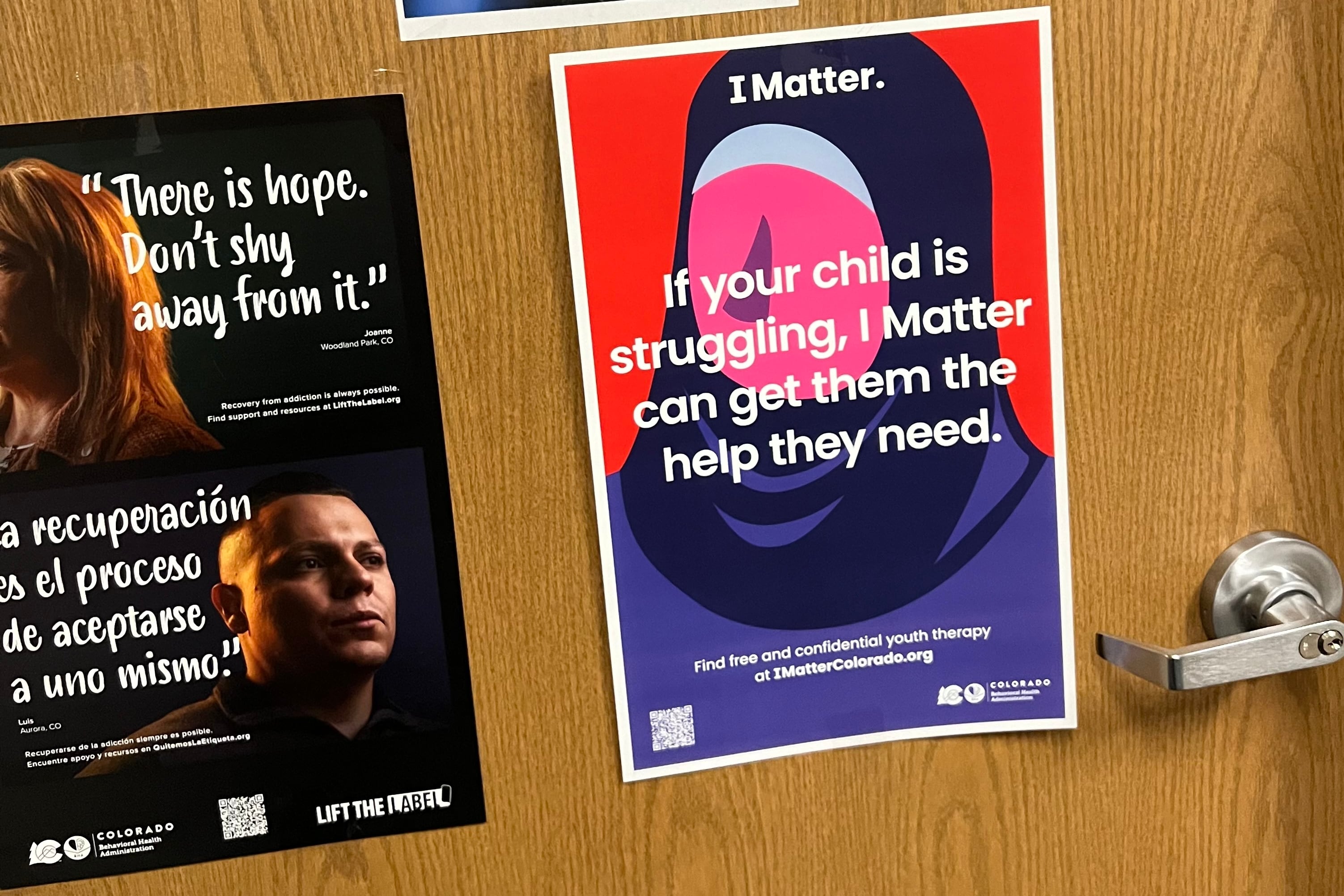
“Students are using it,” she said. “I see the posters in coffee shops and beam with pride when I think about its impact.”
If you are in crisis, please call, text or chat with the Suicide and Crisis Lifeline at 988, or contact Colorado’s Crisis Line at 1-844-493-8255 or by texting TALK to 38255.
Correction: Due to incorrect information from the Colorado Behavioral Health Administration, an earlier version of this story incorrectly stated that more than 14,000 children and teens have used I Matter since its inception. Nearly 11,000 youth have used the program.
Ann Schimke is a senior reporter at Chalkbeat, covering early childhood issues and early literacy. Contact Ann at aschimke@chalkbeat.org.