Did you know search engines like Google are changing the way you see news? Keep Chalkbeat’s valuable education coverage at the top of your feeds by clicking here and checking the box next to our name.
For a second year in a row, adults ages 25 and older helped fuel an enrollment increase at Colorado’s community colleges.
Most community college students are still recent high school graduates or current high school students concurrently enrolled in college-level classes. But the share of older adults who are attending two-year colleges is growing.
The 13-school Colorado Community College System, which serves about 97,700 students, enrolled 755 additional older adults this fall, data shows. Enrollment among recent high school graduates was down by about 450 students.
The second year of enrollment gains among older adult students stabilizes declines that have persisted well over a decade. Many students gravitate toward two-year colleges during down economies, and the 2008 recession fueled large enrollment gains.
College officials report that more older adults might be choosing to take classes that would help them get healthcare jobs, especially due to the rise of artificial intelligence and economic uncertainty. School officials have also directed more resources toward keeping older adults enrolled.
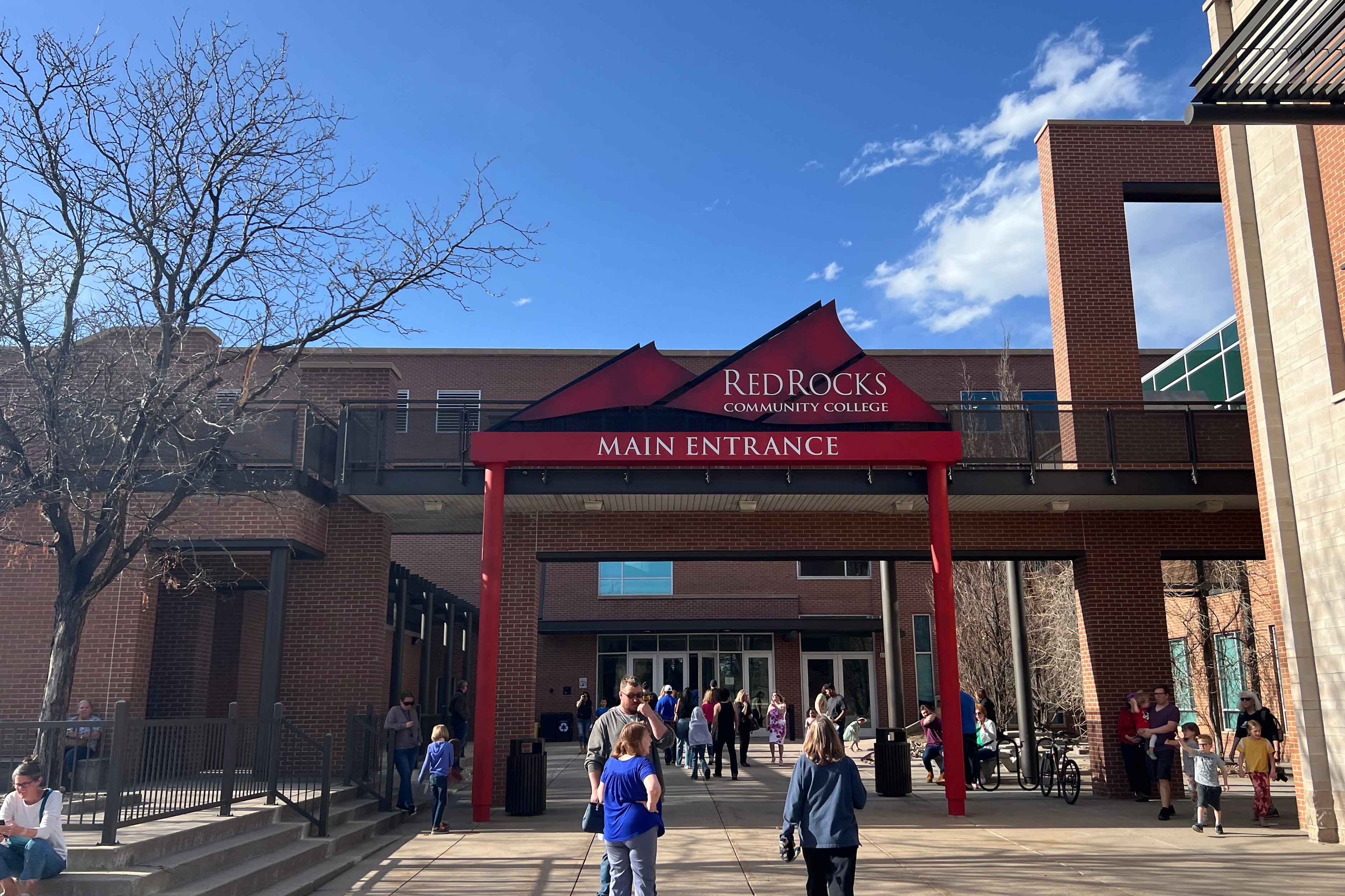
Landon Pirius, president of Red Rocks Community College in Lakewood, said healthcare work is seen as a more AI-proof field. And there are job opportunities because of nationwide health workforce shortages. A Red Rocks spokesperson said the school’s older adult population increased by 7.3% this year, up to 2,351 students.
“I’m seeing more people not necessarily not having a job, but anticipating that in a year or two they may need a different job,” Pirius said.
Pikes Peak State College’s Kevin Hudgens, the senior director of admissions, recruitment, and enrollment services at the Colorado Springs school, also sees the same trend.
“They talk about wanting to make sure that they are in a field that is recession-proof and that is a little more hands-on or has some skills that that AI can’t replicate,” Hudgens said.
Ariana Lazo, a 35-year-old mother of five, enrolled at Red Rocks to study nursing because she wanted greater economic opportunities.
“I am struggling to make ends meet because it’s a difficult economy,” she said.
She initially worried about going back full-time as an adult. At Red Rocks, Lazo helped create the Adult Student Advocacy Collective with support from campus officials to help others like herself. The organization advises campus leaders on how to serve adult learners and hosts workshops on topics such as how to thrive in college.
“There’s less of a stigma about going back, you know, at a certain age,” she said. ”You do feel empowered to have more of a voice. Like, this is our campus, too.”
Jason Gonzales is a reporter covering higher education and the Colorado legislature. Chalkbeat Colorado partners with Open Campus on higher education coverage. Contact Jason at jgonzales@chalkbeat.org.