Sign up for Chalkbeat Philadelphia’s free newsletter to keep up with the city’s public school system.
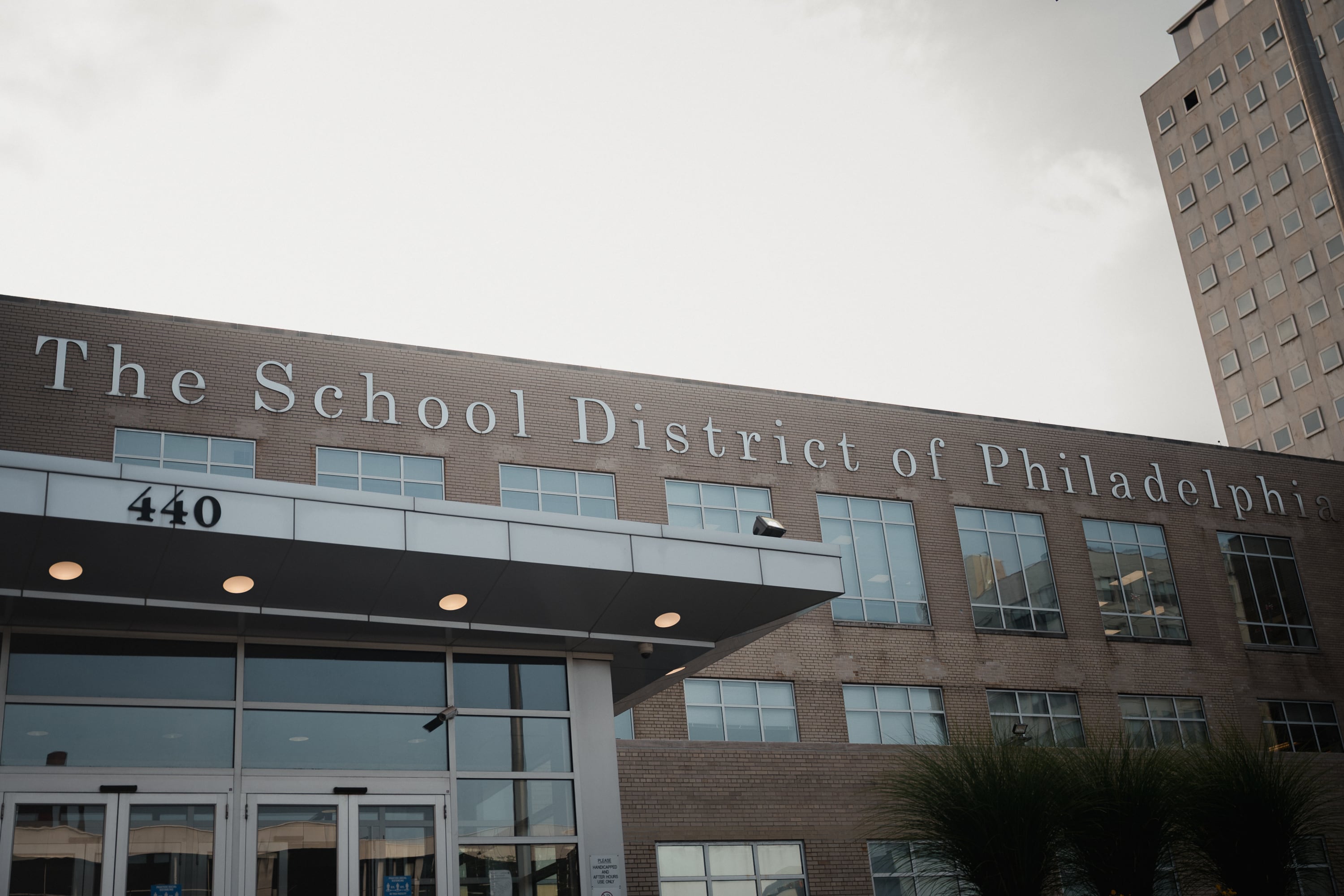
The Philadelphia Board of Education adopted a preliminary plan Thursday to cut district spending by $225 million next fiscal year.
The plan follows the budget cuts Superintendent Tony Watlington proposed earlier this month. Watlington said the cuts are necessary to plug the district’s $300 million deficit and to prepare for the projected rising costs of salaries, charter school payments, and health care.
“It is not because of waste,” Watlington told the school board Thursday. “It is not because somehow we’re not managing the public’s tax dollars wisely. It is because over the next five years, our expenditures will grow faster than revenues.”
He also said the district’s funding challenges are largely a result of underfunding from the state and the end of post-pandemic federal aid.
The preliminary $4.5 billion spending plan, called the “lump sum” budget statement, isn’t finalized. It will be presented to Mayor Cherelle Parker and City Council, and there will be public hearings before the board’s final vote in May.
If the plan passes, the district will eliminate all of its approximately 220 building substitute positions, reassign another 340 school-based positions, and cut 130 vacant central office roles. The district would also cancel some contracts that Watlington said aren’t increasing attendance or student performance in reading or math.
Those cuts, along with additional spending reductions over the next few years, would enable the district to eliminate its structural budget deficit by 2030, Watlington said.
Board President Reginald Streater acknowledged that the budget cuts could be painful for the city’s schools. “It is clear that [students] are worth the investment,” Streater said. But he added that the board must consider what needs to be done to address the budget deficit.
There’s a chance the cuts could be much lower. Earlier this week, Mayor Cherelle Parker proposed a $1-per-ride tax on Ubers and Lyfts to generate $48 million annually for schools, which would save 240 school-based positions from elimination. But it’s unclear if members of the City Council will support that plan.
In the meantime, Watlington said the district is advising schools to plan budgets that would not include that extra funding.
The school board also approved the following contracts:
- $84.5 million for preschool programming at three dozen providers for income-eligible children.
- $390,000 for a pre-K marketing campaign to promote enrollment.
- $18.8 million in payments to other educational institutions, including hospitals, private schools, and other districts where students are placed by the Department of Human Services, Community Behavioral Health, or the courts.
- An additional $175,000 with David Geppert Recycling for asbestos disposal services on top of an initial $150,000 contract.
Rebecca Redelmeier is a reporter at Chalkbeat Philadelphia. She writes about public schools, early childhood education, and issues that affect students, families, and educators across Philadelphia. Contact Rebecca at rredelmeier@chalkbeat.org.