Sign up for Chalkbeat’s free weekly newsletter to keep up with how education is changing across the U.S.
President Donald Trump doesn’t have the votes to abolish the U.S. Department of Education, though that’s not stopping him from taking it apart.
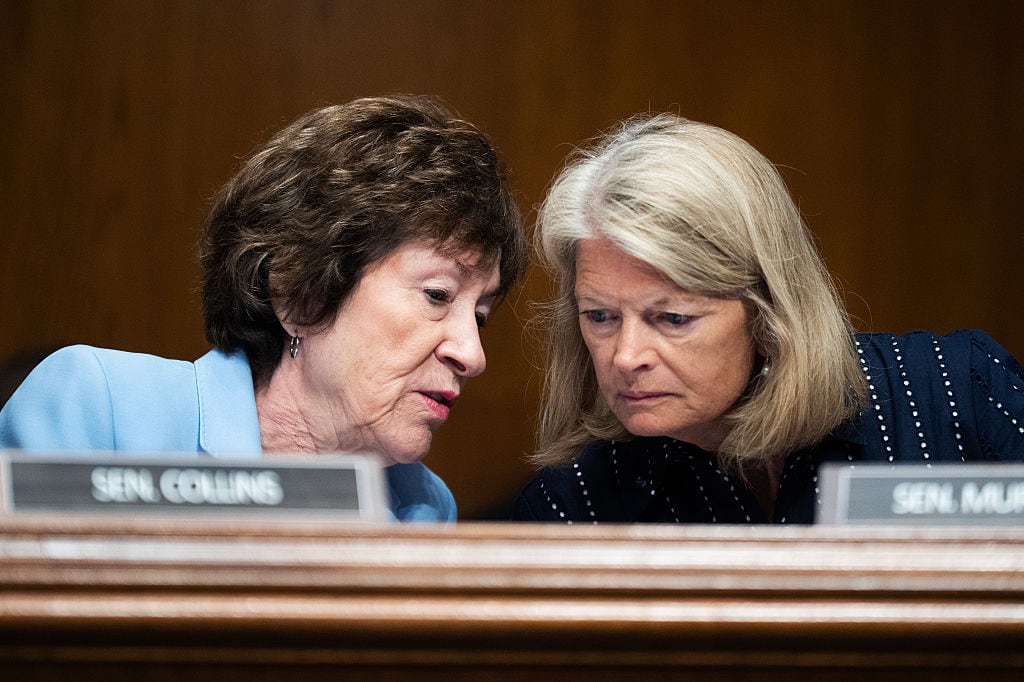
That came into focus this week when moderate Republican Sens. Lisa Murkowski of Alaska and Susan Collins of Maine joined Sen. Tim Kaine of Virginia and other Democrats to advance legislation that would reverse some of the Trump administration’s efforts to dismantle the Education Department.
Thursday’s bipartisan 13-9 vote in the Senate education committee represents the first formal effort by Congress to stop a series of interagency agreements that Education Secretary Linda McMahon has used to transfer core functions to other departments.
“This bill is straightforward. It keeps the administration of important landmark education programs at the Department of Education, where Congress specifically put them and where they belong,” Collins said during the committee hearing.
McMahon has pitched these agreements, which critics have said are illegal, as “proof of concept” that the federal government can adequately support education without a standalone department. She and her top deputies have repeatedly said they are not trying to go around Congress to abolish the agency, even as they have moved aggressively to outsource its core functions without congressional approval.
That backing has always appeared unlikely. Unless the Senate ditches the filibuster, significant legislation such as abolishing a cabinet-level agency would require 60 votes. And Republicans only hold 53 seats. No Democrats are on record supporting the effort.
Perhaps there was a time when some Democratic votes could have been found in exchange for dramatic increases in education funding, said Rick Hess, a senior fellow at the right-learning American Enterprise Institute. Those days are long gone — and the Trump administration never offered that deal anyway.
The committee vote, meanwhile, shows the administration can’t unite even Republicans behind its goals, something the president’s allies find “enormously frustrating.”
“I don’t see a path forward,” Hess said.
At the same time, if Democrats somehow convinced enough Republicans or won enough seats to pass the bill restricting Trump’s outsourcing effort, he would simply veto it, Hess said.
“Nobody has the votes to do anything,” Hess said.
The legislation advanced by the Senate committee would roll back four of the interagency agreements. These sent K-12 education and postsecondary education to the Labor Department, Indian education to the Interior Department, and most controversially, special education oversight to Health and Human Services.
The bill does not affect agreements moving career and technical education to Labor, or giving the Justice Department a larger role in civil rights enforcement in schools.
The change to special education, widely decried by advocates, appears to have been the move that prompted public resistance on Capitol Hill. Trump’s record low approval ratings also give Republican skeptics more breathing room to act independently.
Louisiana Republican Sen. Bill Cassidy, the education committee chair who recently lost his primary to a Trump-backed challenger, echoed the concerns of many special education advocates when he said, “I worry that many states will still struggle to meet IDEA’s requirements and need federal technical assistance, coordination, and oversight,” referring to the main federal special education law.
Though Cassidy ultimately voted against broader limits on reorganizing the Education Department, it’s notable that he allowed the vote to occur. He also introduced his own bill to prevent special education from going to HHS.
In response to the legislation, McMahon sent an open letter to Congress Thursday touting the success of the interagency agreements to date. She noted record numbers of applications for some grant programs and the successful distribution of federal funds.
“Our interagency agreements deliver on both promises by breaking up the failed federal education bureaucracy in Washington and partnering with agencies who are far better equipped to manage essential programs effectively,” she wrote.
Although the administration has promised to “return education to the states,” it has aggressively wielded federal authority in a bid to restrict liberal policies related to race and gender in school. Trump officials have also said they would preserve most existing federal education programs.
A department spokesperson said the legislation represented “an insult to American families — and downright malpractice.”
“It is entirely premature to sabotage this effort before it has the chance to eliminate bureaucratic barriers and fully deliver the results that our students, families, and educators deserve,” press secretary Savannah Newhouse said in an emailed statement.
Erica Meltzer is Chalkbeat’s national editor based in Colorado. Contact Erica at emeltzer@chalkbeat.org.