Did you know search engines like Google are changing the way you see news? Keep Chalkbeat’s valuable education coverage at the top of your feeds by clicking here and checking the box next to our name.
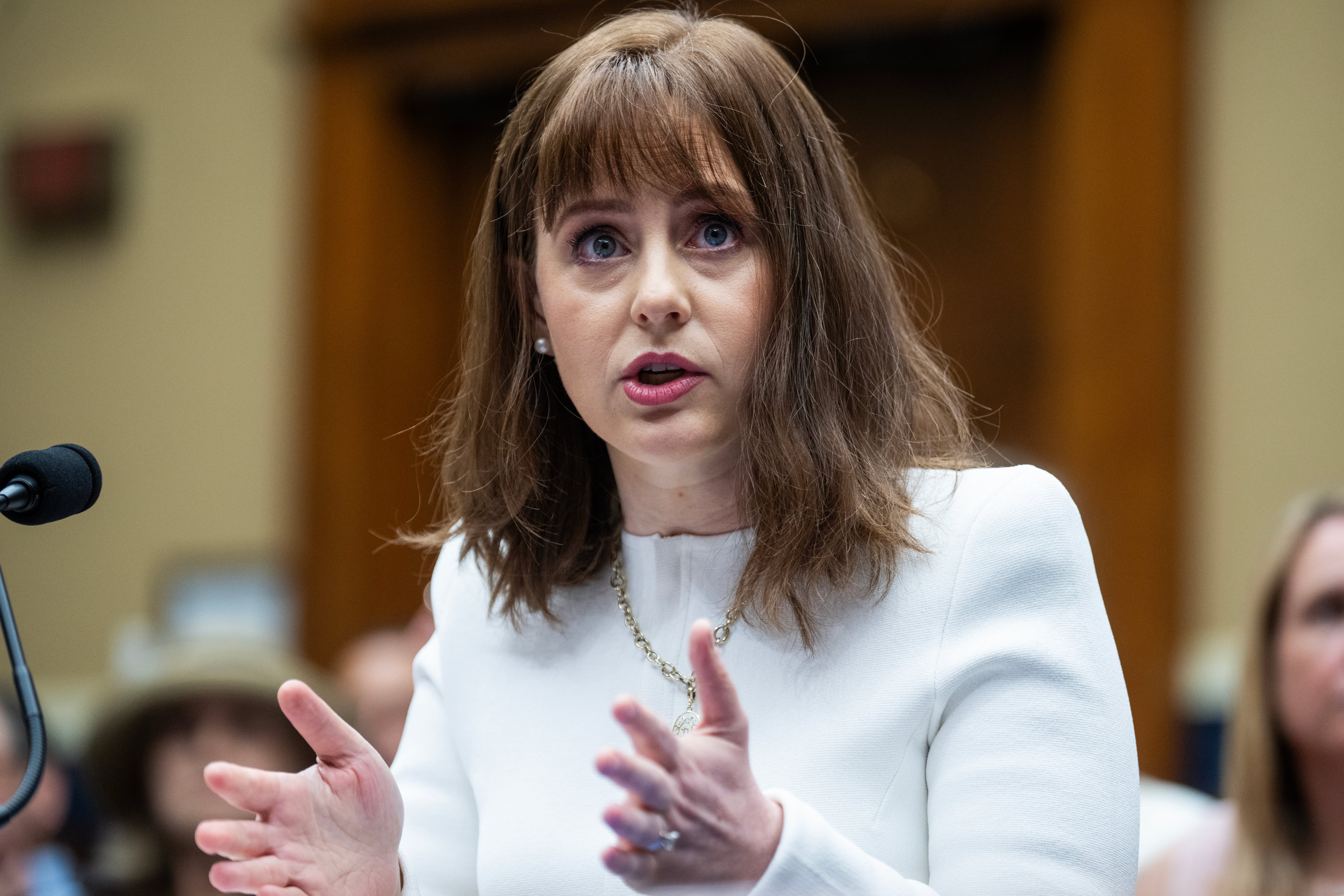
When a small group of nonprofit and ed-tech leaders arrived at a meeting with Trump administration official Arielle Roth earlier this year, they were not expecting a warm welcome. But some were stunned at just how combative the meeting ended up being.
Roth, who leads an agency that advises the president on telecommunications issues, had already been on the record sharply criticizing the proliferation of screens in American classrooms.
At this meeting she went one significant step beyond her public comments: Roth compared ed-tech to tobacco and those in the meeting to the tobacco industry, according to two people who were there.
The meeting included individuals who support ed-tech, as well as those who back federally subsidized internet access in schools generally. Roth suggested that, like the tobacco industry, they were pushing products that cause serious harm.
“People were pretty shook up about it,” a meeting attendee said. Some were startled and offended by the comparison to tobacco, which has been linked to millions of deaths. The people spoke on the condition of anonymity to avoid the ire of the Trump administration and to share the details of a private meeting.
Roth’s comments — which she made months ago but have not been previously reported — reveal the depth of feeling within parts of the administration about technology in schools. “I don’t remember the specific analogies used in this meeting,” Roth said in an interview last week, when asked about her comments. “We had a frank discussion.”
“Just like any industry, the ed-tech industry and the E-Rate consultancy industry [have] a financial interest in their line of business,” she said. “It’s important to ensure that their interests are aligned with the interests of children.”
Roth’s perspective matters because she has already helped prompt a review of the $3 billion federal school internet fund, known as E-Rate. Education officials and their advocates say that internet access is essential to the functioning of modern schools. Many are fearful of potential cuts to the long-running federal program. Roth contends that these subsidies may have fueled excessive and ineffective ed-tech use.
Roth, a mom of six, says concerns about school screen time are “deeply personal” to her. As the head of the National Telecommunications and Information Administration, she launched listening sessions about “excessive screen use in schools” and helped craft the E-Rate review.
At one of those sessions, Erin Amini, a Pennsylvania pediatrician and a mom of four, said that school devices issued in kindergarten made it difficult to limit her children’s screen use. “Suddenly the decision that we had carefully made for our children was no longer ours to make,” she said. The gamified nature of certain ed-tech products could activate the same response as an addictive drug, said Amini. More parents are pressuring schools to cut back screen use, and some districts are already doing so.
In comments issued last week about E-Rate, Roth’s agency raised the possibility of allowing parents to opt out of ed-tech. “A key priority of this administration is ensuring that parents have control over their children’s technology use,” Roth said in the interview.
Many submitted comments, though, emphasized the value of federal internet funding.
Supporters of ed-tech have also argued that broad screen-time restrictions are blunt measures that could limit effective uses that are helping students. “It’s really disingenuous” to compare ed-tech to something like tobacco, said Richard Culatta, head of an educators’ group that backs tech in schools. “It’s sort of become this talking point du jour — oh, ban ed-tech because it’s dangerous. And there just isn’t evidence for that.”
The efficacy of ed-tech remains up for debate among researchers. Advocates have struggled to prove that it has led to the learning gains many hoped for, but assertions that it has caused large declines in test scores are also unproven.
Culatta has allies in other parts of the Trump administration. In fact, his group recently hosted a convening at the Education Department building titled “From Screentime to Screen Value.” Education Secretary Linda McMahon has repeatedly touted Alpha School, a tech-powered private school. Her department has issued relatively favorable guidance on ed-tech, and the White House has promoted the value of AI in education.
“The same tools that can distract during recreational use can also expand access to advanced courses, support students with disabilities, and help close learning gaps, when used wisely,” Assistant Secretary of Elementary and Secondary Education Kirsten Baesler said in a statement in August.
The Trump administration, in other words, appears deeply divided on tech in the classroom. One arm of the federal government is promoting it, while another arm is trying to limit it — with intense feelings on both sides.
Matt Barnum is Chalkbeat’s ideas editor. Reach him at mbarnum@chalkbeat.org.