Democrats have expanded their majority on the Colorado State Board of Education in an election that many education observers called one of the most important on the ballot.
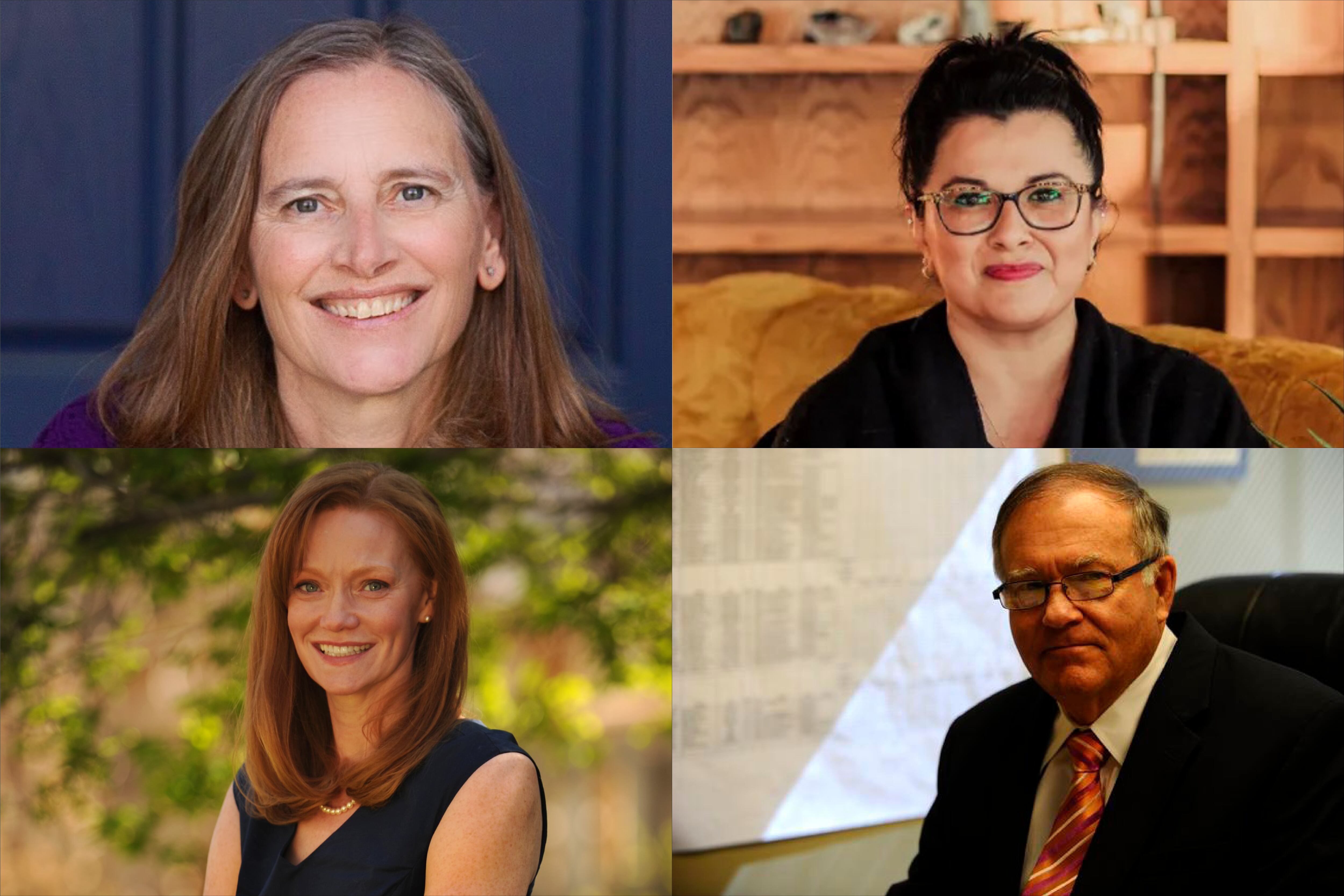
Democrat Kathy Plomer, a former Adams 12 school board president, won decisively in the election for a new statewide at-large seat on the Colorado State Board of Education. She was running against Dan Maloit, a St. Vrain Valley parent who organized others in support of in-person school.
And former Greeley-Evans school board member and Latina community activist Rhonda Solis came out ahead in the closest race this year, the contest to represent the new 8th Congressional District in Adams and Weld counties.
Two incumbents are returning to the State Board of Education as well.
In the 6th Congressional District, incumbent Democrat McClellan defeated Republican Molly Lamar, a Cherry Creek parent and former teacher.
And in the 5th Congressional District representing Colorado Springs and El Paso County, incumbent Republican Durham defeated long-shot Democratic challenger Joseph Shelton, a campus security guard and LGBTQ community activist.
Starting in January, Democrats will hold six seats on the State Board, up from four. The State Board is growing from seven members to nine due to Colorado’s growing population.
“I’m feeling very excited and honored,” Plomer said by phone from an election party at Denver’s Art Hotel. “I’m very glad I got a chance to talk to people all over Colorado about what matters to them in education.”
The election comes at a time when more voters think schools are on the wrong track, yet they’re deeply divided about what the right track would look like. Republicans had hoped victories by conservative school board candidates last year might open a path to take back the State Board, which Democrats have held since 2016. But Colorado voters favored Democrats in most races up and down the ballot.
Plomer said she hopes Democratic wins help put to rest some of the debates that dominated the campaign, and that seemed to play out two days after the election, when, in a party line vote, the current State Board adopted more inclusive social studies standards that call for students to learn more about the contributions and experiences of diverse groups.
The decision concluded a lengthy process that saw a progressive coalition advocate for more inclusive social studies content required by state law and conservatives push back against standards they described as divisive and contrary to some parents’ values. The social studies standards became an election issue despite the vote being scheduled to be decided by the current board.
Republicans proposed — again — adopting the conservative American Birthright civics program as the basis for Colorado civics standards, and Democrats — again — rejected them.
Plomer said she’s looking forward to working on other issues, such as the school accountability system and addressing teacher shortages.
The next State Board will be responsible for overseeing unprecedented state intervention in the long-struggling Adams 14 school district, guiding recovery from pandemic learning disruptions, hearing charter appeals in school districts grappling with declining enrollment, and setting academic standards amid widespread polarization around what schools should teach.
CD-8 has been considered the most competitive district in the state and one of the most closely watched. It contains a large share of Hispanic voters and unaffiliated voters and went narrowly for Donald Trump in the 2016 presidential election.
It lived up to its reputation and was by far the closest race among the four State Board seats. Solis prevailed by roughly 2,000 votes over Republican Peggy Propst, a longtime educator and former State Board of Education member who previously represented El Paso County.
Bureau Chief Erica Meltzer covers education policy and politics and oversees Chalkbeat Colorado’s education coverage. Contact Erica at emeltzer@chalkbeat.org.