Sign up for Chalkbeat Colorado’s free daily newsletter to get the latest reporting from us, plus curated news from other Colorado outlets, delivered to your inbox.
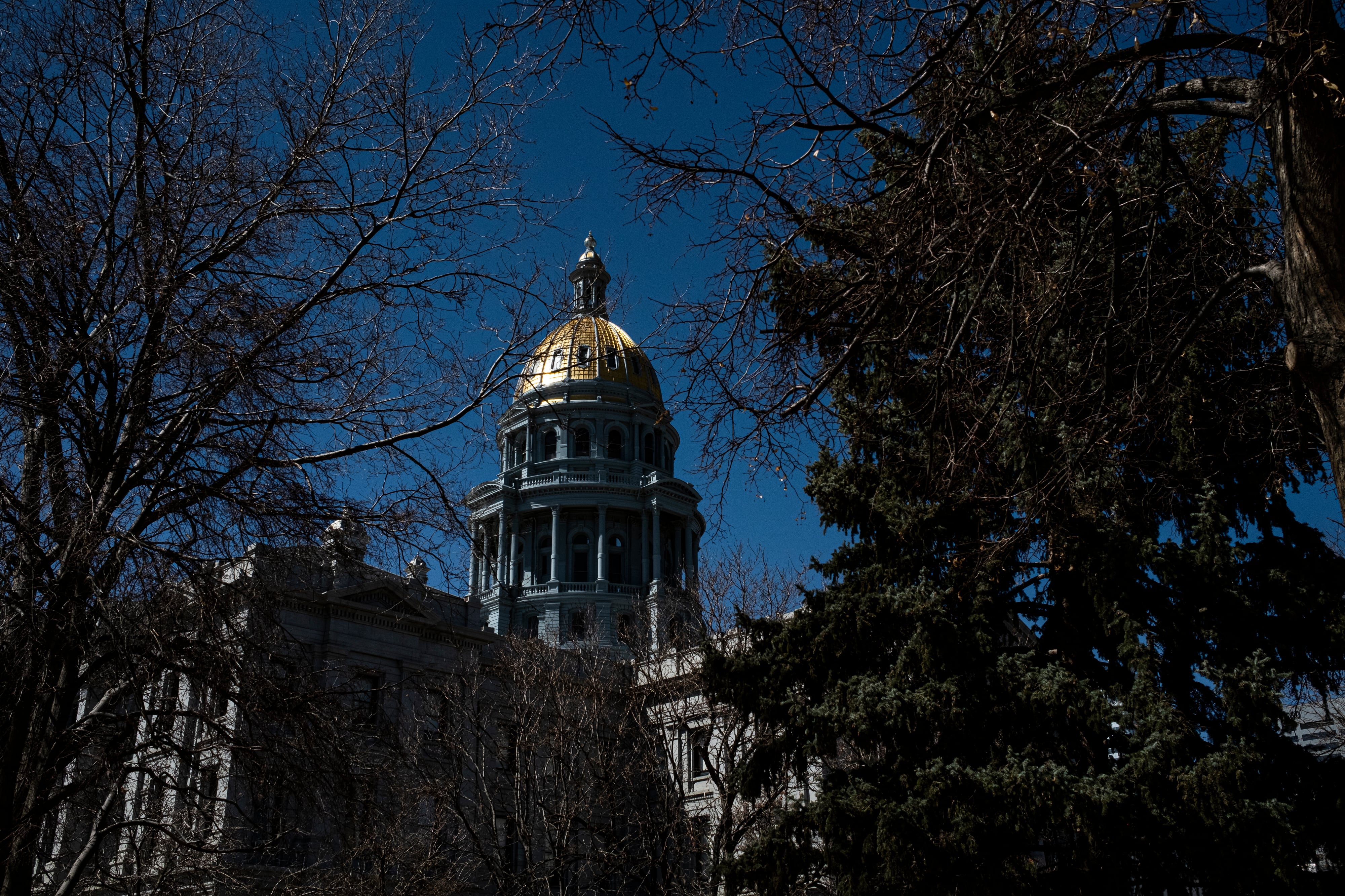
Every January, 100 people elected to the Colorado General Assembly gather in Denver for 120 days and make decisions that affect students and teachers in the classroom, university administrators trying to balance their budgets, and parents and students having to make tuition payments.
There are only two bills that legislators have to pass before they adjourn in May: a balanced budget and the school finance act. Both have profound implications for educational opportunity.
Lawmakers also tackle many more education issues, from school meals to school safety, from what students should learn in the classroom to workforce training.
But it can be hard for ordinary citizens to understand how ideas turn into laws.
To explain the lawmaking process and the opportunities for public input, we’ve prepared this guide to the legislative session that starts Wednesday, and how you can get involved:
How a bill becomes a law
Think Schoolhouse Rock’s “I’m Just a Bill.”
Legislators get ideas for bills from a lot of places. A legislator might have a passion for a particular topic. The governor’s office or leaders of state agencies might request a policy change. An interest group or ordinary citizens might ask a lawmaker to help solve a problem.
Lawmakers work with bill drafters — nonpartisan legislative staff — to write a bill. Once a lawmaker introduces it, leaders in either the House or the Senate assign it to a committee, usually one with relevant expertise.
Most education bills go to a chamber’s education committee, but a bill on youth mental health might land first in the health committee, or one on police in schools might be heard by the judiciary committee.
A few committees — most infamously the State Affairs committees — are known as “kill” committees, where leadership can send controversial bills, especially those from the opposing parties, to ensure they don’t reach the floor.
A bill must win committee approval to proceed to the full House or Senate. Some bills might need to go through more than one committee.
Bills must get approved twice in the first chamber, before heading to the next chamber, where they go through the process all over again. Bills can be amended at any point in the process, and both chambers must sign off on the same final form of a bill for it to clear the legislature.
Then the governor decides whether to sign it into law.
Who has a vote on the Colorado education committees
For this session, the House Education Committee has 13 members — eight Democrats and five Republicans:
- Chair Rep. Meghan Lukens, a Steamboat Springs Democrat
- Vice Chair Rep. Matthew Martinez, a Monte Vista Democrat
- Rep. Jennifer Bacon, a Denver Democrat
- Rep. Mary Bradfield, a Colorado Springs Republican
- Rep. Ava Flanell, a Colorado Springs Republican
- Rep. Lori Garcia Sander, an Eaton Republican
- Rep. Lindsay Gilchrist, a Denver Democrat
- Rep. Eliza Hamrick, a Centennial Democrat
- Rep. Anthony Hartsook, a Parker Republican
- Rep. Dusty Johnson, a Fort Morgan Republican
- Rep. Jacque Phillips, a Thornton Democrat
- Rep. Katie Stewart, a Durango Democrat
- Rep. Tammy Story, a Conifer Democrat
Find the committee schedule, documents, and live and archived audio of its meetings at the committee website.
The Senate Education Committee has seven members — four Democrats and three Republicans:
- Chair Sen. Chris Kolker, a Centennial Democrat
- Vice Chair Sen. Janice Marchman, a Loveland Democrat
- Sen. Scott Bright, a Platteville Republican
- Sen. Lisa Frizel, a Castle Rock Republican
- Sen. Cathy Kipp, a Fort Collins Democrat
- Sen. Dafna Michaelson Jenet, a Commerce City Democrat
- Sen. Janice Rich, a Grand Junction Republican
Find the committee schedule, documents, and live and archived audio of its meetings at the committee website.
Find the names and contact information of all current Colorado lawmakers here. And find maps of current legislative districts here.
Can you speak on a bill or submit testimony?
If you’re interested in having your perspective heard, there are a few ways to get involved.
You can speak on the bill in person or remotely, or submit a written statement to the committee. The sign-up process is not difficult. Just fill out this online form.
Speakers are generally limited to two to three minutes, so think about how to make your point quickly and clearly.
Want to know the schedule?
The full schedule of the House and Senate can typically be found online on the Colorado General Assembly website’s landing page.
The session schedule should be posted daily and gets updated as bills move through the process.
How to look up Colorado General Assembly bills
Looking for a bill online? Go to the Colorado General Assembly’s bill search page. There you can search by a bill number, the sponsor, or a topic.
When you click on a bill, you’ll see a summary of what the bill does, the full text of the bill, and other relevant information, such as a fiscal note that explains how much passing the law would cost the state. Often the description of a bill in the fiscal note is easier to understand than the bill language itself.
You can also search through tabs near the bottom of the page that include the bill’s history, when it’s scheduled to be heard again, any amendments, and a summary of the committee votes.
What’s the Joint Budget Committee, and why is it so important?
The six-member Joint Budget Committee is the most influential committee in the Colorado General Assembly. Why? Because it writes the budget that guides the state’s priorities. The committee members this year are four Democrats and two Republicans, with Rep. Emily Sirota, a Denver Democrat, as chair.
Yes, Gov. Jared Polis does submit a budget every November. And the governor’s priorities guide the Joint Budget Committee’s work. But the committee ultimately writes the budget that gets submitted to the General Assembly for approval.
Other lawmakers also have a chance to submit budget amendments that reflect their own spending priorities — but lawmakers need to pass a balanced budget, and the Joint Budget Committee will strip out amendments that endanger that goal.
The budget shapes every facet of state government, including K-12 and higher education spending.
Learn more about the budget process here.
Want to know more about the education topics we expect to come up this session?
We held our annual legislative preview event on Jan. 6, focused on the education issues we expect lawmakers to consider in 2026. You can watch a recording here.
Need a refresher on what happened last year? We rounded up the education bills of the 2025 session.
Want to know more about how lobbying affects the legislative process? Check out our deep dive on education lobbying, produced in collaboration with data reporter Sandra Fish.
Have questions or a tip? We’re listening at co.tips@chalkbeat.org.
National editor Erica Meltzer covers education policy and politics and oversees Chalkbeat Colorado’s education coverage. Contact Erica at emeltzer@chalkbeat.org.
Jason Gonzales is a reporter covering higher education and the Colorado legislature. Chalkbeat Colorado partners with Open Campus on higher education coverage. Contact Jason at jgonzales@chalkbeat.org.